 YouTube
 Facebook
 X
X LinkedIn
 Pinterest
 Instagram

 Carlo Lo Raso
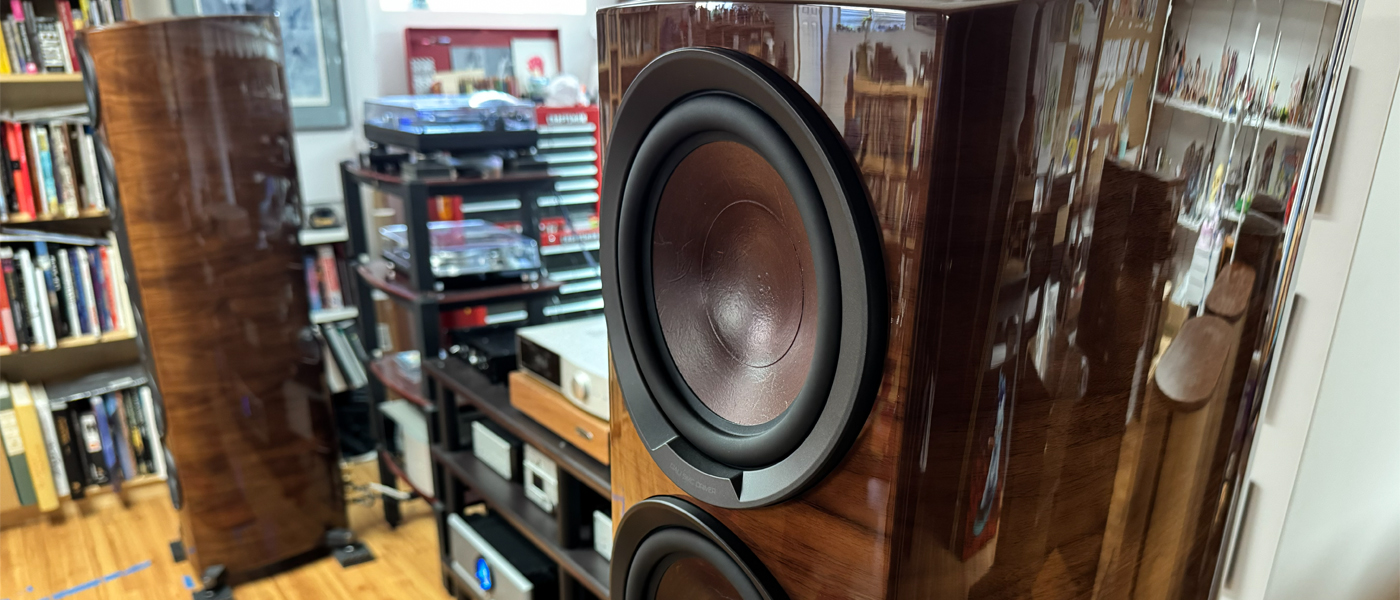
The DALI Epikore series of speakers incorporates much of the technology and experience learned in the development of the company’s flagship Kore loudspeaker, which was introduced in 2022. The Epikore 11 is the model that sits at the top of the range, a Danish-made 4.5-way tower of power, poise, and panache. Sporting the same combination planar magnetostatic/soft dome dual hybrid tweeter assembly as the Kore, these are mated to a bespoke low-distortion 6.5-inch midrange driver along with four powerful 8-inch woofers. All this is housed in a beautifully veneered and solidly inert furniture-grade cabinet that is almost guaranteed, when seen in person, to elicit “Oohs and Aahs!”
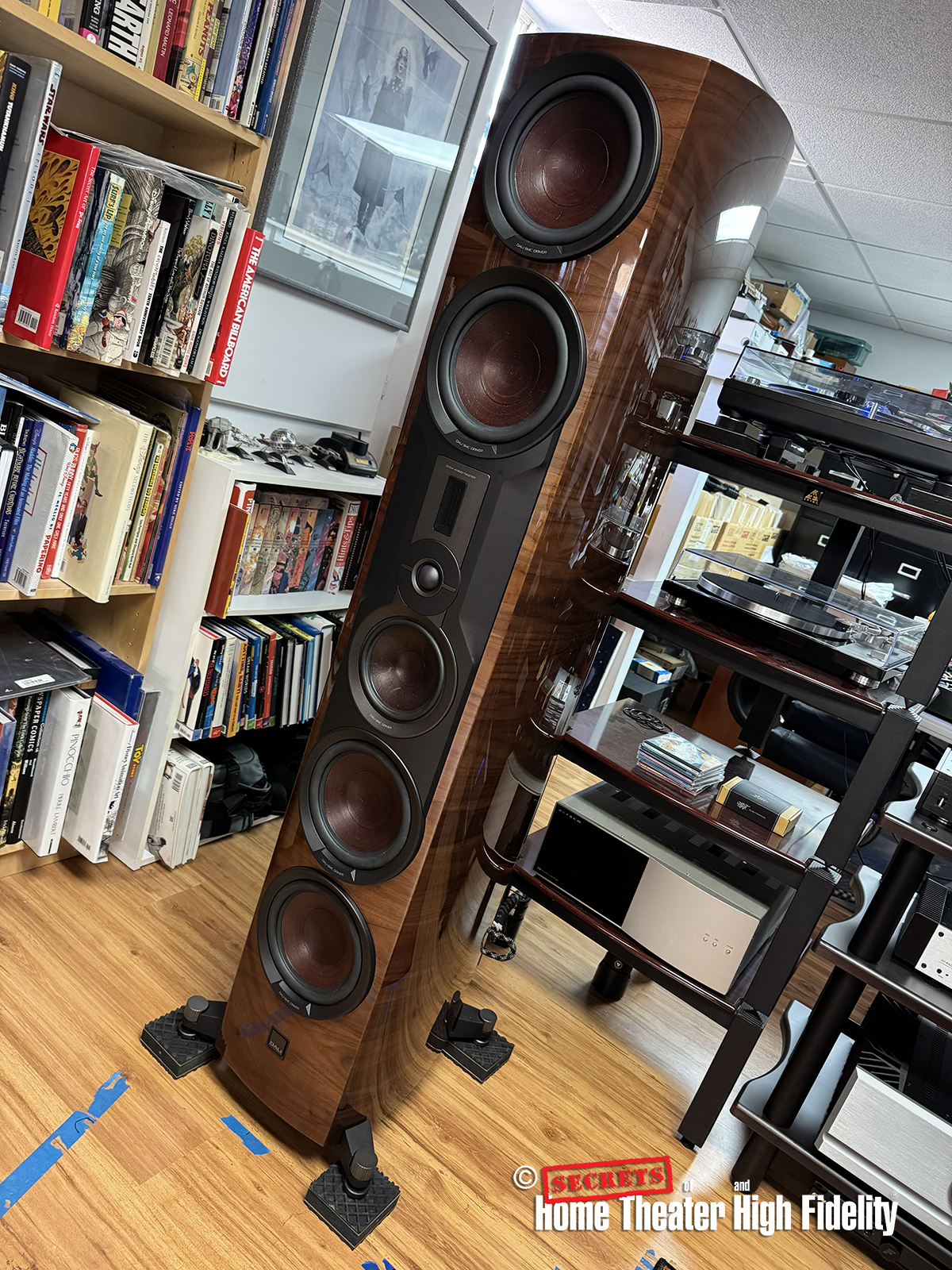
DALI Epikore 11 Floor-Standing Loudspeaker
- Delivers sound in an almost effortless manner. Huge soundstage.
- Powerful, unyielding bass response.
- Dual Hybrid Tweeter system delivers an airy treble without fatigue.
- Use of patented SMC Gen-2 material in mid and bass drivers, along with SMC-KORE crossover inductors, to lower distortion.
- Vocals sound gorgeous on these speakers. Clean, but not sterile.
- Stunningly beautiful, handcrafted enclosures.
- The entire speaker, cabinets, crossover, and drivers are manufactured and assembled in-house by DALI in Denmark.
- May not be the best choice for smaller rooms or rooms with standard height ceilings. The Epikore 9 may be more appropriate.
After the introduction of the Kore flagship loudspeaker to commemorate DALI’s 40th Anniversary, there was a fairly broad gap in the product line between the new Kore and the (until that point) previous top-of-the-line series of speakers, the Epicon. As what was most likely DALI’s plan all along, a range to bridge that gap was needed as a way to help trickle down much of the tech that had been developed for the Kore. The Epikore 11 was the first part of that range. Released as a solo product in 2023, it was shortly followed by the introduction of the Epikore 9, 7, and 3 models last year to fill out the full line.
After visiting DALI’s facility in 2022, where I got both a firsthand introduction to the sound of the Kore speakers and the technical skill and artisan craftsmanship that goes into making them, I have wanted to review a pair. Logistically, it isn’t possible as I don’t have the proper room (or frankly, understanding spouse) to do these speakers justice. The Epikore 11, though, is a different matter. I was most certainly bowled over when I heard them at Munich High-End in 2023. Besides being positively stunning to look at, they’d be much easier to accommodate and live with and, as I would soon find out, just as much fun to listen to and enjoy, with perhaps one caveat. Read on, true believers!
Design:
4.5-Way Bass Reflex Floor-standing Loudspeakers with rear ports.
High Frequency Drivers:
Single 10 × 55 mm planar magnetostatic tweeter, and Single 35 mm soft dome tweeter.
Midrange Driver:
Single 6.5-inch Paper and Wood Fiber coned driver with SMC Gen-2 Technology.
Bass Drivers:
Four 8-inch Paper and Wood Fiber coned drivers with SMC Gen-2 and Clarity Cone technology.
Frequency Response (Manufacturer):
29 Hz – 34 kHz (+/-3 dB)
Nominal Impedance:
4 Ohms
Sensitivity:
89 dB (2.83 dB @ 1-meter full space)
Crossover Points:
170 Hz, 370 Hz, 3.1 kHz, 12.5 kHz
Dimensions (H x W x D):
1602 × 422 × 554 mm / 63 × 16.6 × 21.8 inches.
Net Weight:
158.7 pounds / 72 kgs
Accessories:
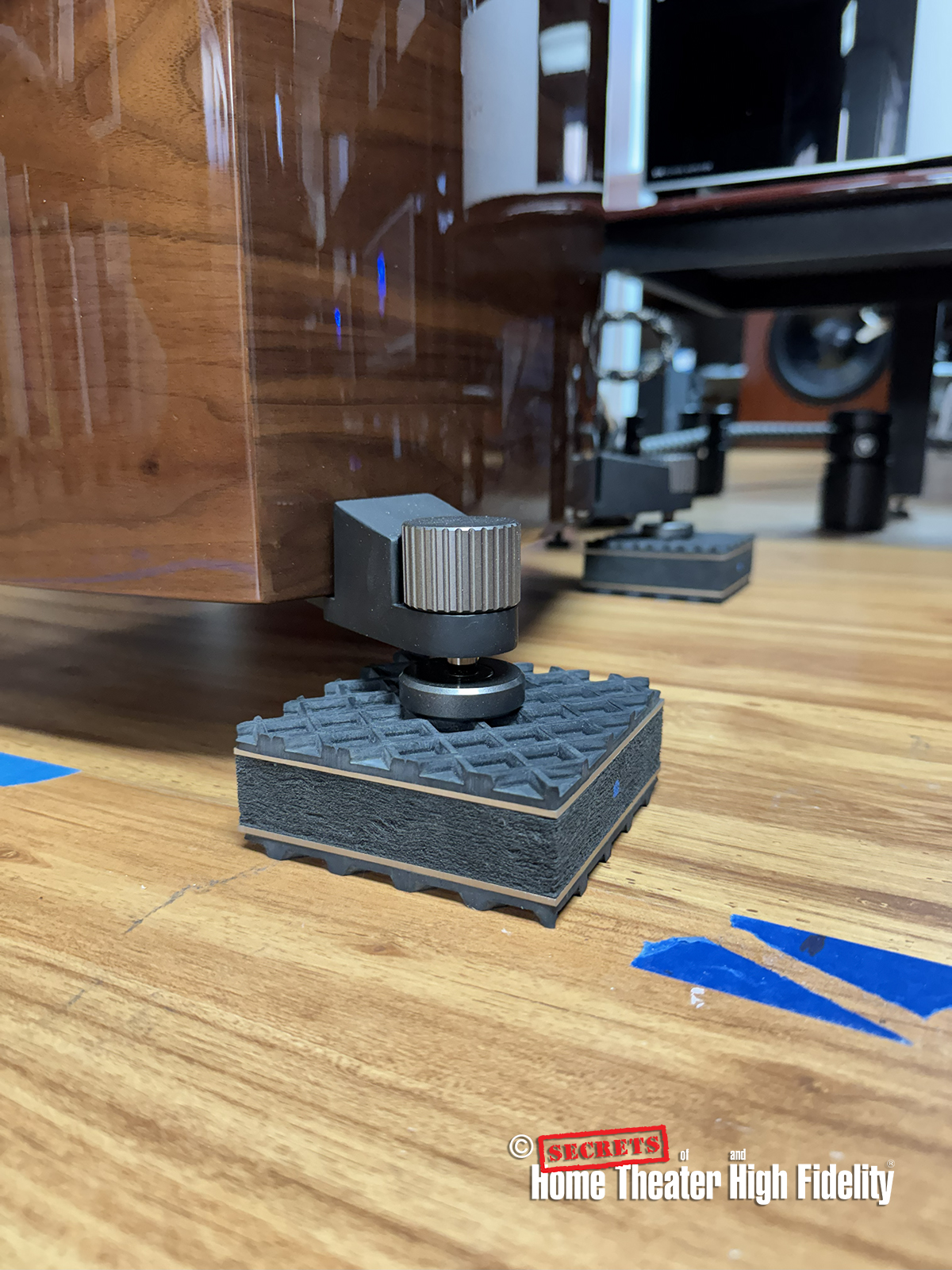
8 × Magnetic spike feet, 4 × Terminal jumpers, 1 × Cleaning cloth, 2 × Magnetic front grille, 4 x Floor protection pads
Finishes:
High Gloss Black (Shadow Black grille)
High Gloss Walnut (Shadow Black grille)
High Gloss Maroon (Shadow Black grille)
High Gloss White (Grey grille)
MSRP:
$75,000.00 pair
Website:
Company:
SECRETS Tags:
dali, epikore, denmark, loudspeakers, HiFi, audiophile
Secrets Sponsor
There is probably no better person to introduce the Epikore 11 than DALI’s Head of Product Management, Krestian Pedersen, as seen in this video I shot with him at the Epikore 11 unveiling at Munich High-End 2023.
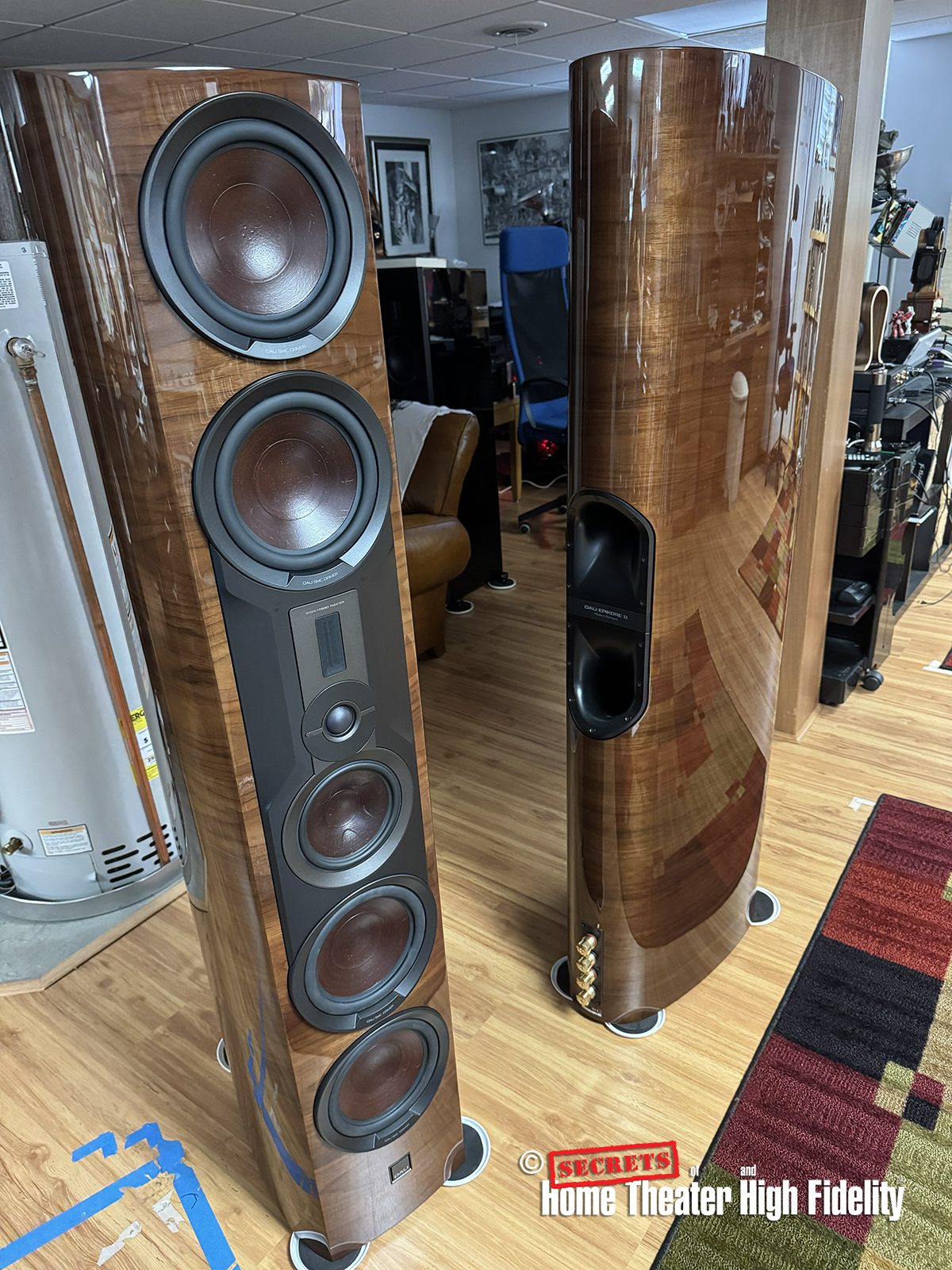
From a design standpoint, the first thing I noticed about the DALI Epikore 11 upon unboxing them was just how truly stunning a pair of speakers they are. The artfully curved and strategically braced enclosure, designed to minimize unwanted cabinet resonances, was clothed in a stunning high-gloss real walnut veneer. Its finish is so rich and deep that it practically feels like I could go swimming in it.
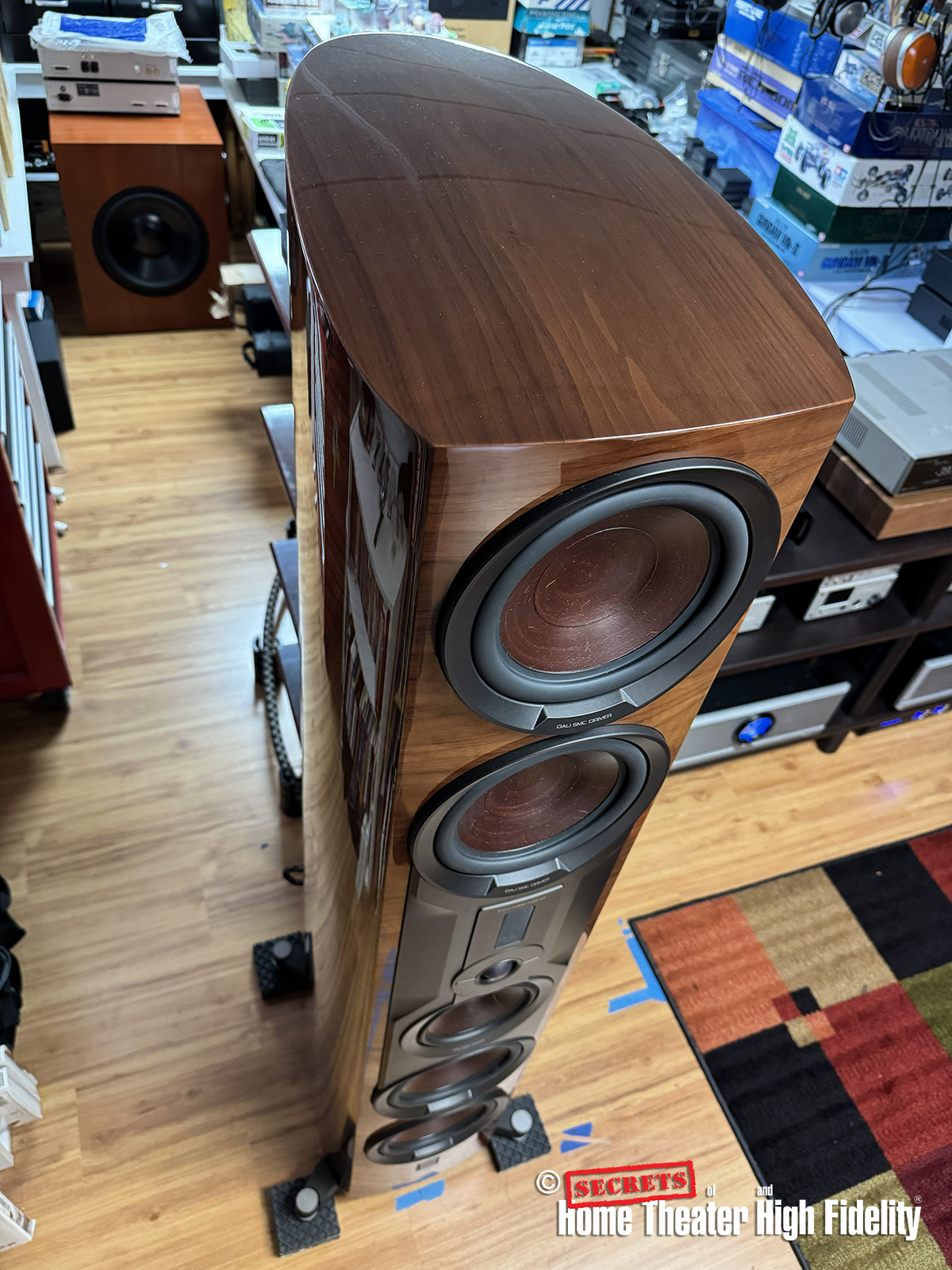
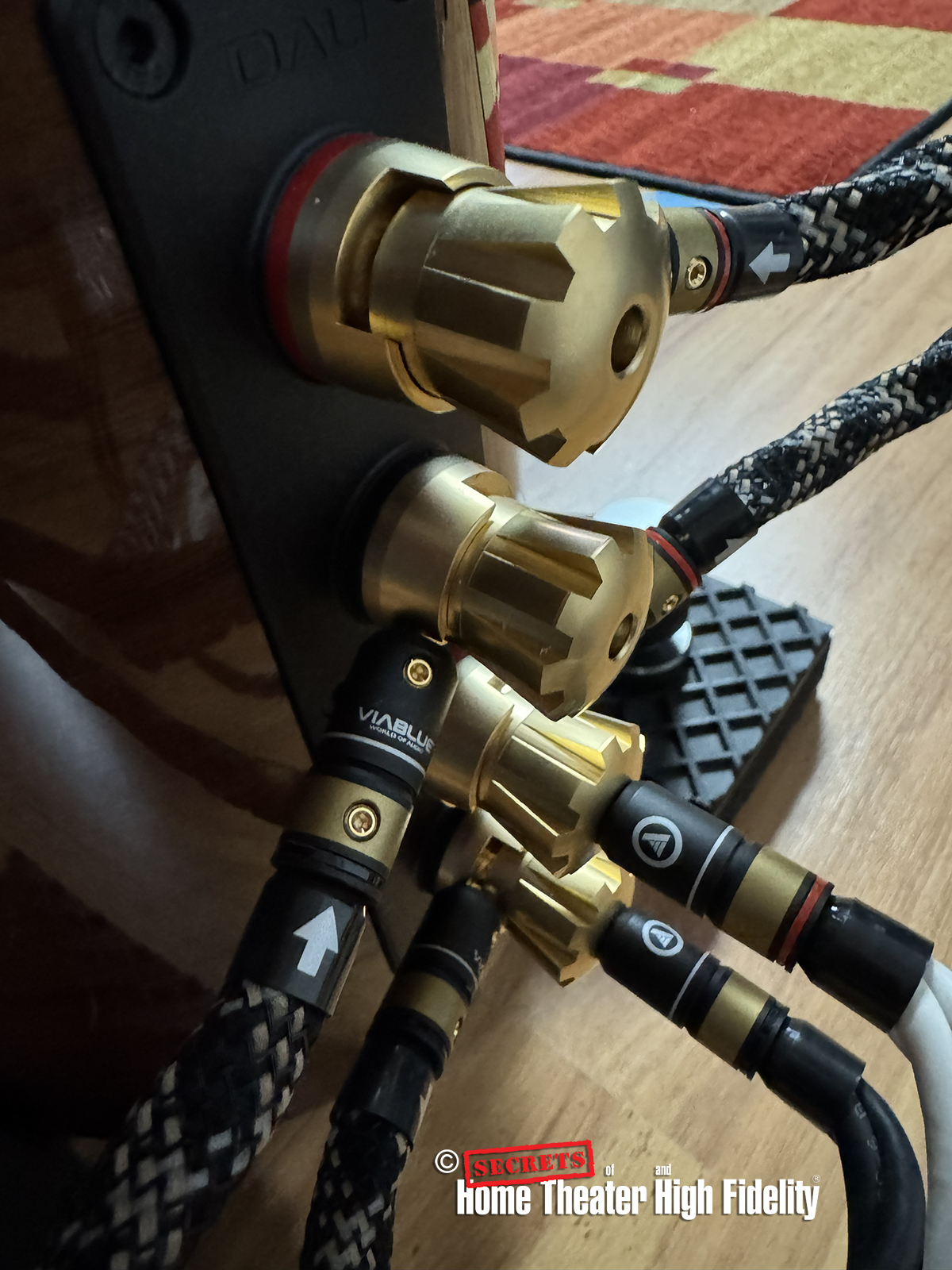
But it’s more than simply a nice finish. DALI’s craftspeople have gone to great lengths to make every visual cue and tactile touch point look and feel of exceptional quality, and it shows. I couldn’t help but touch these speakers every time I got near them! The Epikore 11 feels truly special, and when dealing with these types of products and at these price points, that sense of satisfaction is a must-have component.
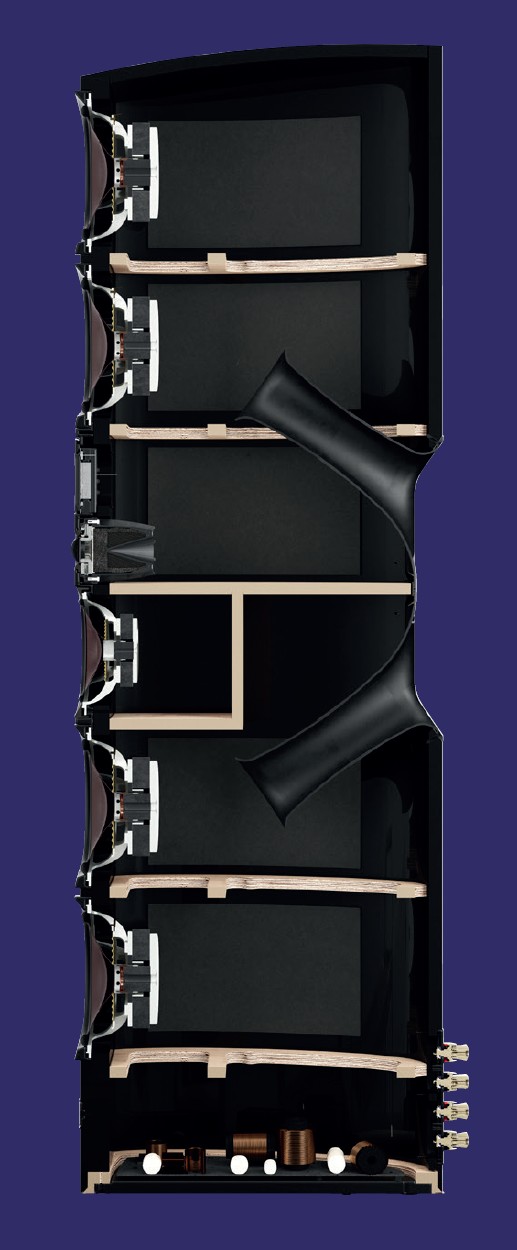
Once I could stop myself from drooling a bit and started looking into and researching the technical aspects of the Epikore 11’s design, I was reminded of just how deep an engineering bench DALI has to work with when coming up with these types of speakers. I already touched on the bracing within the Epikore’s cabinet, but along with that, both the upper and lower pairs of bass drivers are segregated in their own 64-liter closed-off space, each separately vented to the outside, with the vents tuned to 24 Hz. The hybrid dual tweeter and midrange driver sections also benefit from their own sealed 6-liter space within the overall cabinet to best optimize the driver’s performance characteristics and reduce any interference from the bass drivers.
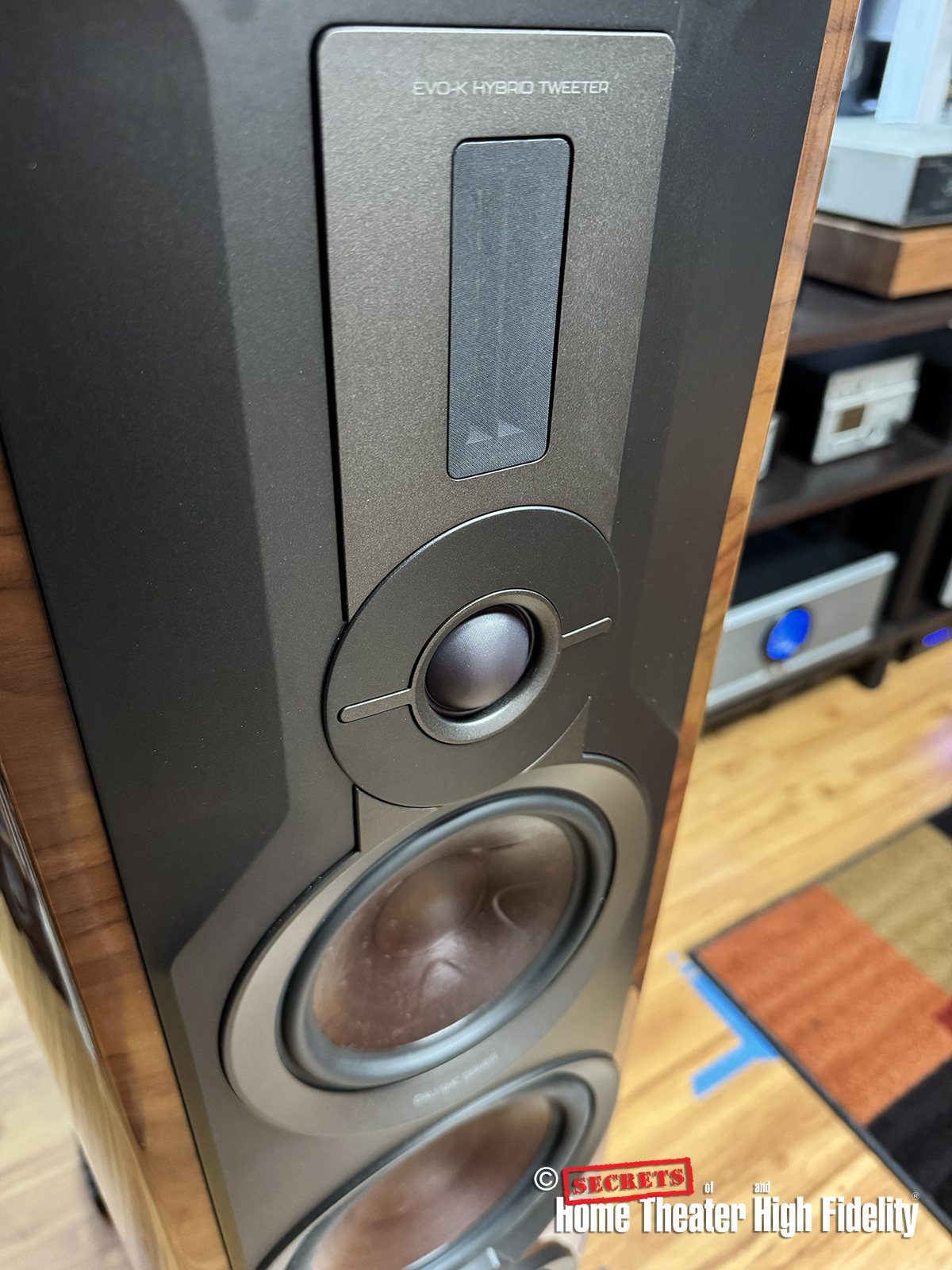
DALI specifies the Epikore 11 as a 4.5-way design. On the driver front, starting off with the aforementioned Hybrid tweeter array, the Epikore 11 uses the identical 1.4-inch soft dome tweeter and 0.4 x 2.2-inch planar magnetostatic tweeter found in the flagshipKORE speakers. They call it their EVO-K tweeter. DALI claims that the larger diameter of this soft dome offers substantially more surface radiating area and a lower resonant frequency than is typical for a traditional 1-inch dome. This translates into overall better power handling and the ability to reach lower frequencies. They also say the lack of ferrofluid in this particular dome allows for lower distortion and reduced power compression in its lower range. The heat dissipation job that ferrofluid would usually handle is made up for by using a large, finned cast aluminum enclosure on the rear of the dome driver. The planar fully takes over from the dome at 12.5 kHz and continues on to 34 kHz, enhancing both the range and dispersion characteristics over a dome tweeter alone. The planar driver has substantial improvements over those used in lower-tier DALI speaker models, including a much larger magnet structure, a large rear aluminum heat sink, and a re-profiled waveguide.
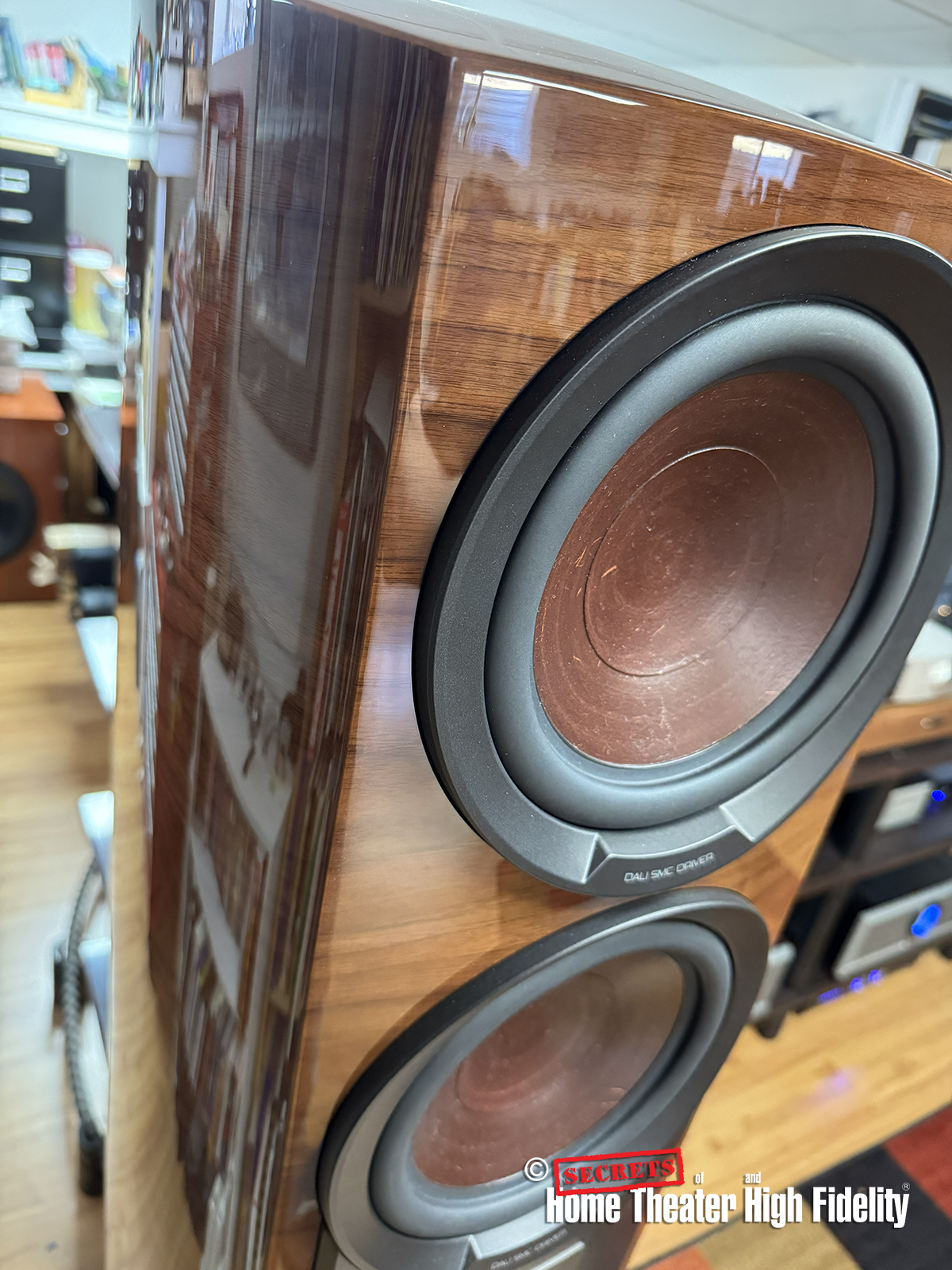
The Epikore’s four 8-inch bass drive units that evolved from those in the DALI Epicon speakers use a special wood fiber/paper composite cone, a titanium voice coil former, and a generous ferrite magnet structure.
The single 6.5-inch midrange driver again uses DALI’s wood fiber/paper composite cone construction, but adds to this a specifically designed embossed pattern and a lacquered coating that helps dampen any resonances without adding additional weight.
Called “Clarity Cone Technology,” DALI also claims that it controls the break-ups better above 1 kHz, offering a smoother frequency response in the area where the midrange meets with the tweeter, providing better upper midrange and low-high-frequency reproduction.
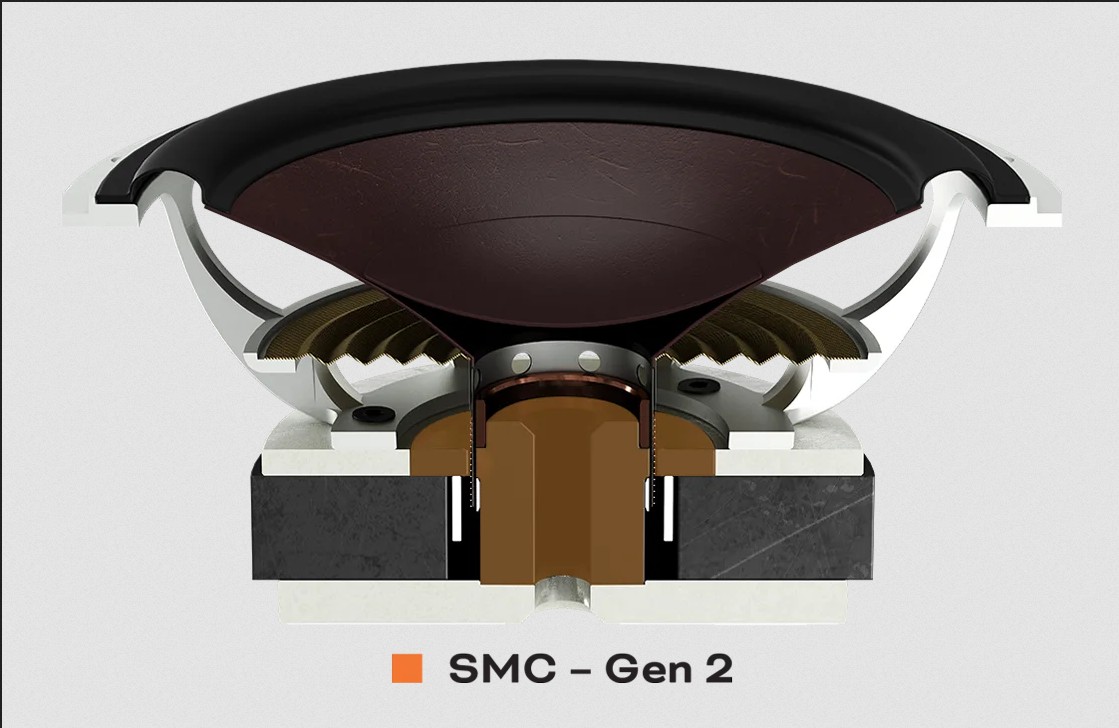
DALI also makes a point of mentioning the expanded use of their SMC material in both the bass and midrange drivers and the crossover of the Epikore 11. Called SMC Gen-2, this material is highly magnetic yet non-electrically conductive at the same time. DALI has said to have found genuine distortion-lowering benefits in using SMC Gen-2 in the Epikore 11 driver’s motor structure (pole pieces and top plates) and as inductor cores in the crossovers.
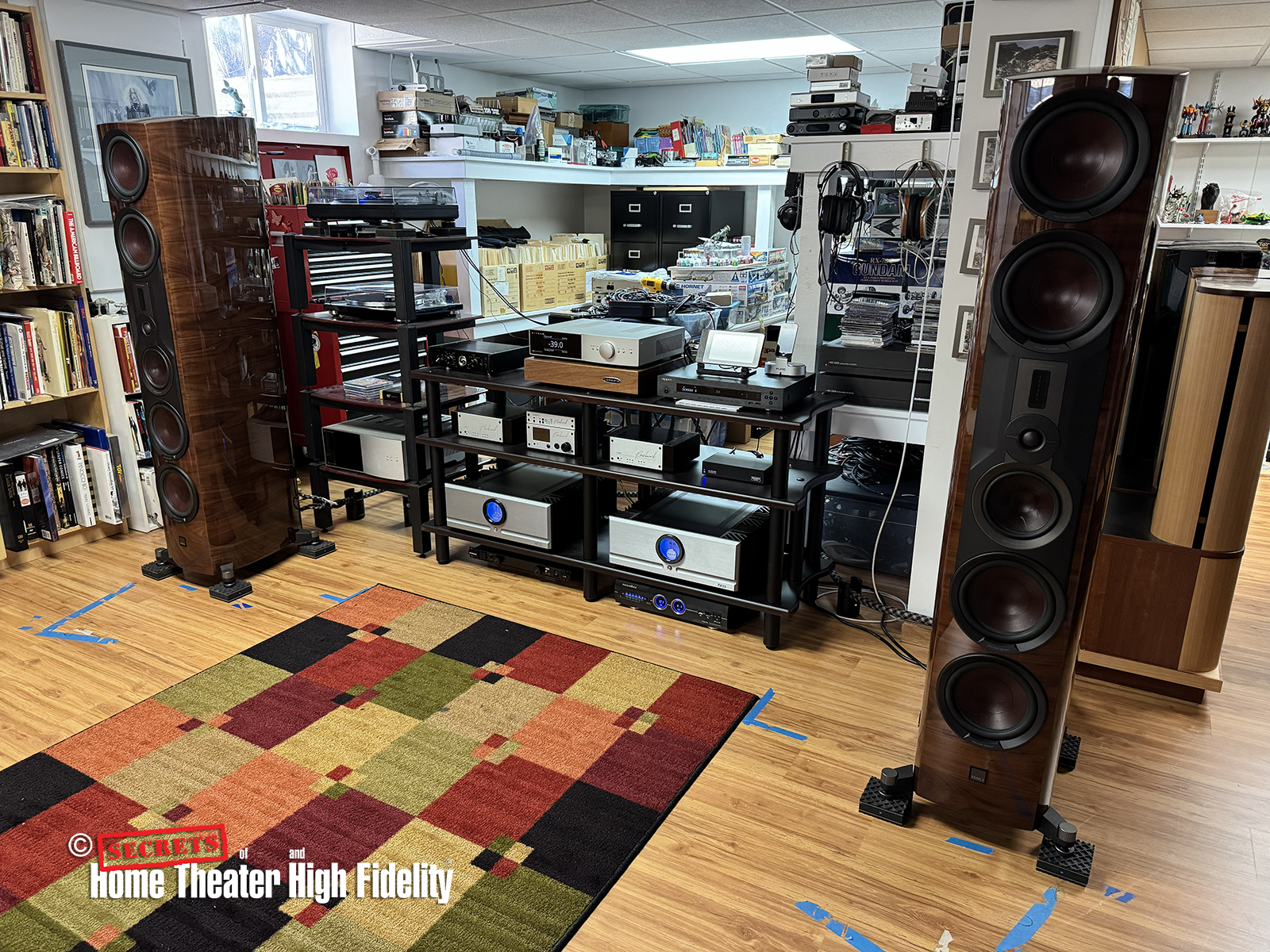
After some experimentation, I settled on the DALI Epikore 11 speakers positioned 9.5 feet apart and essentially pointing directly into the room. My listening position was just over 10 feet away from the center point between the speakers. I found that this positioning worked best with the dispersion characteristics of the speakers to give me the best combination of overall soundstage and image detail.
The associated equipment in the review included:
– Two Pass Labs XA-60.8 Monoblock Power Amplifiers.
– Two Benchmark AHB2 Power Amplifiers.
– Benchmark DAC3 B Digital to Analog Converter.
– Benchmark HPA4 Preamplifier.
– Anthem STR Preamplifier.
– Anthem STR Power Amplifier.
– AXIOM ADA-1000 5-Channel Power Amplifier.
– OPPO BDP-105D Universal Disc Player.
– GeerFab D.BOB Digital Breakout Box.
– DIY Raspberry Pi-based Endpoint.
– Technics SL1200 Mk6 Turntable modified by KAB Electroacoustics.
– Audio-Technica ART20 MC Phono Cartridge.
– TEAC PE-505 Fully Balanced Phono Preamp.
– VIABLUE Interconnects and speaker cables.
– EVP Vibration Protectors from AV RoomService.
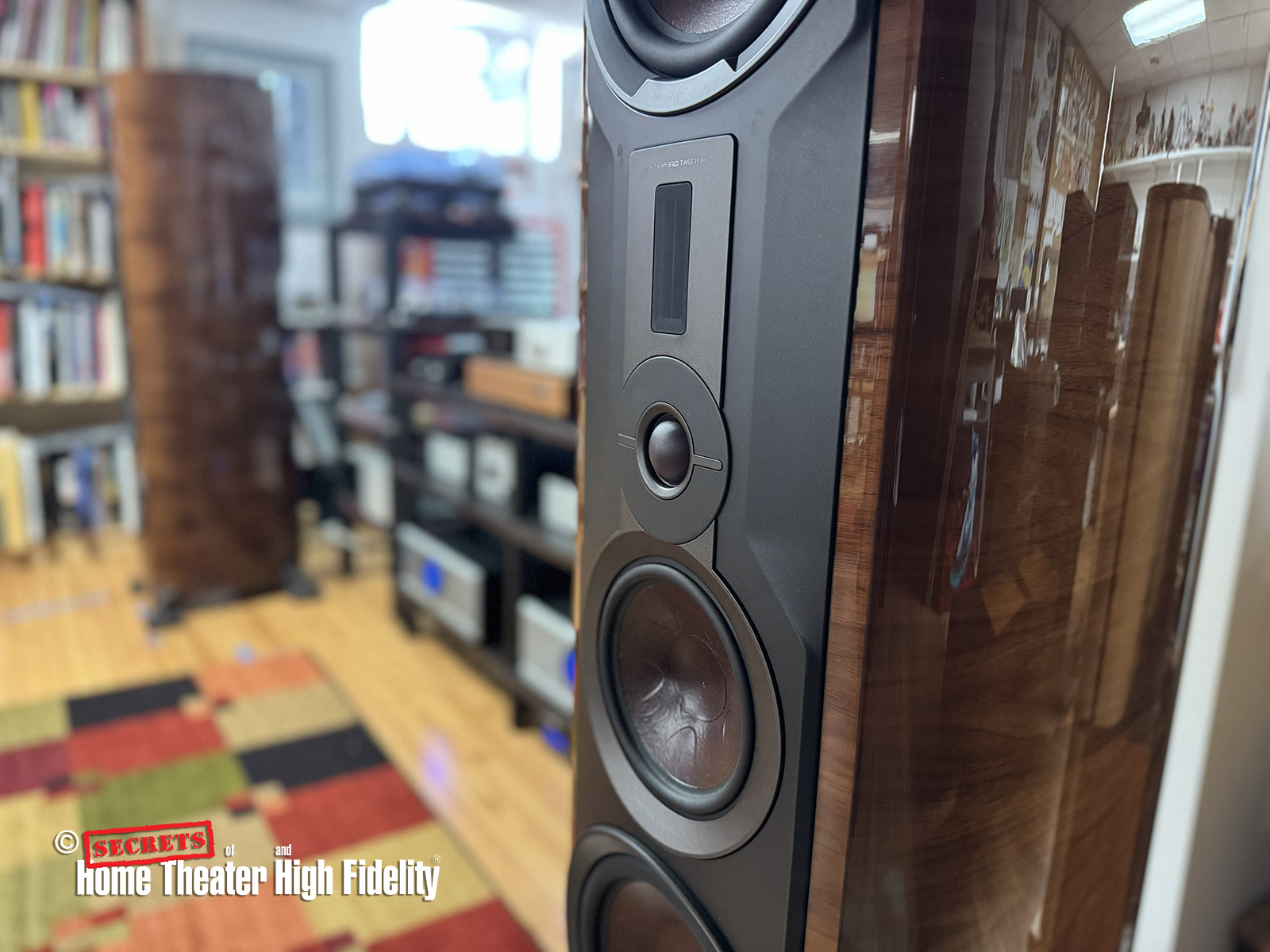
A few notes before I get into my listening impressions. The Epikore 11 is a tall speaker, and with the orientation of its bass drivers, I feel that it would benefit from a room with taller-than-standard height ceilings to reduce the possibility of upper bass to lower midrange cancellation and excite some lower bass room modes. My basement listening space has just over 7-foot ceilings, and I had to remove several acoustic drop ceiling tiles to significantly reduce a 70 Hz bass peak that the speakers were exciting. If you have a similar room situation, one of the smaller Epikore models might be better suited for your listening space to avoid this potential issue. Again, every room is different, but these are just some observations from my experience.
Now, putting all that aside, it doesn’t change the fact that throughout the review period, I found the DALI Epikore 11 to be one of the most satisfying and musically engaging loudspeakers that I have ever auditioned in my home. The size of the image they threw was almost absurdly big, and yet the precision of how instruments and voices were placed gave the music such a sense of dimension and life to it that it made me keep wanting to listen to them more. They generated a nice, wide sweet spot, and off-axis music listening was still plenty engaging. They aren’t what I’d describe as a flat or neutral-sounding speaker. They are certainly a very musical speaker in that they pull off a similar trick that Sonus fabers (for example) do so well. The DALI Epikore 11 are loudspeakers that “flatter” the music. They work with your room in such a way that they will conspire to make much of the music you play through them sound better than it actually is. Speakers like this can occasionally become tiring to listen to because they can go too far and editorialize too much, trying to sound overly exciting. These are, for lack of a better expression, “seasoned just enough” that I never got tired or lost interest. Listening sessions just kept getting longer.
The Epikore 11s also had an incredible dynamic capacity. On some pretty challenging Classical works, the dynamic swings happened instantaneously and sounded impressively clean and unstressed regardless of the volume or how quickly the output shifts happened. I can imagine that DALI’s “low-loss” or “low-distortion” methodology of speaker design pays particular dividends in this regard. No matter if I was listening to digital or vinyl, the Epikore 11’s output always sounded incredibly clean.

Eiji Oue, Minnesota Orchestra, “Exotic Dances from the Opera”
With an energetic Classical piece like “Dance of the Tumblers,” with Eiji Oue conducting the Minnesota Orchestra, the big DALIs just presented such a huge sense of scale that I felt like I was right in the concert hall. The quieter passages with just a few subtle woodwinds and the triangle were represented with exceptional detail and transparency. The sparkle and decay on that triangle alone sounded especially clear and pretty much perfect. When the large dynamic shifts came, featuring the full horn sections and the big tympani drums, they happened quickly and were handled without fuss, distortion, or bloat. The horns had plenty of power, but the speakers relayed no hints of harshness or grain, and those drum hits were phenomenal, punching me in the gut with some serious impact. No need for a sub unless you really wanted to gild the lily. (And with DALI’s new V-16F subwoofer that is just becoming available, you could pick up a couple and keep your sense of full-blown “HiFi Crazy” all in the family!)
The upper bass area, where a lot of the cello work was happening, sounded particularly clean, but sufficiently full for my tastes. The massed strings sounded detailed and very sweet, without any hint of harshness. Neither did they sound particularly thin, with great body and dimension to boot.

Musica Nuda, “Live à FIP”
Switching to something live and much more intimate, “You’re the One I Want” by Musica Nuda from their Live at FIP album features the wonderful vocals of Petra Magoni and the bass playing of Ferruccio Spinetti. Miss Magoni has an amazing range to her voice, and besides changing between Italian, French, and English lyrics in this track, she runs the vocal gamut tonally from a chesty, almost-tenor to a piercing soprano. The Epikore 11 recreates every nuance of her performance, relaying it with a palpable presence. I was fully prepared for the hybrid tweeter arrangement on these speakers to project her highest and most intense notes with some sort of elevated edginess or boosted level that I might find objectionable. That was thankfully not the case for me at all. Her super high notes were played back with fantastic clarity and transparency, and I found no aspect of it to be irritating or fatiguing in the slightest. Everything sounded well-balanced at all parts of her performance with the midrange driver and tweeters working together seamlessly. Mr. Spinetti’s bass playing throughout the track involves both bowing and plucking, and in each case, the Epikore 11’s bass drivers punched with great weight and authority while simultaneously revealing all the string details and the distinctive woody resonances from the instrument body.
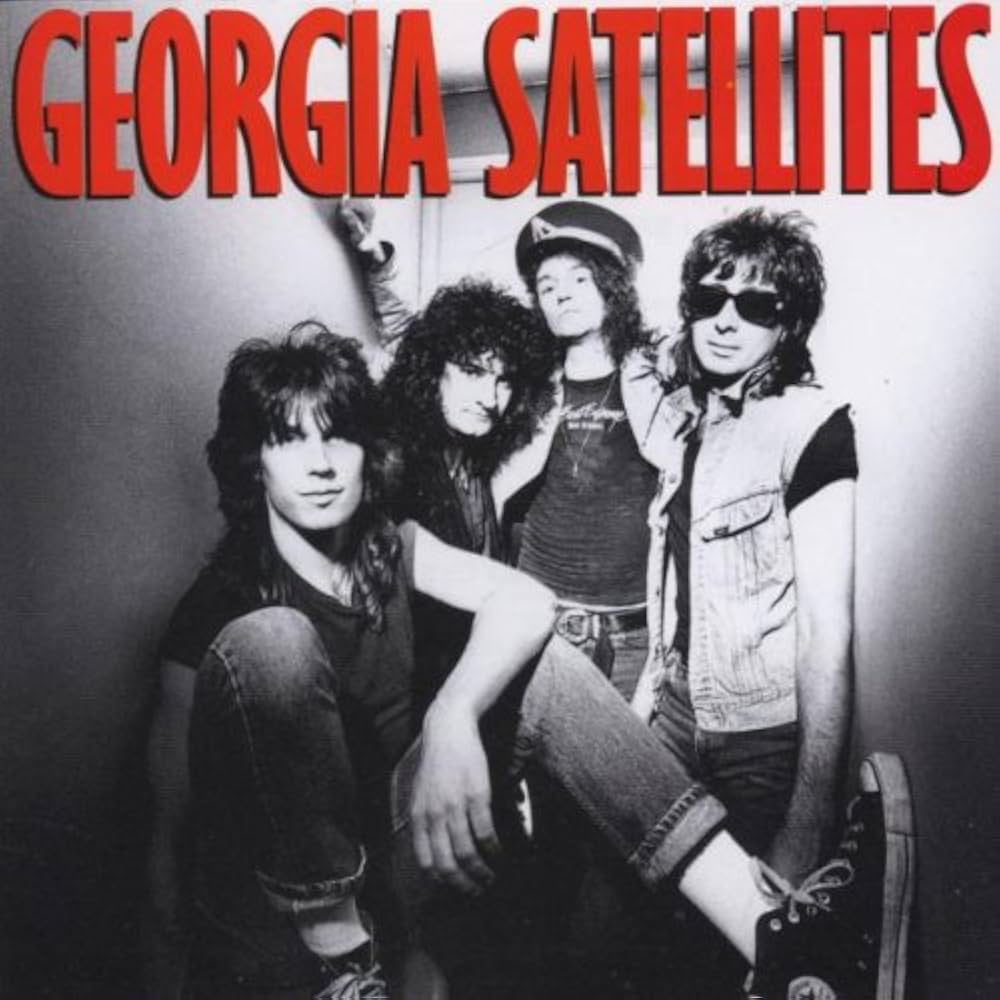
Georgia Satellites, “Georgia Satellites”
Switching from a clean live recording to something more gritty and lo-fi. “Keep Your Hands to Yourself” by The Georgia Satellites was just the ticket to see how the DALI’s would handle classic rock. It’s always a bit of a gamble playing this kind of music on hifi speakers, as ultimate fidelity was not exactly top of mind when these tracks were likely recorded and mastered. As a result, plenty of classic rock can sound flat and fairly lifeless when played back on these types of speakers. The Epikore 11, though, seemed to liven up this track in all the best possible ways. The opening kick drum beat was surprisingly strong and punchy, with impact that I could feel. Lead singer, Dan Baird’s vocals are raspy and higher in pitch, which could become wearisome to listen to, especially on the classic “No Huggy, Kissy, until I get a Wedding Ring” verses, but not so on these DALIs. Lead vocals had just the right level of edge to their delivery while still having a decent amount of weight and body to them. The multiple distortion-riddled guitar parts were relayed with fantastic detail and oozed with drive and groove. The upper bass on this track was fairly clean and not muddy-sounding by any stretch. Some people might consider it slightly thin with music like this, but I don’t agree. The additional lower bass boost that I was experiencing in room was likely offsetting any lightness in the upper bass to lower midrange region that may have been happening. All-in-all, really great results with music like this.

Daniele Cordisco, Ron Carter, “Bitter Head”
Trying out the track “Canadian Sunset” with Ron Carter and Daniele Cordisco from the album Bitter Head, the DALI’s huge soundstage suited this tune especially well. With standup bass, Jazz guitar, drums, and keyboards recorded in what felt like a very intimate setting, the Epikore 11 created a wonderfully immersive experience for me to enjoy. Ron Carter’s bass playing sounded outstanding, with punch to the notes, and plenty of those little details from plucking the strings were reproduced clearly. Daniele Cordisco’s guitar had that sweet-sounding choral fullness to it, and yet the notes still maintained a crisp ring to their sound, all of which the DALIs reproduced most appealingly. Lucca Santaniello on the drum kit was keeping time nicely and with great body to the sound of the skins, and the cymbals had an excellent metallic sheen to their sound. Jeb Patton on the piano practically sparkled, so clean did his notes sound. The Epikore 11 did a superb job delineating each of the performers such that I could really enjoy the interplay that was going on between all of them and appreciate their respective skills. The speakers definitely had the transparency combined with the dynamic chops to keep up with great players, recreating a spectacular performance.
Secrets Sponsor
Bench tests were performed with a Cross-Spectrum Labs calibrated UMIK-2 microphone connected to my computer workstation using Room EQ Wizard acoustic measurement software.
The In-room average response measurements are derived from an 18-point spatial average taken from around the listening position (11 ft away), with the microphone capsule placed at ear level.
Phase and Impedance measurements are done using a Dayton Audio DATS V3 Audio Test System.
No nearfield measurements are included this time due to the fact that measuring at 1 meter for a speaker this tall does not allow enough distance for all the drivers’ output to fully merge. Conversely, measuring in-room at a distance of 3 to 4 meters allows too much of the room’s influence to intrude, making accurate horizontal and vertical axis measurements impossible.
Caveats: Unlike measurements taken outdoors or in an anechoic chamber that measures a speaker in isolation, in-room measurements give a sense of how a speaker behaves in the actual (often imperfect) environment in which it’s used. Both types of measurements are valuable (make no mistake, a properly designed speaker in an anechoic environment will hold up much better in an average listening space), I just find in-room measurements interesting as they help shed light on what I am hearing and why. Note that no in-room measurement will ever match an anechoic measurement, and a measurement taken in my room won’t necessarily match a similarly done measurement taken in your room. But, after measuring dozens of speakers here, I’ve acquired a good understanding of how this space interacts with the speakers under test, and some general performance observations can always be drawn.
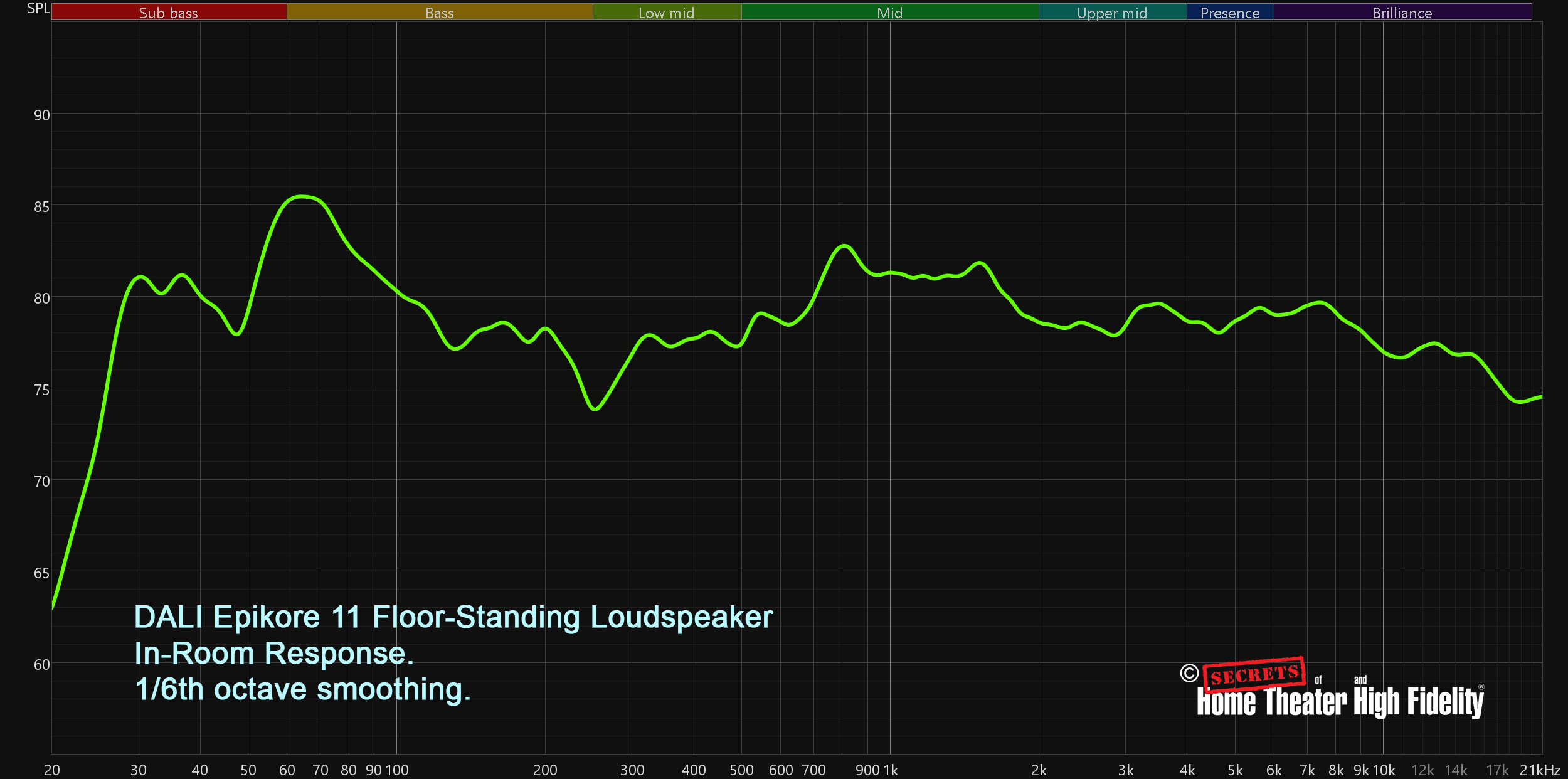
This in-room measurement of the DALI Epikore 11 tower speakers is an 18-point spatial average. A 9-point measurement was made for the right speaker and then repeated for the left speaker. Averaging both speakers is an approach others have been using and publishing. Using data from both speakers reduces the modal response of the room by averaging the differences in the response of the two speakers from room asymmetries. The technique cannot eliminate them, however, and so the response below 300Hz remains room-dominated. As you can see from the graph, the speaker and room interaction is causing a noticeable bump in the 60 -70 Hz area, resulting in extra punch to electric /acoustic bass, kick drums, and such. Above this area, there is a broad response dip between 125 Hz to 500 Hz. While there may be some intentional voicing in this, it is mostly due to room interaction from a tall speaker with bass drivers both at the top and bottom of the cabinet, placed in a room with lower-than-average ceilings. The 250 Hz dip is likely a floor bounce interaction. There is also a severe dip in this room at precisely 20 Hz, which is why there is such a steep drop below 27 Hz. This affects every loudspeaker tested in here and is only overcome by using a pair of powerful subwoofers. Without that issue, it is likely the Epikore 11’s bass response would easily extend below 20 Hz in a more forgiving listening space.
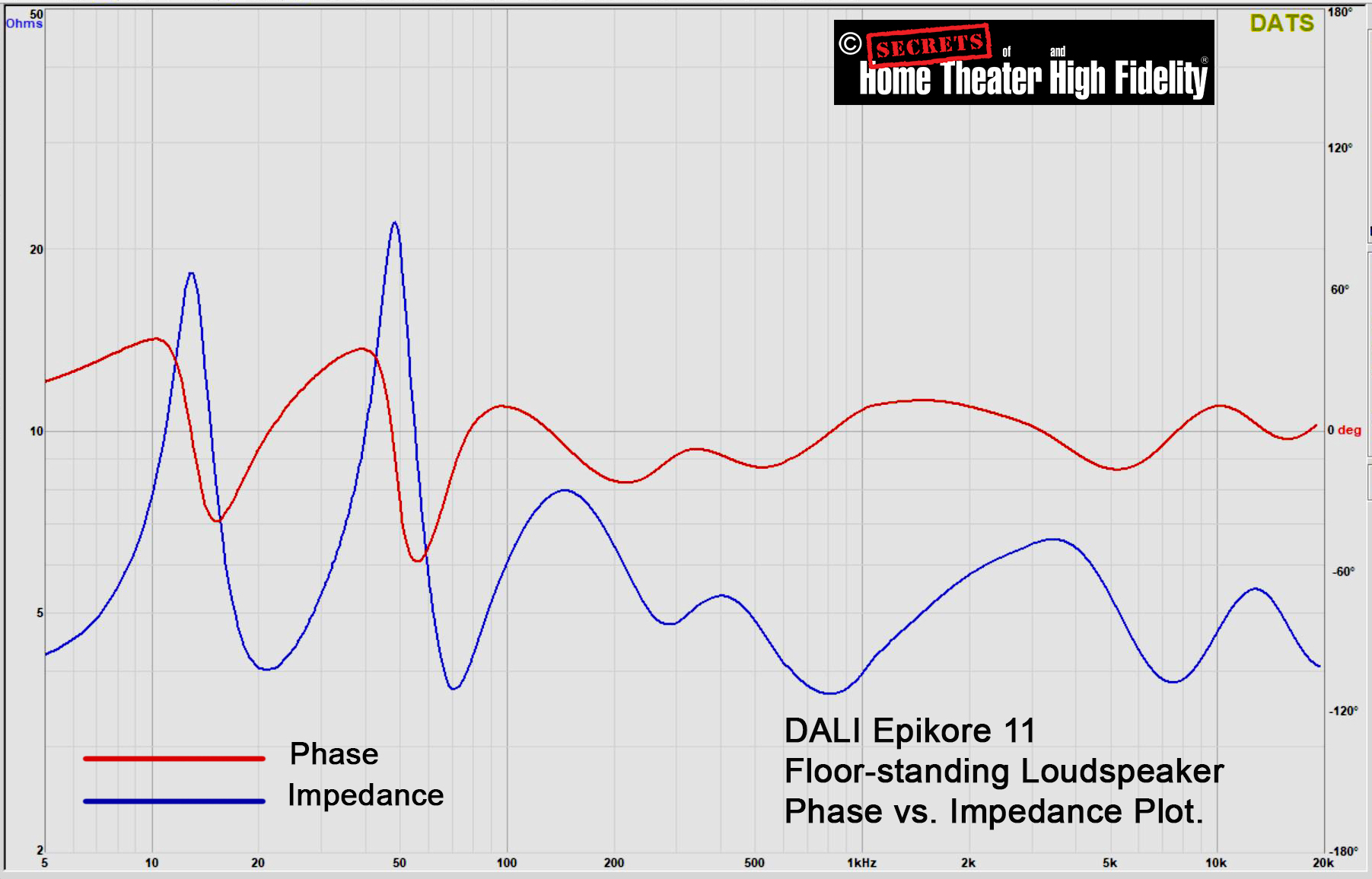
Here we have the Impedance sweep for the DALI Epikore 11. The results show that the speaker remains below 5 Ohms from 18 Hz to 29 Hz, from 60 Hz to 90 Hz, from 250 Hz to 1500 Hz, from 5.2 kHz to 11 kHz, and from 16 kHz to 20 kHz. There are peaks as high as 17 ohms at 14 Hz and 23 Ohms at 48 Hz, respectively. The speaker hits an impedance low of 3.7 Ohms at 70 Hz and 800 Hz. The DALI Epikore 11 specifications rate its nominal impedance as 4 ohms, which is quite accurate.
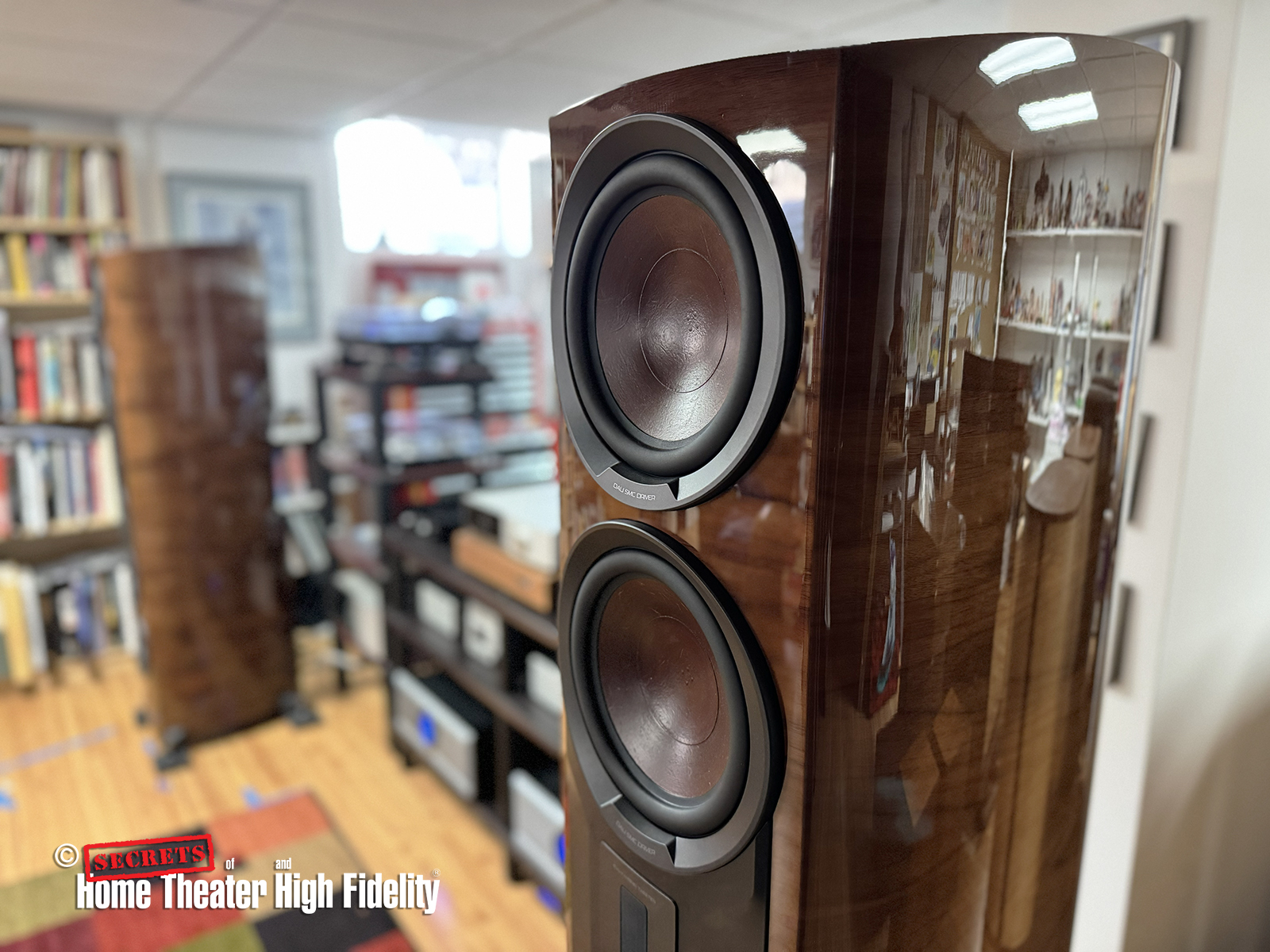
The DALI Epikore 11 is one of my favorite speakers that I’ve reviewed this year. Their combination of stellar sonics and drop-dead good looks makes them a truly desirable, almost crave-able, luxury audio product.
- A combination of tonal balance and effortless imaging that flatters just about any music.
- One of the most beautiful finishes that I have ever seen on a loudspeaker.
- Powerful bass.
- Dynamic as all get out. I could not stop listening to them.
- For the price? An active iteration.
- A pair under my Christmas tree. Hey, a guy can dream!
There is no questioning that the DALI Epikore 11 are a superb-sounding pair of loudspeakers. Transparent, revealing, along with being almost insanely musical, and relentlessly appealing to listen to. They have just enough of a sonic personality to them to draw you in, yet not become tiresome or boring. You need to have the right room for them, though, because perceived bass output almost borders on the absurd (not that I minded at all). Much of the driver, crossover, and design behind the Epikore 11 are directly taken or adapted from DALI’s flagship Kore speakers, so the purely Danish R&D and craftsmanship involved here are tried, true, and essentially peerless. But beyond sounding wonderful, they also looked outrageously beautiful in the high gloss walnut finish that I experienced. For me, they legitimately crossed that realm into being an object of desire. It’s as if a Dane and an Italian got together and had an extremely pretty yet surprisingly sensible baby with a beautiful singing voice.
I know I’m hooked when thoughts of a modest level of criminality enters the mind as a completely reasonable option in “acquiring” said speakers. But I digress.
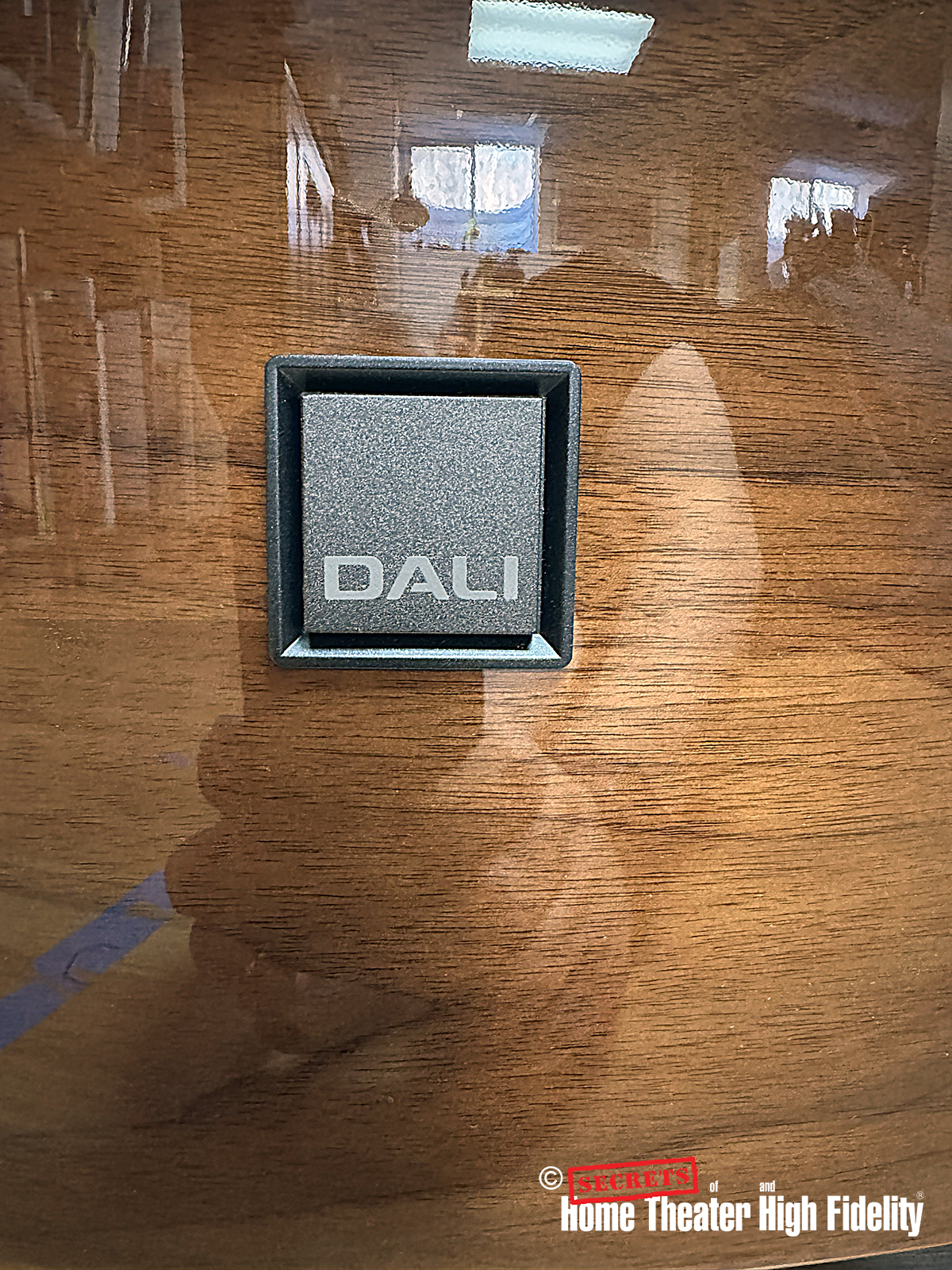
At roughly $75K for the pair, people can argue about whether that is too expensive for what a passive pair of loudspeakers can deliver, but I think that misses the point. The Epikore 11s are a luxury HiFi product, and they truly look, feel, and sound like it. DALI produces many other very fine speakers (including smaller Epikore and Rubikore variants) for us mere mortals. However, if your bank account is sufficiently padded and you are suitably driven to entertain a pair of loudspeakers in this sphere, you owe it to yourself to seek out a set of Epikore 11 and spend some quality time with them. Get to know their sonic and visual charms. You might just become as smitten with them as I was!