 YouTube
 Facebook
 X
X LinkedIn
 Pinterest
 Instagram

 John E. Johnson, Jr.
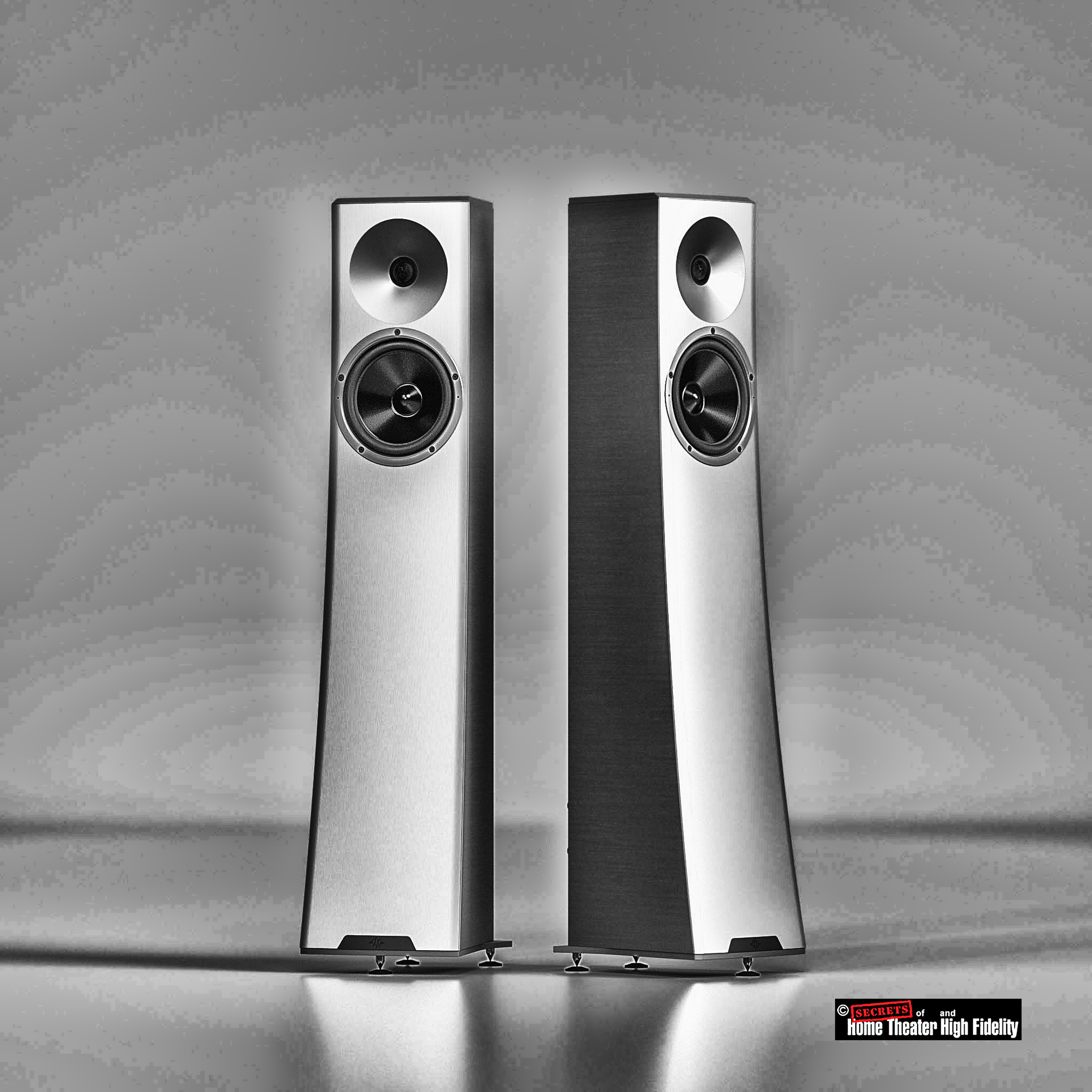
YG ACOUSTICS CARMEL 3 FLOORSTANDING SPEAKERS
- All aluminum enclosures
- Custom-designed silk-dome tweeter and aluminum mid-woofer
- Wide dispersion characteristics
The YG Acoustics Carmel 3 occupies a rarefied corner of high-end loudspeaker design where cutting-edge engineering, meticulous materials science, and sculptural industrial aesthetics converge. Made entirely from solid, aircraft-grade aluminum, the enclosure is not merely inert; it is a structural statement. Machined to tolerances more often seen in aerospace components than in consumer audio, the cabinet provides a level of rigidity and resonance control that wood-based designs struggle to approach. This monocoque metal structure virtually eliminates panel flex, significantly reduces stored energy, and creates an acoustically “black” background against which fine musical detail can emerge unmasked. In an era when many manufacturers rely on wood-based materials or composites, YG opts for a more demanding and cost-intensive path: start with a block of metal and extract everything that isn’t music.
Complementing this engineering-driven enclosure is the Carmel 3’s refined soft-dome high-frequency driver, a custom-built silk-dome tweeter developed to harmonize with the speaker’s ultra-rigid cabinet and precision-machined waveguides. While aluminum and beryllium tweeters often dominate discussions at this price point, YG’s choice of silk is deliberate. The organic damping properties of a well-designed textile diaphragm deliver a sweetness and tonal continuity that can be difficult to achieve with stiffer diaphragms, while still maintaining impressive transient accuracy. In the Carmel 3, this tweeter works in concert with YG’s machined mid-bass driver and proprietary crossover architecture to create a seamless, low-distortion handoff from top to bottom. Together, the machined aluminum enclosure and silk-dome tweeter form the foundation for a speaker that aims not just for precision, but for musicality of the highest order, a fusion of metallurgy and craftsmanship that defines YG’s approach to modern loudspeaker design.
SPEAKER TYPE:
2-way passive floor-standing loudspeaker
DRIVERS:
26 mm (1”) proprietary YG Lattice hybrid tweeter with advanced airframe
18.5 cm (7.25”) proprietary YG aluminum cone mid-bass driver with advanced neodymium motor magnets
CROSSOVER:
Ultracoherent circuit with crossover at 1.75 kHz
Exceptional phase alignment: ±5° relative phase between drivers from 700 Hz to 3.3 kHz, covering the entire range where driver relative output is within 25 dB
Optimized for phase alignment, phase slope, and transient response
Custom capacitors, including pure metal foil models
Advanced resistors, including foil resistors for exceptional imaging and transient response
Advanced resonance-damped inductors
Computationally optimized layouts to minimize component interactions
FREQUENCY RESPONSE:
Usable output extends from 32 Hz to 40 kHz
Exceptionally low distortion throughout their range
Excellent pair matching
SENSITIVITY:
87 dB
IMPEDANCE:
6 Ohms average
3.2 Ohms minimum
DIMENSIONS:
103 × 23 × 31 cm (H × W × D)
41 × 9 × 13” (H × W × D)
WEIGHT:
39 kg per speaker
85 lbs. per speaker
FINISHES:
Standard finishes are silver and black. Custom finishes available.
MSRP:
$29,800/Pair USD
Website:
Company:
SECRETS Tags:
YG Acoustics, Carmel 3, Floor-standing Speakers, Floor-standing
Secrets Sponsor
The Carmel 3 is part of YG Acoustics’ Reference series, a lineup conceived to push the limits of linearity, dynamic integrity, and transient accuracy. True to the company’s engineering-first philosophy, the loudspeaker is built around advanced materials and computational design methodologies intended to minimize all forms of mechanical, electrical, and acoustic distortion.
At its core, the Carmel 3 is a compact two-way floor-standing loudspeaker whose architecture borrows heavily from YG’s flagship XV, Sonja, and Hailey platforms. The cabinet is fully machined from high-grade aerospace aluminum billets, a process performed in-house to extremely tight tolerances. Our Editor-In-Chief, Carlo Lo Raso, observed this process first-hand during his YG Acoustics factory visit. This monocoque structure is engineered to maximize stiffness, reduce modal behavior, and create a neutral enclosure with minimal stored energy. Final assembly is performed by hand at YG’s Colorado and Cambridge facilities, ensuring consistent mechanical alignment and driver coupling.
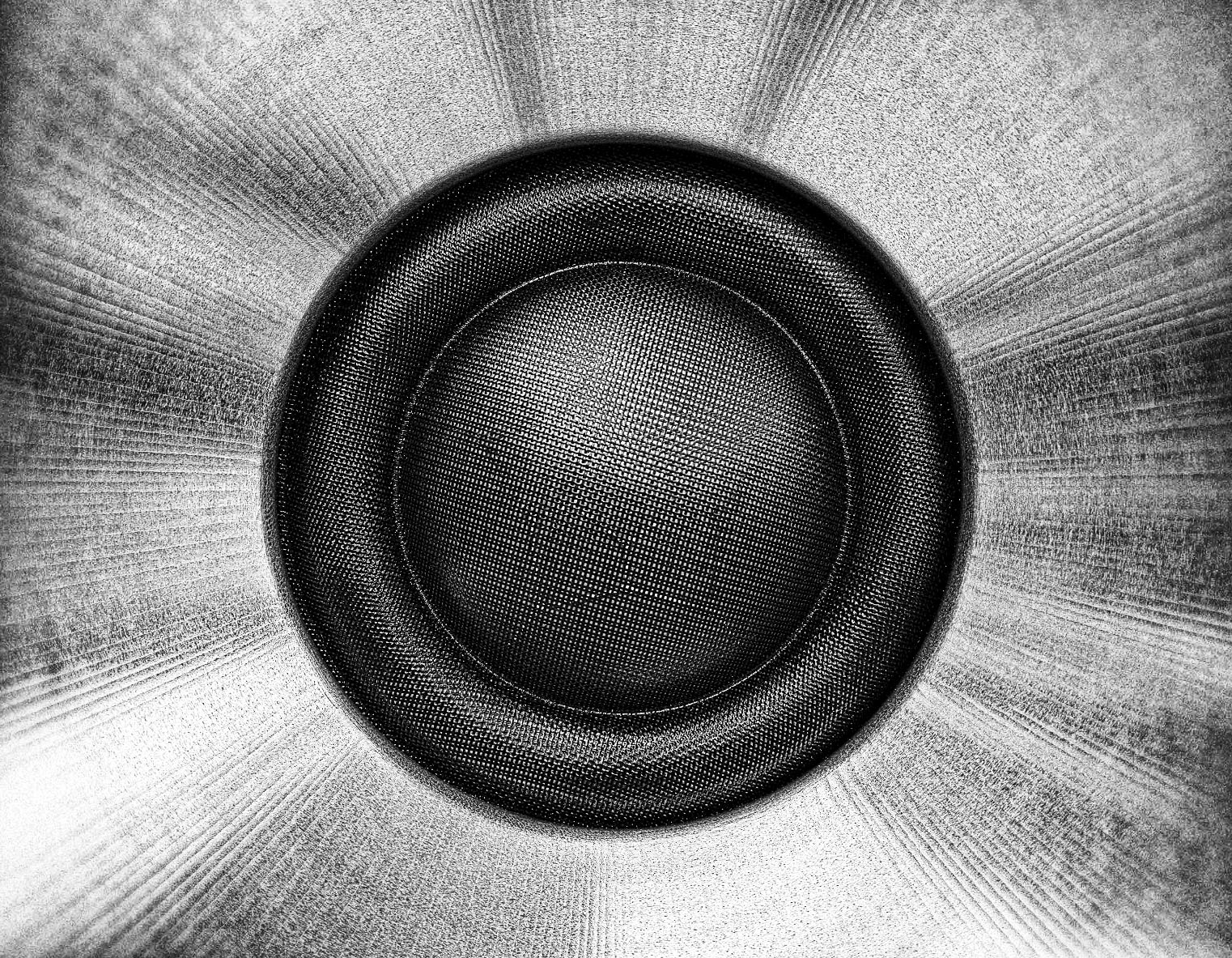
Several components in the Carmel 3 introduce third-generation technology derived from new theoretical models and multi-domain simulations (mechanical, electrical, and acoustical). The silk dome tweeter is a newly developed hybrid Lattice design, employing a precision-machined (almost impossibly thin) star-shaped airframe fabricated from a specialized aerospace alloy.
This geometry is engineered to suppress resonance modes while maintaining exceptionally low mass, yielding low distortion over a wide bandwidth and enabling broad, uniform dispersion. In the photo below, you can see the outline of the lattice behind the tweeter dome. It is shaped like a star.
The tweeter is horn-loaded and features engraved radial lines on the horn.
A horn-loaded tweeter is a high-frequency driver whose diaphragm (the part that vibrates to make sound) is coupled to a horn or waveguide, a flared, funnel-shaped structure that controls how the sound spreads and increases its efficiency.
1. Basic Structure
A horn-loaded tweeter combines:
The horn can be made of metal, composite, or molded polymer. Its geometry, throat diameter, flare rate, and mouth size determine its acoustic behavior.
2. How it Works
Without a horn, a bare tweeter directly radiates sound into the air. However, air is a much lighter medium compared to the stiff diaphragm, so only a small part of the diaphragm’s movement turns into sound pressure.
The horn acts as an acoustic transformer:
That’s why horns are much louder per watt; they can achieve 100–110 dB SPL with only 1 watt, while a direct-radiating dome tweeter might be 88–92 dB.
3. Acoustic Effects and Benefits
| Advantage | Explanation |
| High efficiency | Converts more of the driver’s motion into acoustic output. |
| Controlled directivity | The horn’s shape controls how sound spreads (narrow beam for long throw, wide beam for home use). |
| Reduced diaphragm excursion | The horn amplifies the sound pressure, so the diaphragm moves less, lowering distortion. |
| Improved dynamic range | Because of efficiency and reduced excursion, it can play louder before compressing or distorting. |
4. Trade-offs
Horn loading also introduces some design challenges:
| Limitation | Description |
| Potential coloration | If the horn flare or throat isn’t shaped smoothly, reflections cause resonances and “horn coloration.” |
| Size and aesthetics | True low-frequency horns must be physically large; even tweeter horns can be visually dominant. |
| Complex integration | The horn amplifies the sound pressure, so the diaphragm moves less, lowering distortion. |
5. Modern Variations
● Compression drivers: Used in professional PA and cinema systems, often coupled to exponential or tractrix horns.
6. In this Context
In a crossover network like the Carmel 3 speaker has:
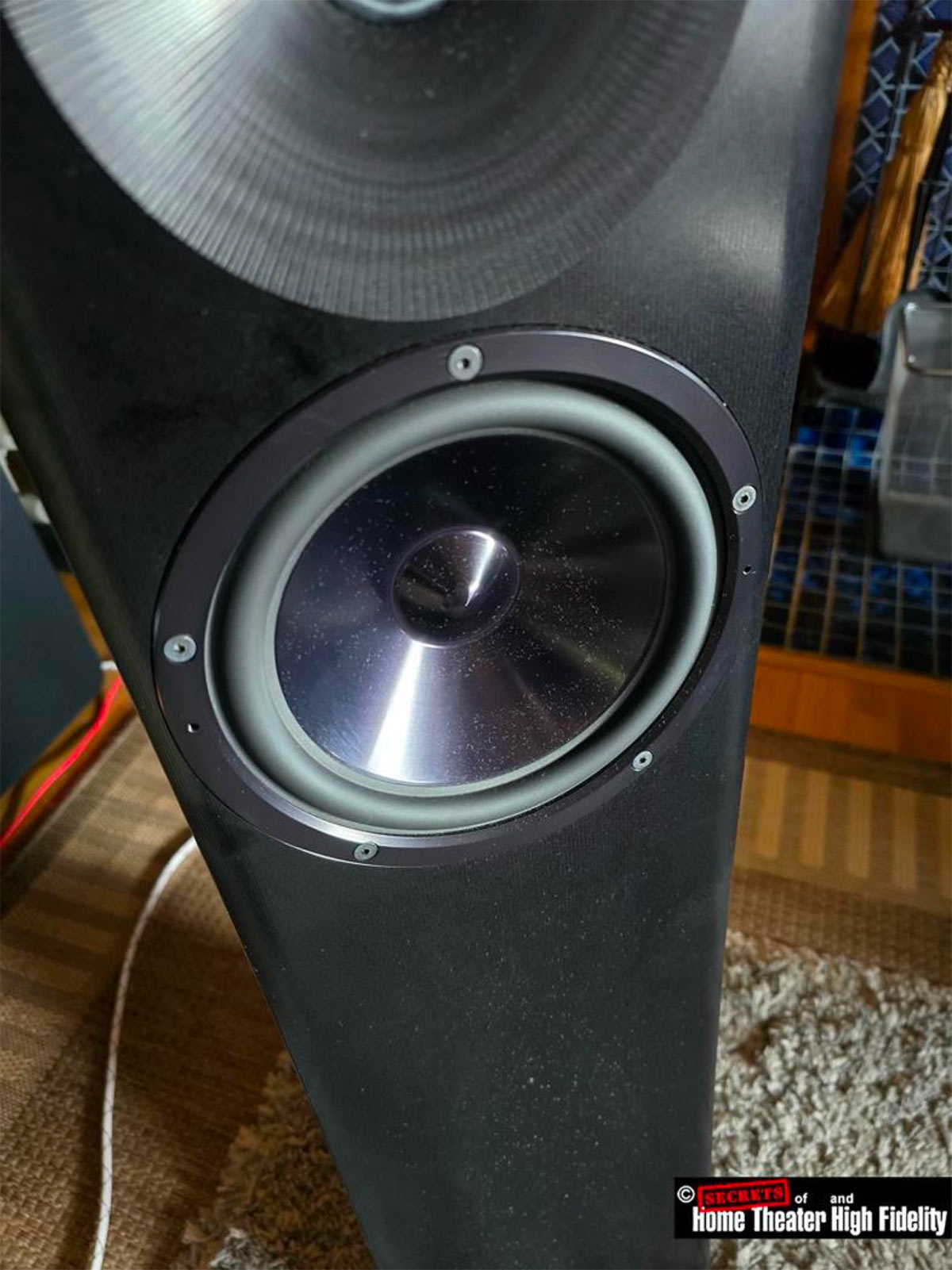
The mid/bass (woofer) unit is an 18 cm (7.25-inch) driver featuring a high-flux neodymium motor system and a proprietary YG-machined aluminum diaphragm. Its combination of low moving mass, high stiffness, and a powerful motor aims to reduce nonlinear distortion, enhance transient response, and ensure controlled pistonic movement throughout its operating range.
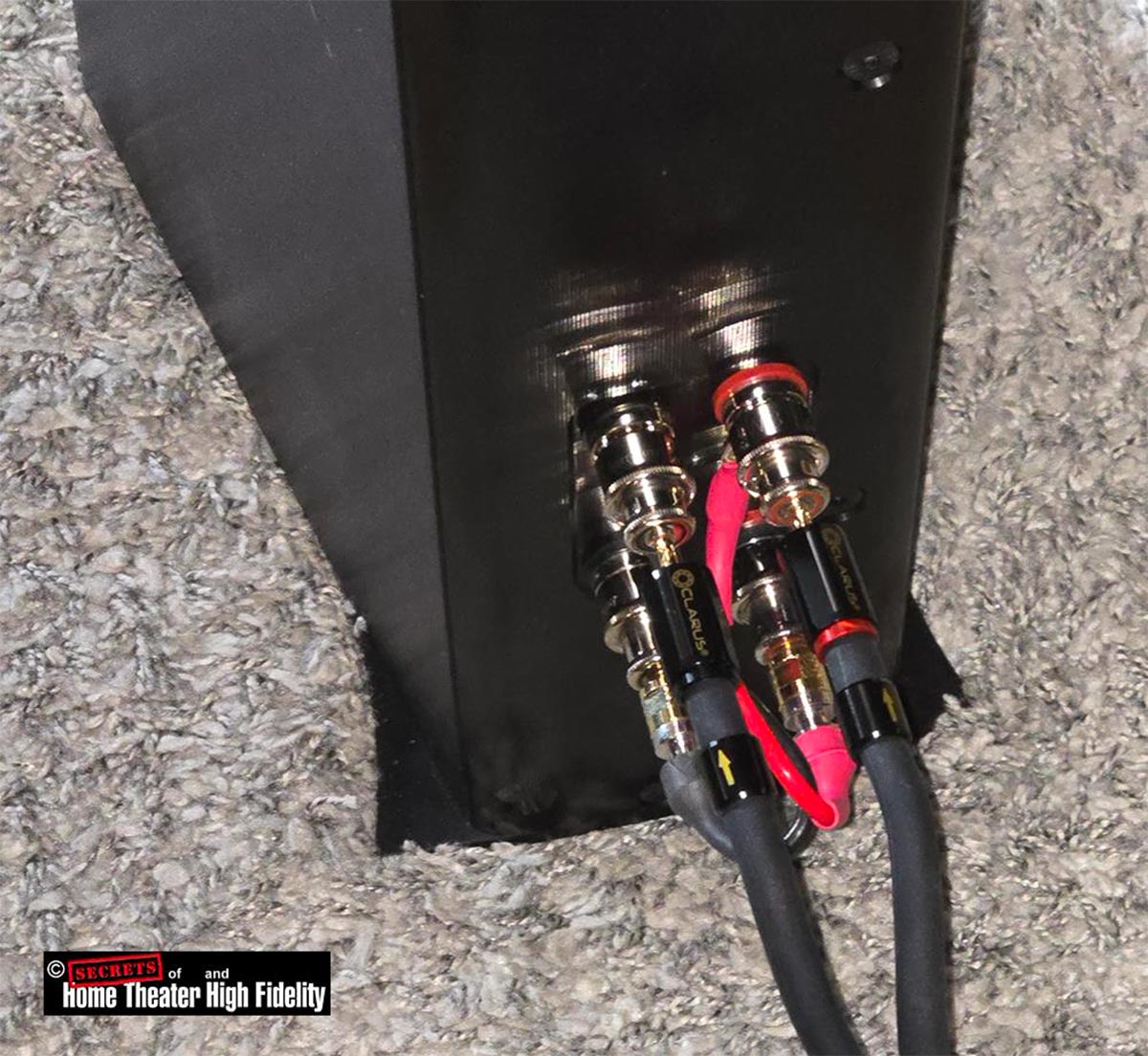
There are two sets of banana jacks on the rear for bi-amping or bi-wiring. Otherwise, you connect the set of included jumper cables as seen in the photo below.
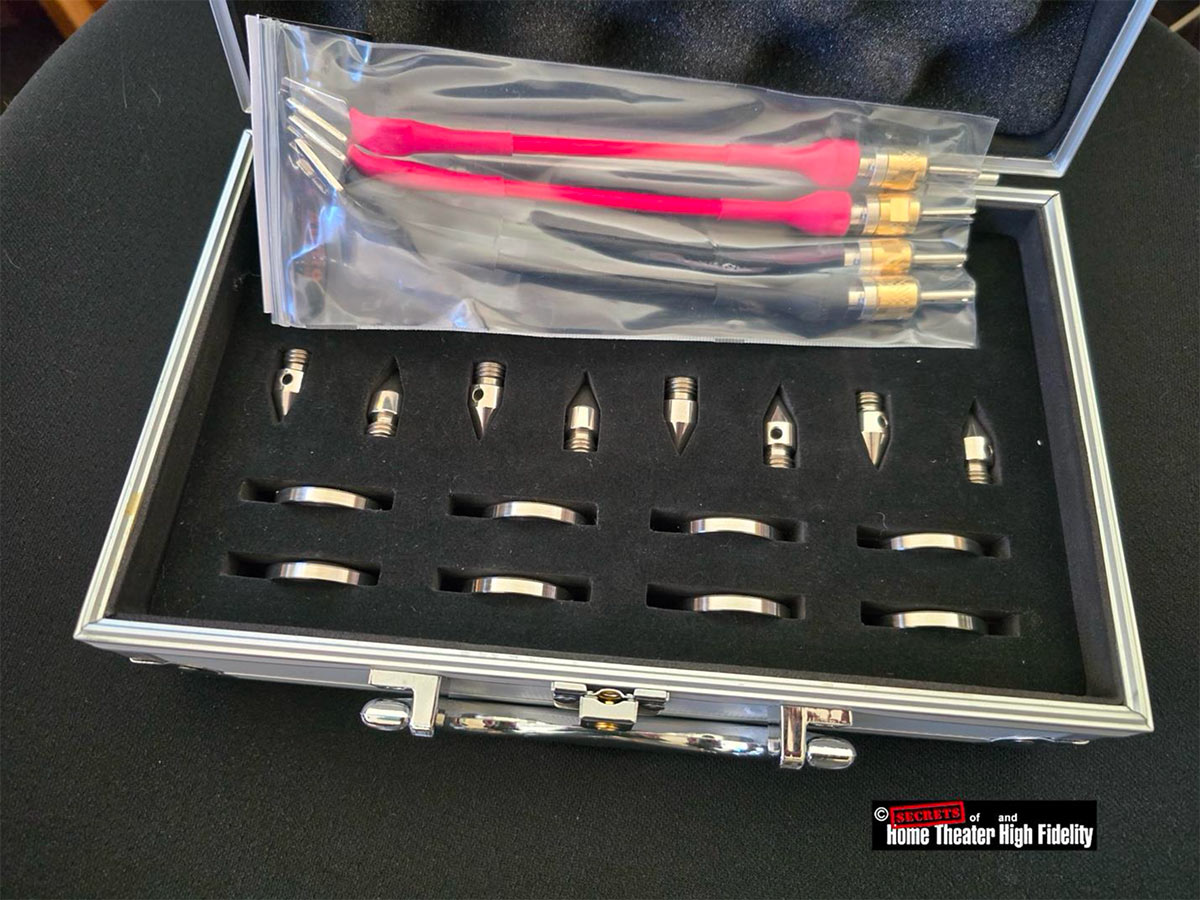
A set of spikes comes with the speakers in a very nice metal case, which also has the jumper cables.
Crossover duties are handled by YG’s third-generation Ultracoherent™ network, developed through extensive simulation of electrical, acoustical, and mechanical interactions. This topology is designed to preserve phase coherence and maintain uniform power response, contributing to the speaker’s ability to reproduce microdetail and macrodynamic events with minimal loss or coloration.
The Carmel 3 crossover network is very interesting. It has as many components outside the signal path as inside. These outside components “assist” indirectly. I count 10 inductors and 11 capacitors.
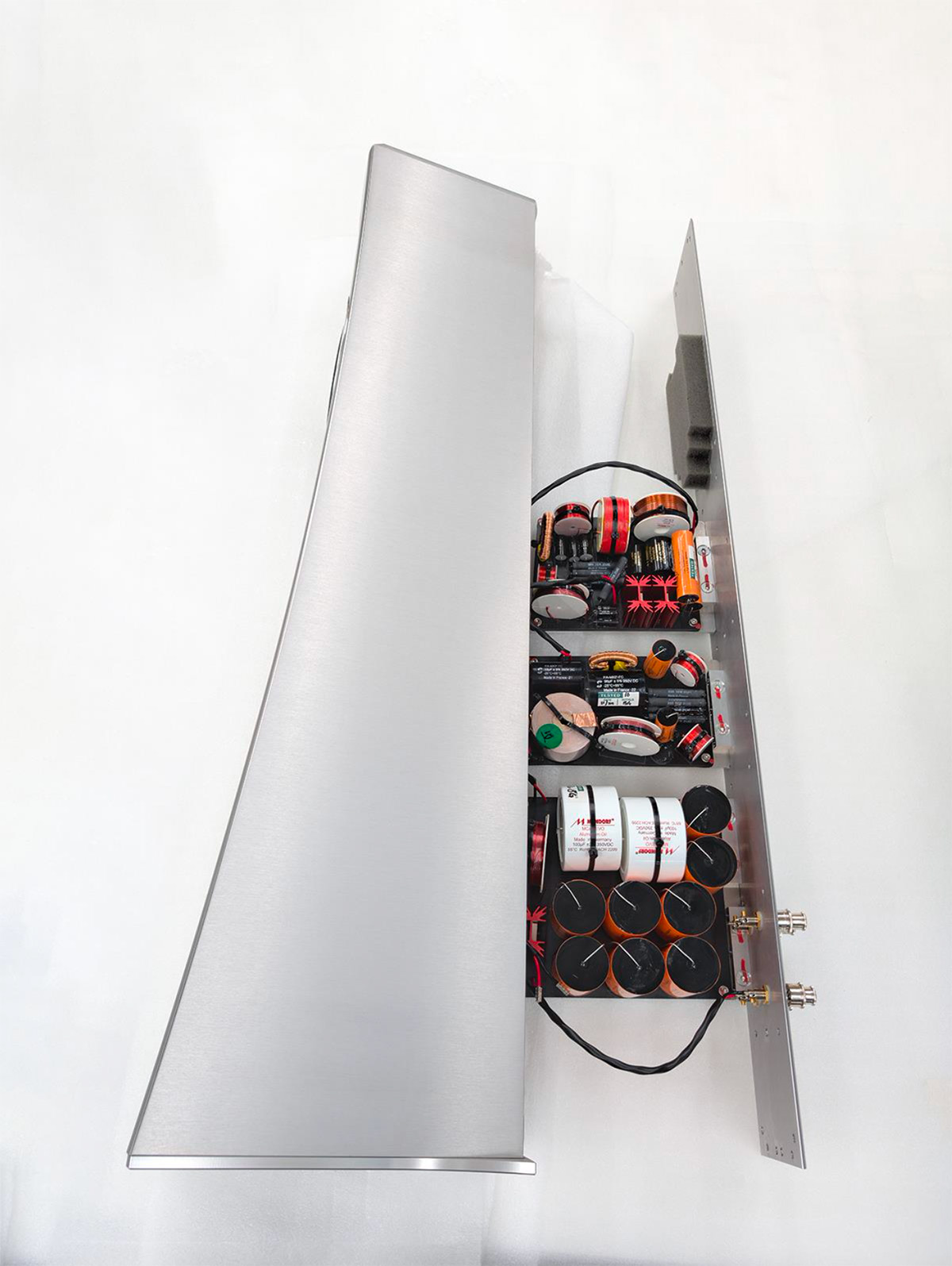
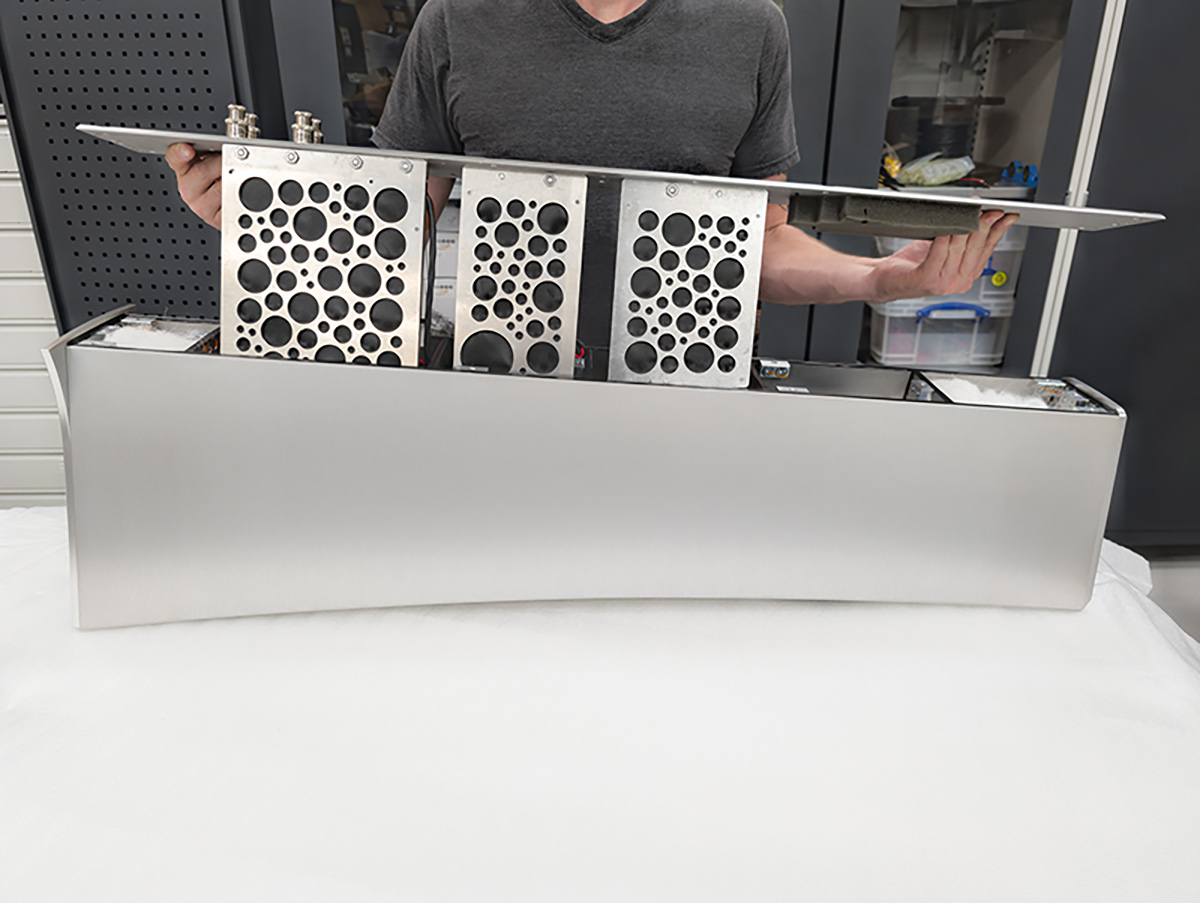
According to the team at YG:
“The Swiss cheese-looking plates and damping pad on the back of the crossover sections are another trick up the Carmel crossover’s sleeve. There is a combination of computer-guided wave scattering and a bit of limp membrane absorption there. The crossover sections themselves are also isolated at the mounting bracket from the cabinet. YG’s circuit board material is also proprietary, with excellent midrange damping characteristics (a laminate of many layers) and an extremely low dielectric constant at very high frequencies. The traces follow shapes guided by simulation, which eschew 90-degree angles (and the corresponding eddy currents from the extra conductor material in a right turn) where it matters to the circuit, and the traces are machined from a thick layer (twice as thick as older YG traces) of copper, which the CNC machines remove from the board material.”
This is a meaningful (and often misunderstood) claim in speaker-crossover design. When a manufacturer says many components are present but only a few are “in the signal path,” they mean that some components do not directly carry the main audio current to the driver terminals, but still influence the circuit’s behavior in beneficial ways.
In sum, the Carmel 3 is a handsome, visually minimalist loudspeaker that uses advanced design and manufacturing technologies to deliver a sound that is larger and more refined than its modest size might indicate.
Secrets Sponsor
I listened to the YG Acoustics Carmel 3 Speakers with my laptop delivering a digital music stream via Qobuz, a Lynx E22 Laboratory Soundcard (XLR balanced outputs), a Pass Labs XP-20 Preamplifier, and a Classé CA-5200 Power Amplifier. Cables were Clarus.
Here is my standard set of albums from which I choose several for any one review.

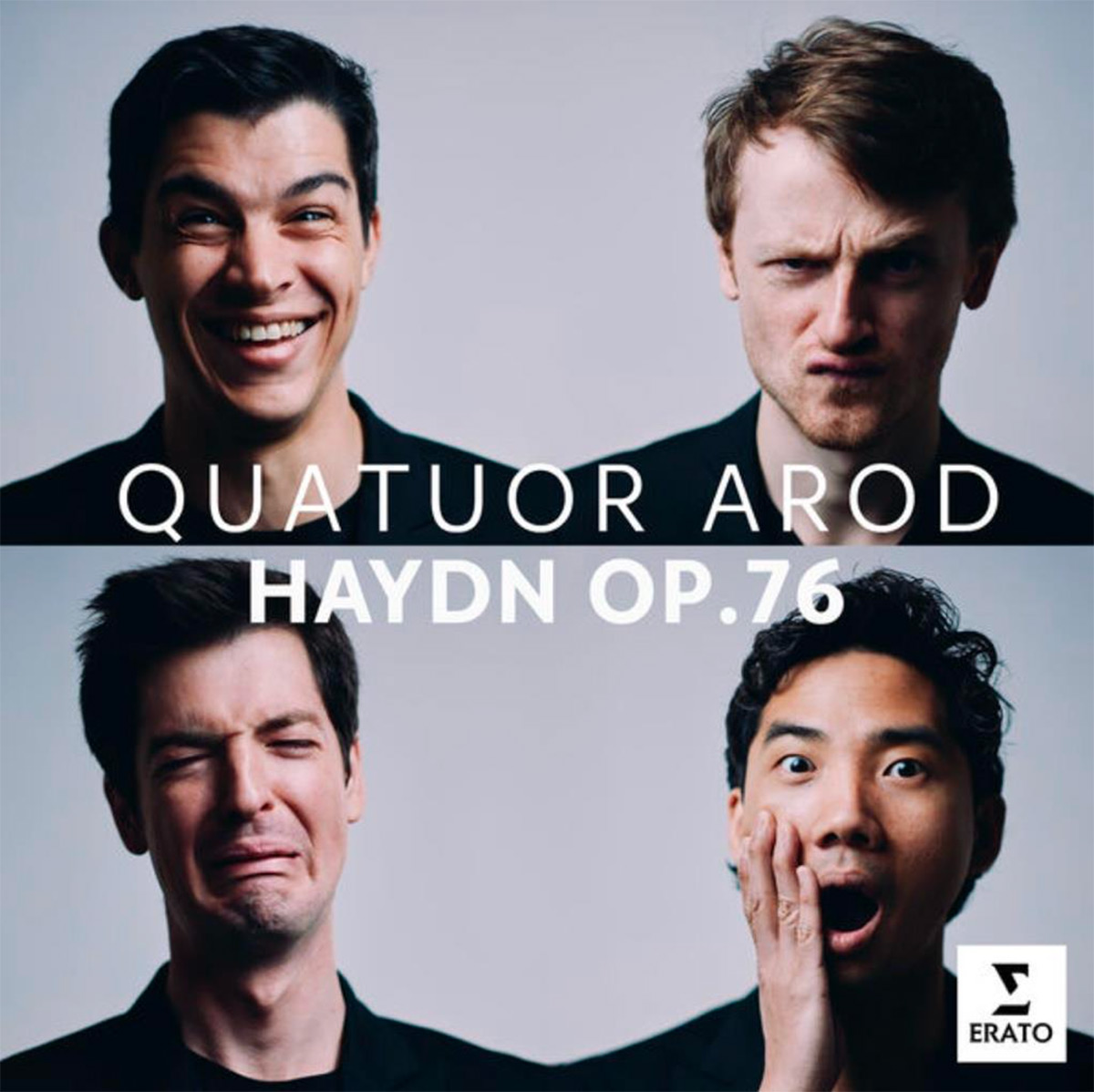
Quatuor Arod, Joseph Haydn, “Haydn: String Quartets Op. 76”
Before I received the shipment of speakers, I heard a rumor that the Carmel 3’s sound a bit edgy. I did not find that rumor to be true, at least for me in my listening environment. They sounded warm and inviting. I subsequently found out why when I ran the bench tests.
Haydn is always a good choice in the classical realm. This new album is an example. A quartet of strings can be harsh, but they certainly aren’t that way when played on the Carmel 3’s.
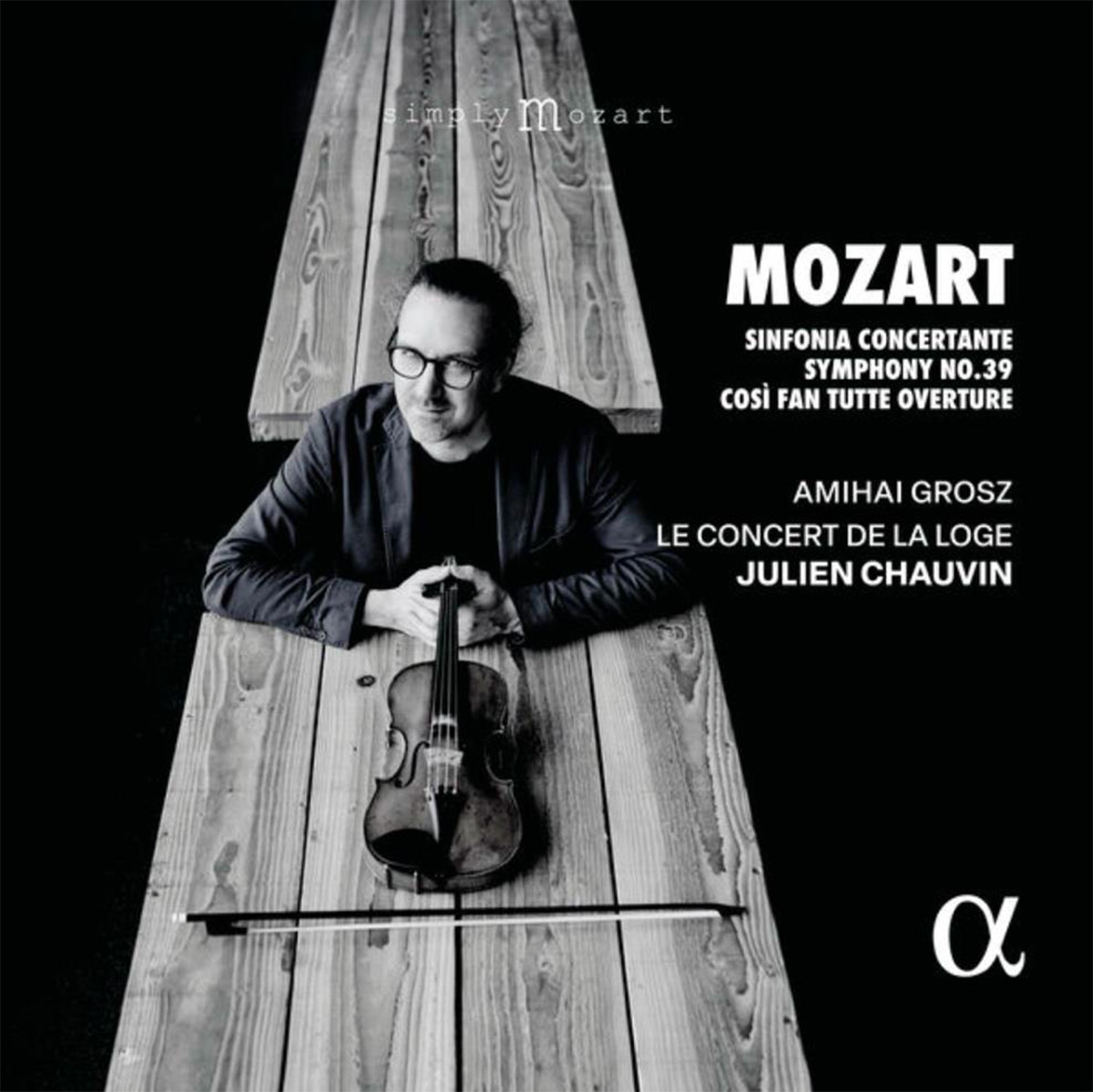
Amihai Grosz, Julien Chauvin, Le Concert de la Loge, “Mozart: Sinfonia Concertante, Symphony No. 39 & Così Fan Tutte Overture”
Moving from string quartets to orchestra, Mozart’s Symphony No. 39 tests a system’s ability to present a lot of instruments at the same time. Perhaps speakers have the most difficult time because they depend on laws of physics as well as electronics. The Carmel 3’s do the job well. Forceful, but retaining the warmth.

Chet Baker, “Cool Burnin’ with the Chet Baker Quintet”
Played through the YG Acoustics Carmel 3, Cool Burnin’ with the Chet Baker Quintet (originally released in 1997) becomes a masterclass in how a loudspeaker can reveal nuance without sacrificing warmth. The Carmel 3’s aluminum cabinets and silk-dome tweeter present Baker’s trumpet with a striking blend of bite and liquidity—every breath attack and taper clearly floats, never turning brittle. The speaker’s exceptional transient precision allows the quintet’s rhythmic interplay to lock into place, especially the subtle ride-cymbal figures and the round, relaxed bass lines. What stands out most is the Carmel 3’s ability to scale: the intimate studio atmosphere feels close and smoky, while solos emerge into the room with effortless dynamic bloom. This pairing delivers the album at its most natural, intimate, and luminous.

Horace Silver, “Silver in Seattle: Live at the Penthouse”
This album, Horace Silver – Silver in Seattle, Live at the Penthouse, is an old one (1965), but it shone as brightly as it could. Playing a modestly recorded album is a good test, and the Carmel 3’s passed.

Colter Wall, “Memories and Empties”
I’m not a fan of Country/Western music, but I find an occasional album, like this one by Colter Wall, that suits my fancy, and the Carmel 3’s made it even more enjoyable.

Carrie Underwood, “Some Hearts: 20th Anniversary Edition”
On the female side of Country/Western, Carrie Underwood is a natural. If a speaker is heavy on the third-ordered harmonics, even a soft voice like hers can sound irritating, but that was not the case here.
Overall, I found the YG Acoustics Carmel 3 Speakers to be tight, warm, and without much really deep bass. I thought perhaps there might be more bass, since the driver is 7-1/2”, but the speakers are not tuned that way. I listen to a lot of classical pipe organ, so I would definitely pair a good subwoofer with these speakers if they were part of my sound system. In the midrange and treble, though, the Carmel 3’s perform extremely well.
Particularly noteworthy is that the silk-dome tweeter keeps high violin notes, yes, silky smooth and voluptuous. For example, Anne Akiko Meyers’ Mirror-in-Mirror album is my go-to music for this specific test, and it was so easy to listen to with the Carmel 3’s.
The violin produces significant amounts of odd-ordered harmonics, but with an important nuance: it produces both odd and even harmonics, and the balance between them varies with bow pressure, bow speed, note, and playing technique.
If any component in the hi-fi audio chain produces significant amounts of odd-ordered harmonics, the addition of these harmonics on top of existing odd-ordered harmonics from the musical instruments – such as the violin – would make the sound harsh.
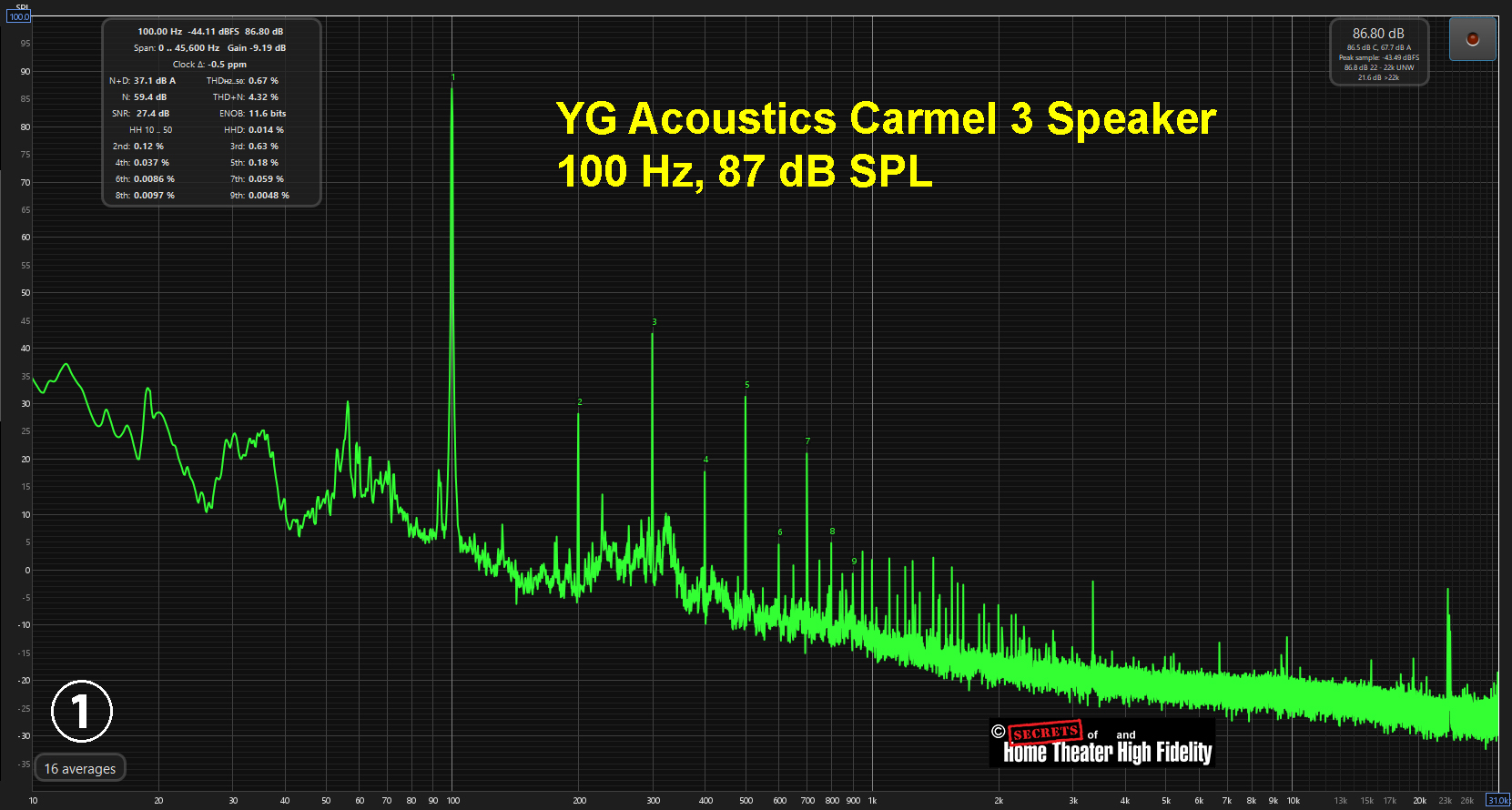
Let’s start with a 100 Hz sine wave (Figure 1). THD was 0.67%, which is not bad for 87 dB SPL. The 3rd-ordered harmonic is predominant.
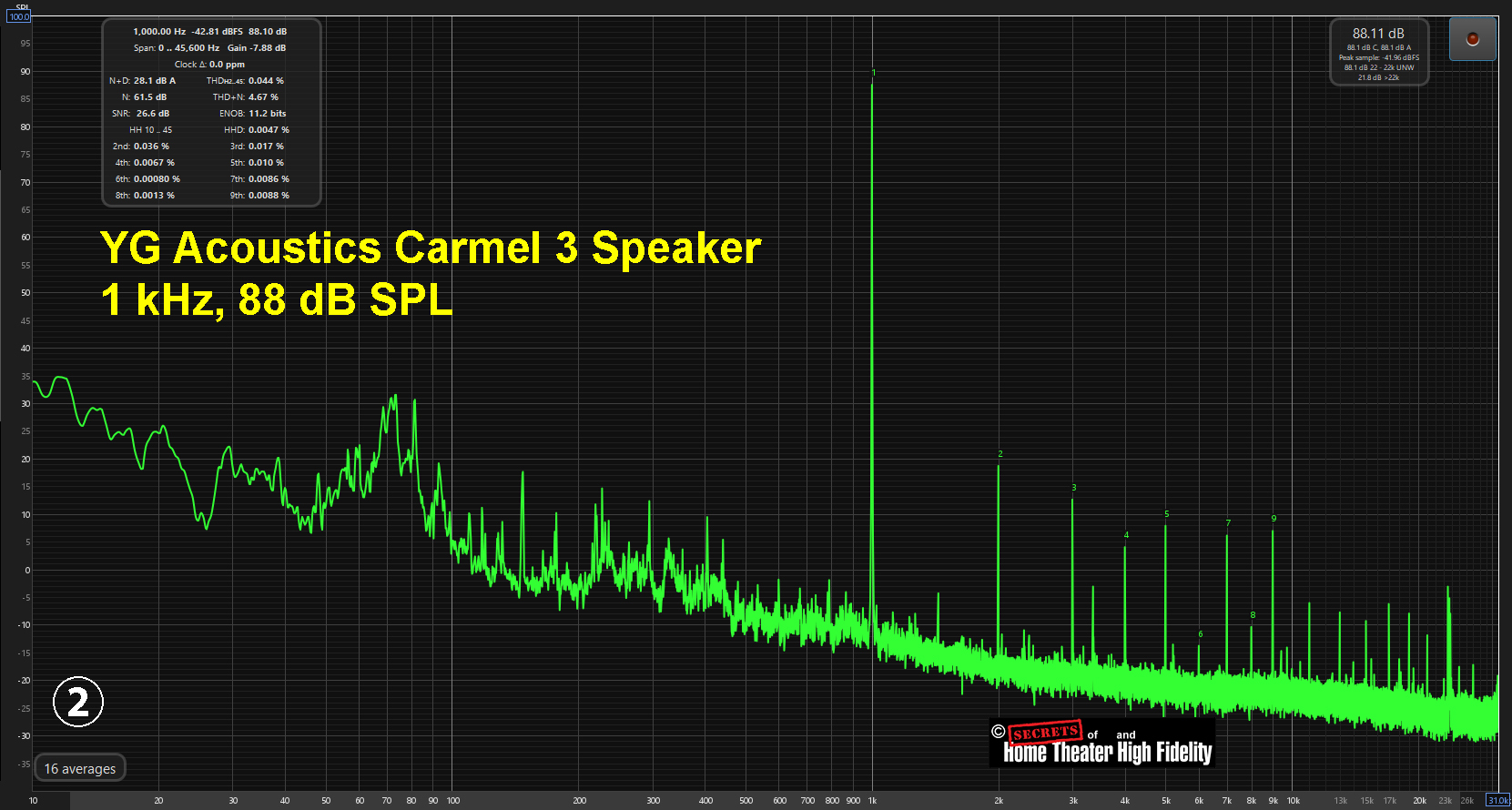
At 1 kHz (Figure 2), THD was only 0.04%, and now the 2nd-order harmonic is the main one. We are still within the mid/woofer’s range, as the crossover point is 1.75 kHz.
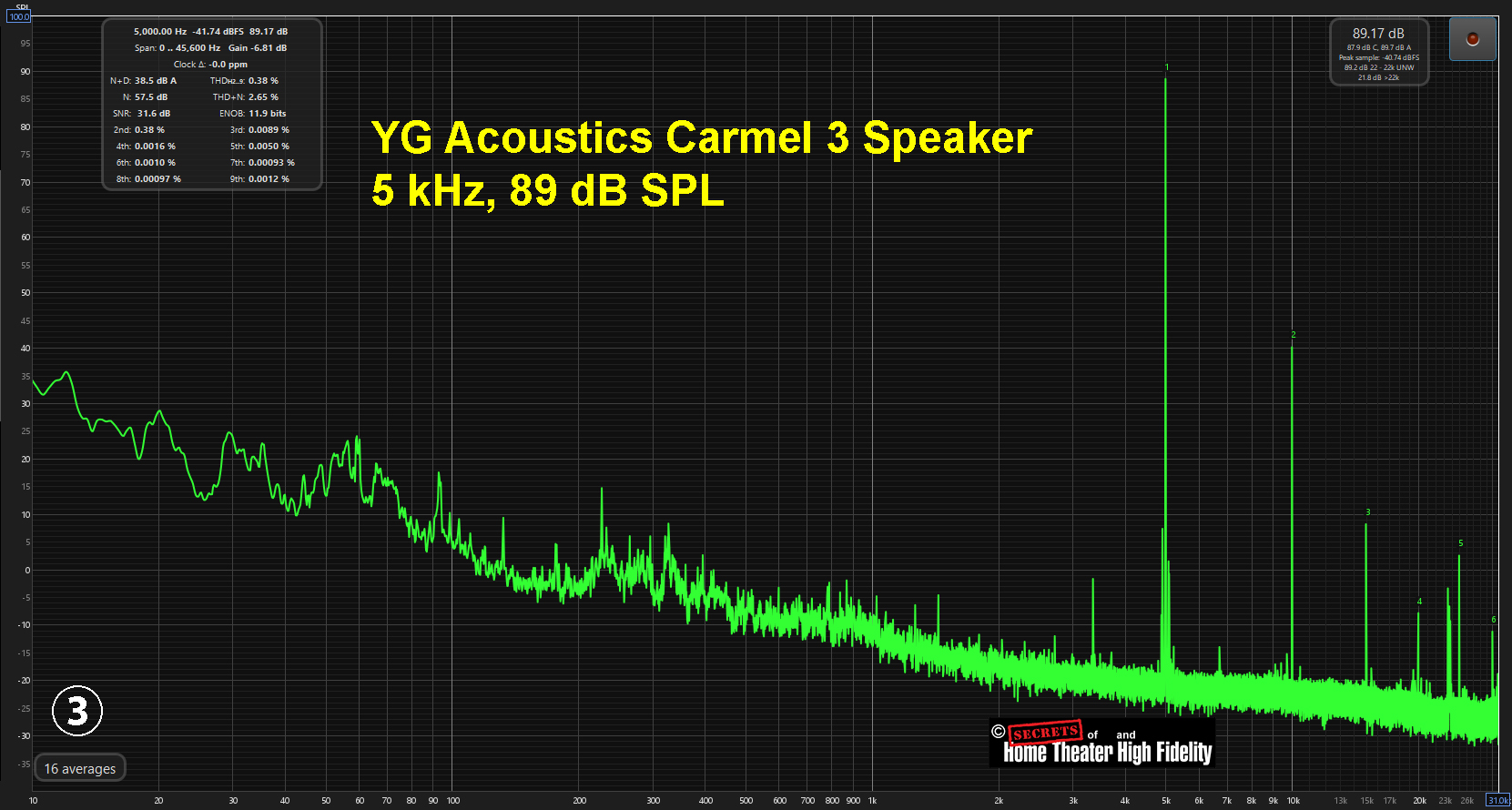
At 5 kHz (Figure 3), we are in the tweeter’s output range. It produces 89 dB SPL with 0.38% THD. Keep in mind that for speakers, I don’t use THD+N because the background noise in my listening room is about 35 dB SPL. Here, again, the 2nd-ordered harmonic dominates by a large margin. This contributes to the warm, sweet sound I mentioned.
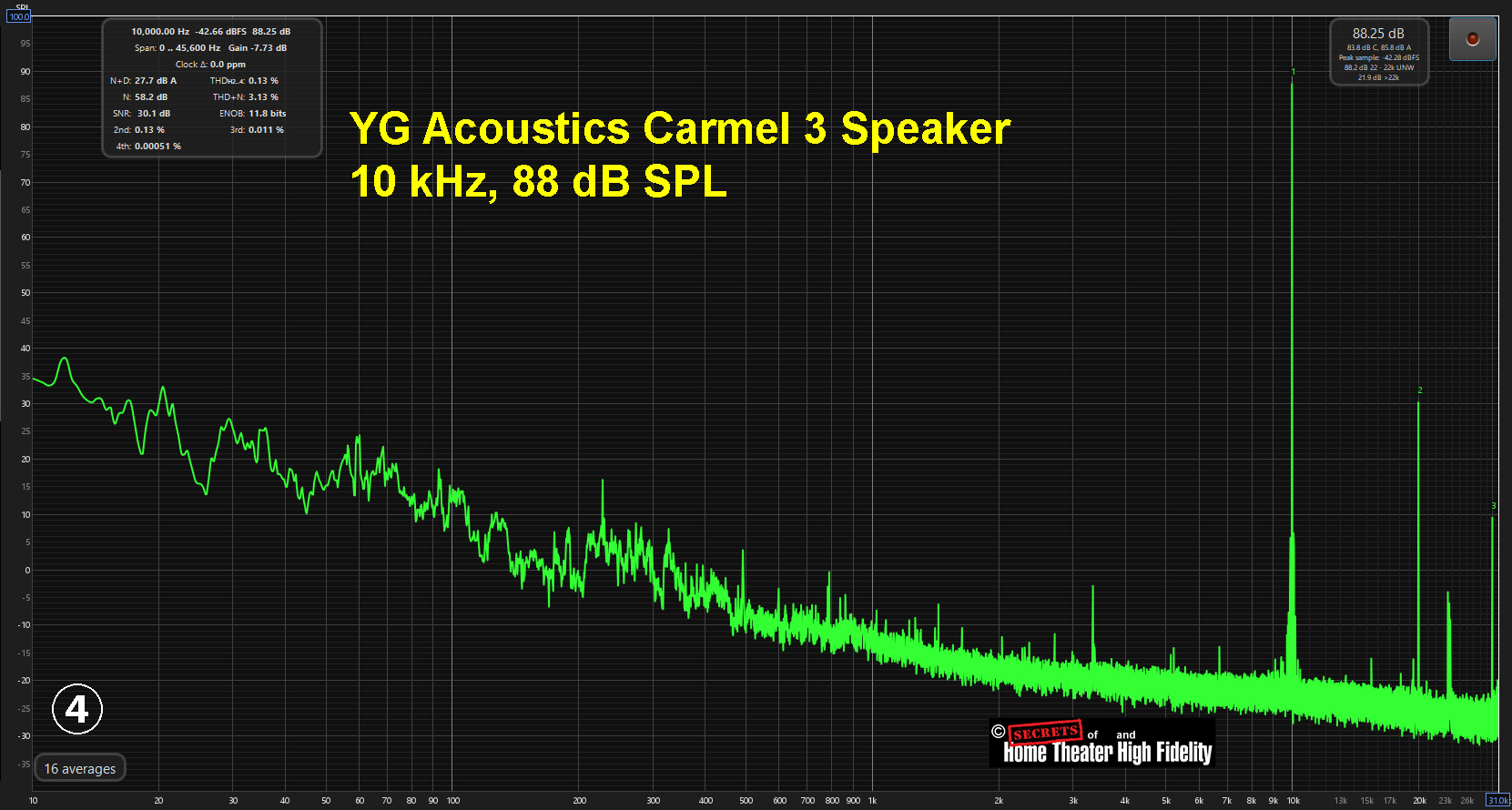
And at 10 kHz, 88 dB SPL. THD was 0.13%, mostly 2nd-ordered.
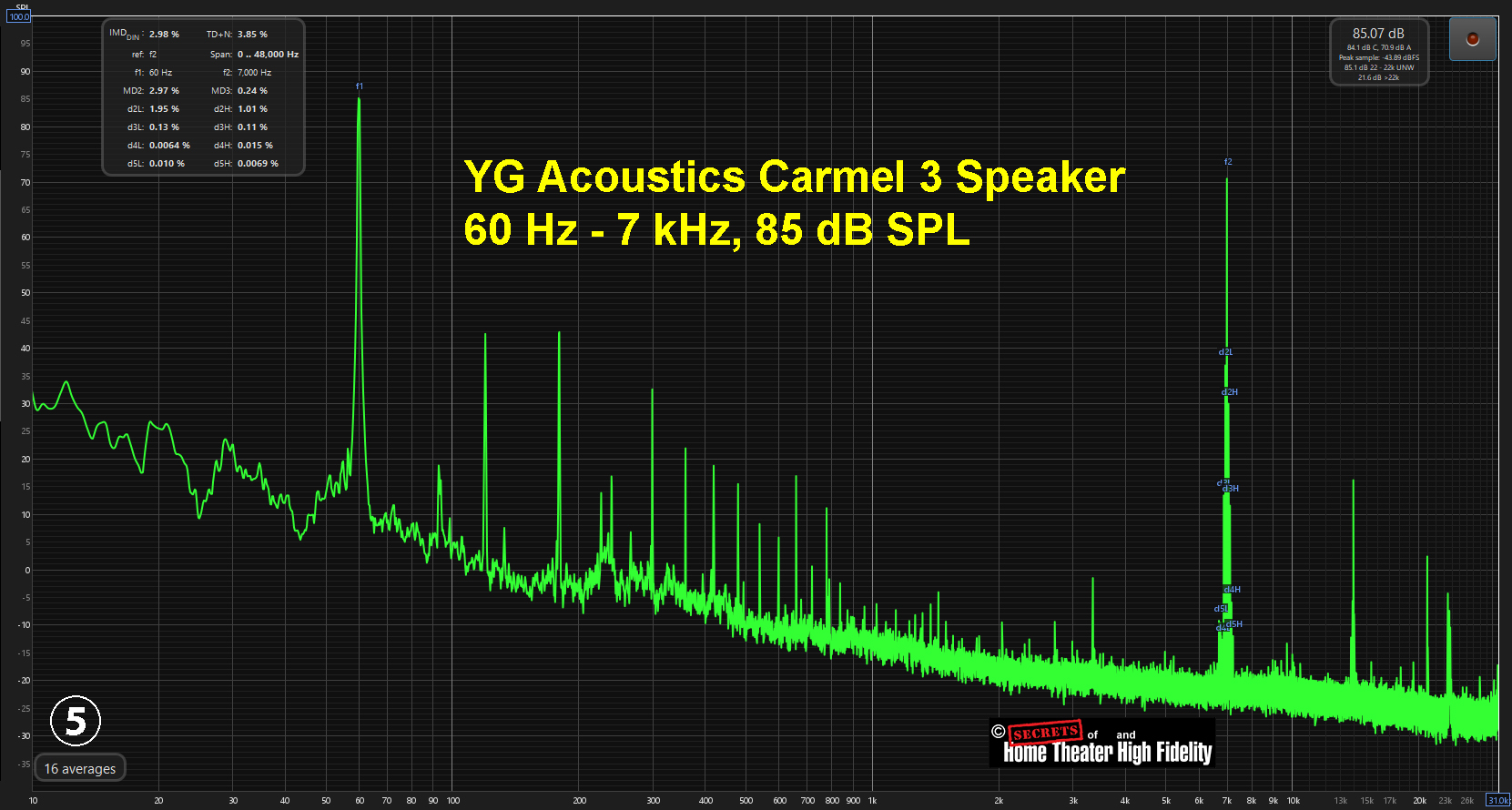
Figures 5 and 6 show IM distortion that occurs after the sound leaves the speakers. It’s a lot (2.98%). The 60 Hz sine wave is emitted by the mid/bass, while the 7 kHz sine wave comes from the tweeter.
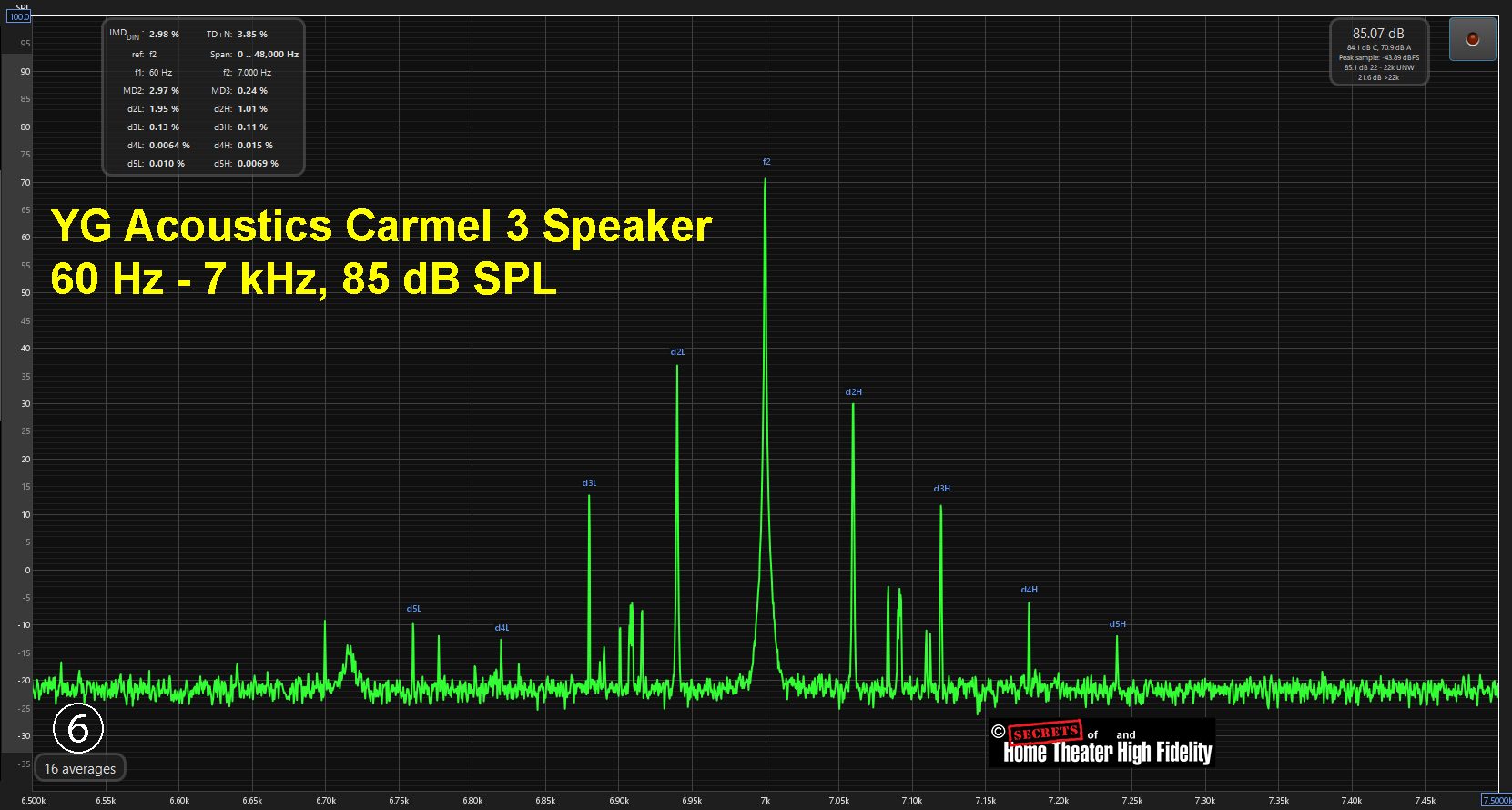
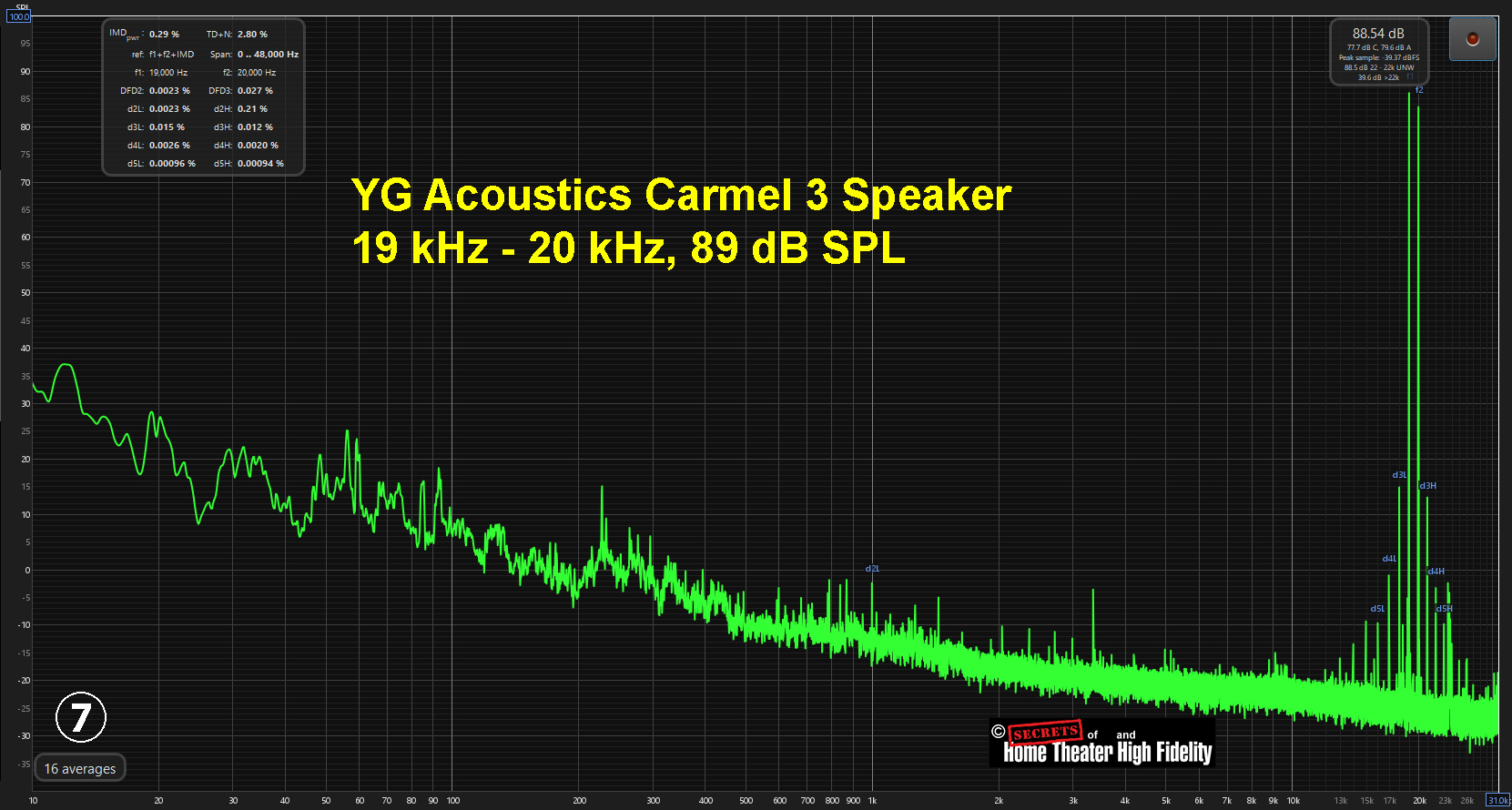
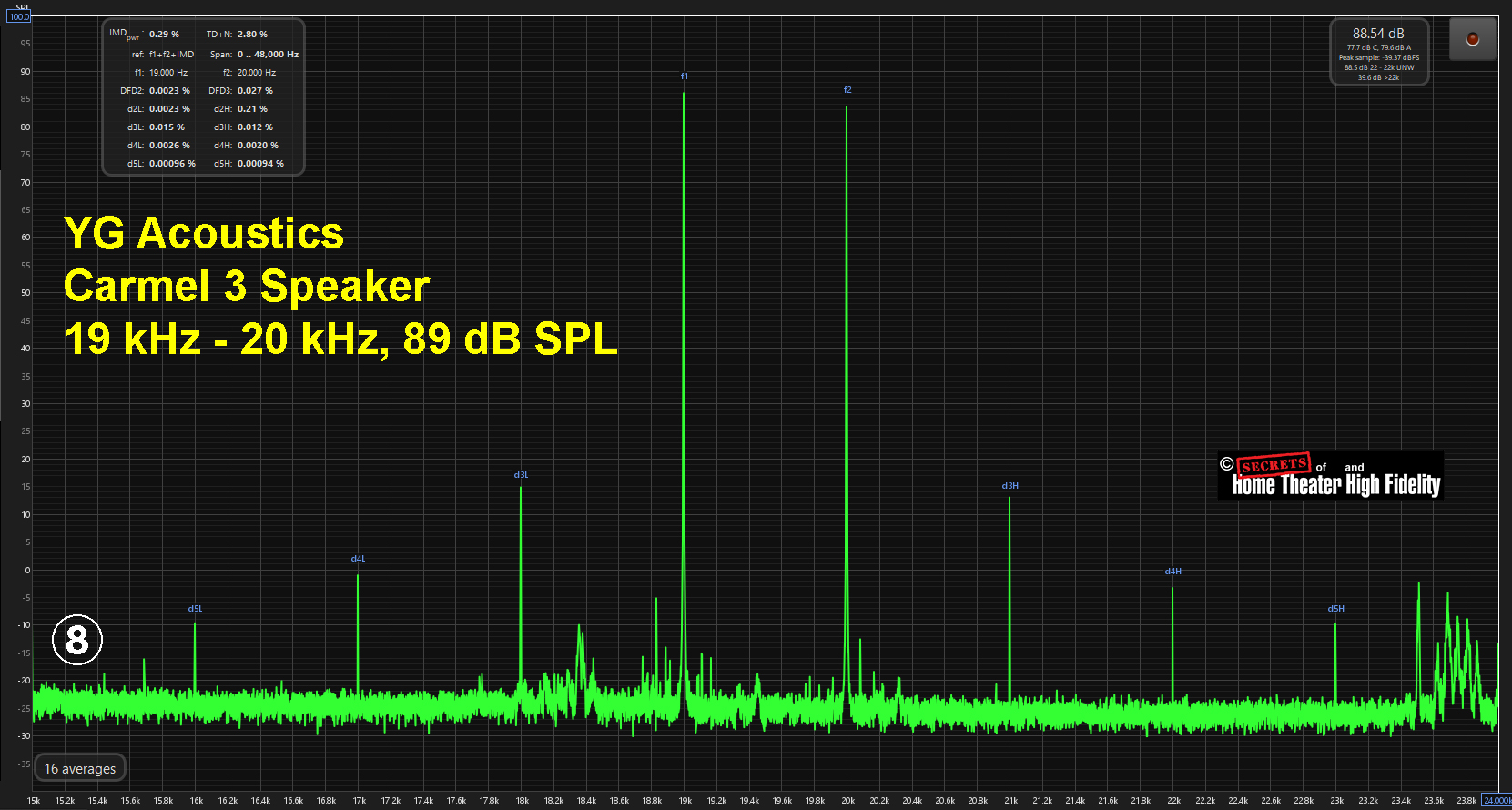
However, when the frequencies interact inside the driver, as they do with 19 kHz and 20 kHz sine waves (from the tweeter), IMD was only 0.29%. (Figures 7 and 8.)
The 1/10th Decade test is shown below (Figure 9). There is a stimulus peak every 10th of a decade, with a frequency increase. It’s a stress test to show where distortion is concentrated. Most of the distortion is between 700 Hz and 4 kHz, as well as between 8 kHz and 20 kHz.
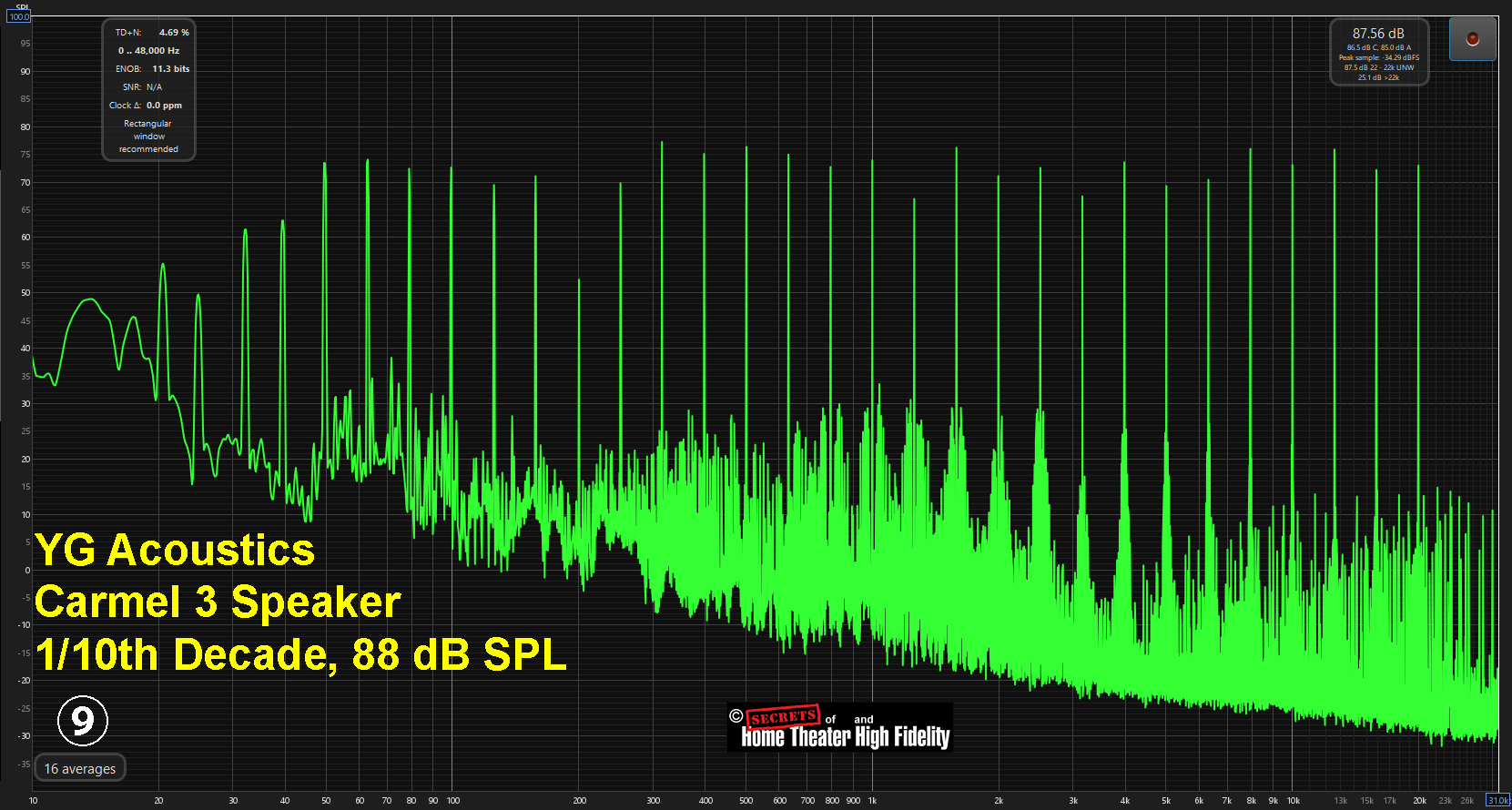
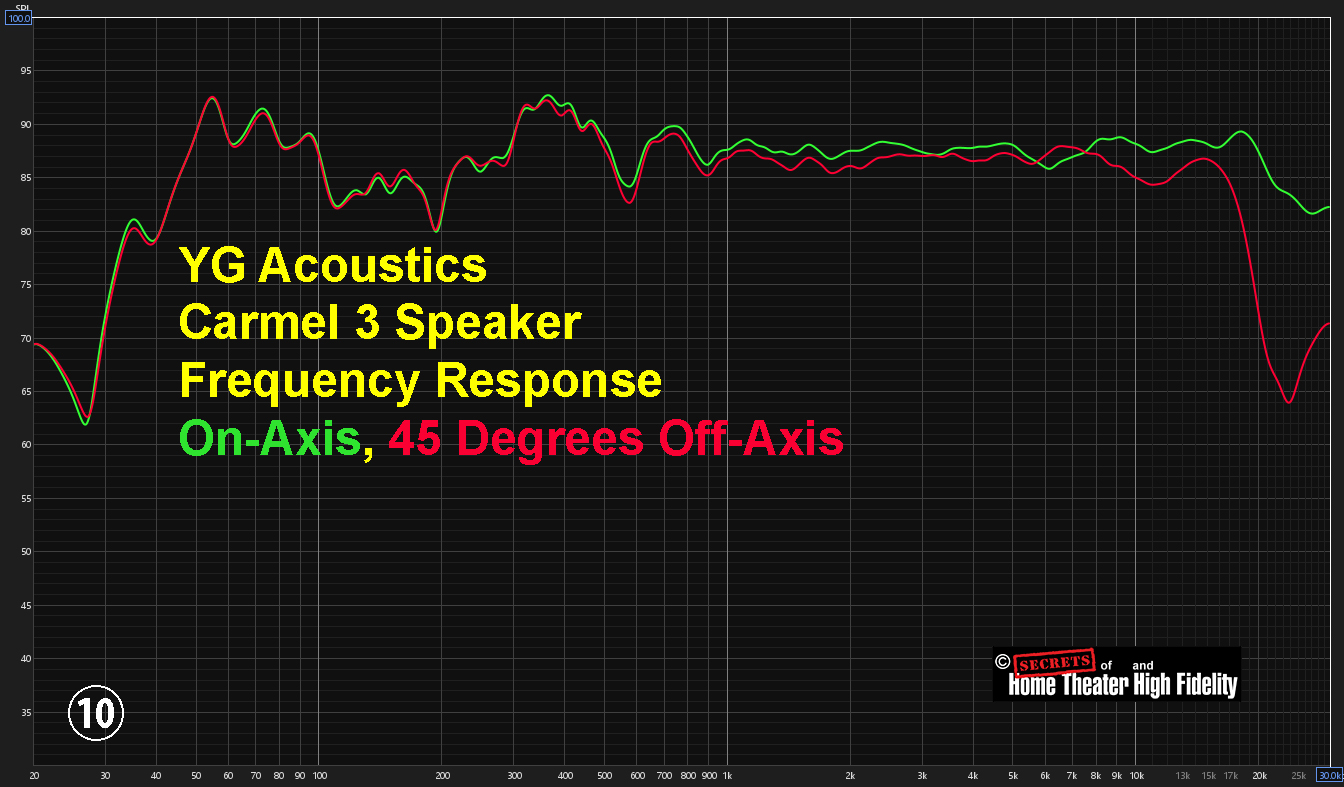
Figure 10 below shows the frequency response on-axis (green line) and 45° off-axis (red line). That horn-loaded tweeter does not drop off very much at 15 kHz, which will give it a good overall response even off-axis.
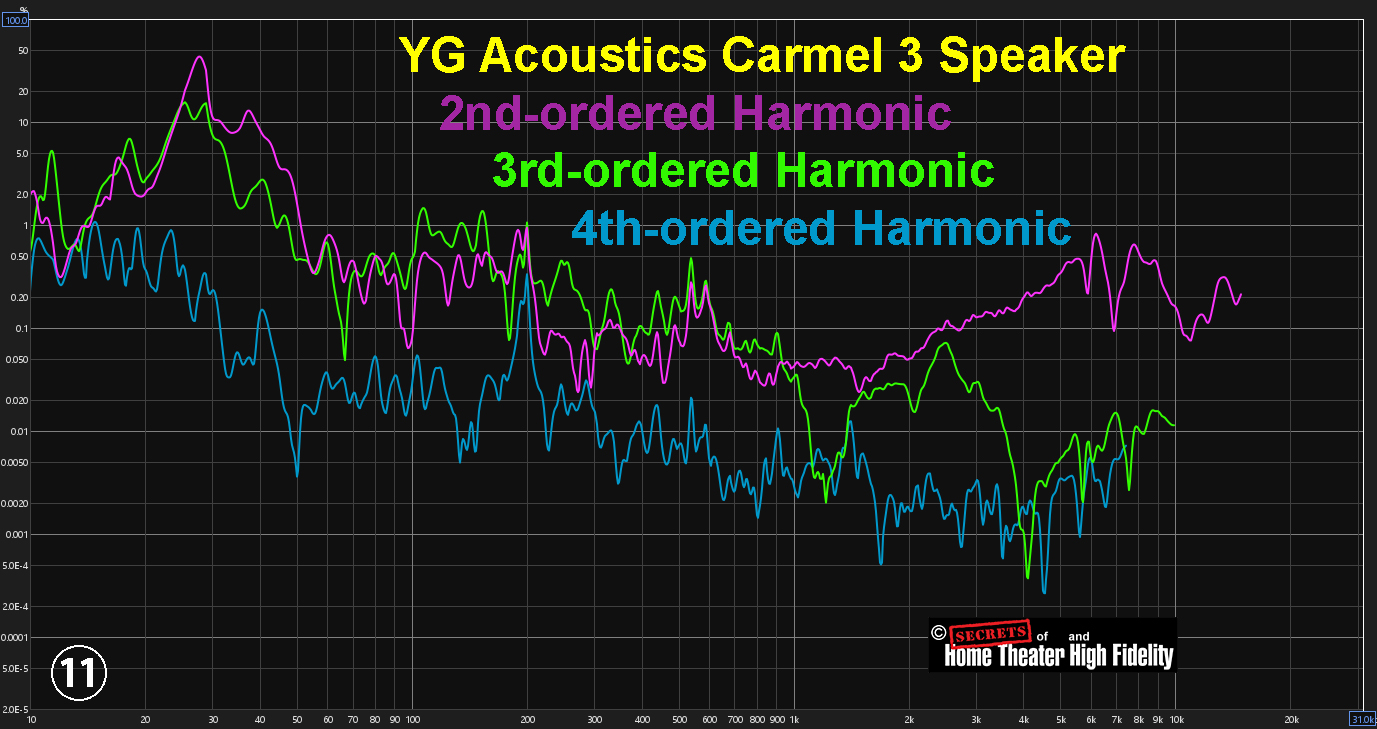
THD vs. Frequency (on-axis) is shown below in Figure 11. You can see that the 2nd-ordered harmonic is the principal one for most of the range. This gives it that warm, inviting sound.
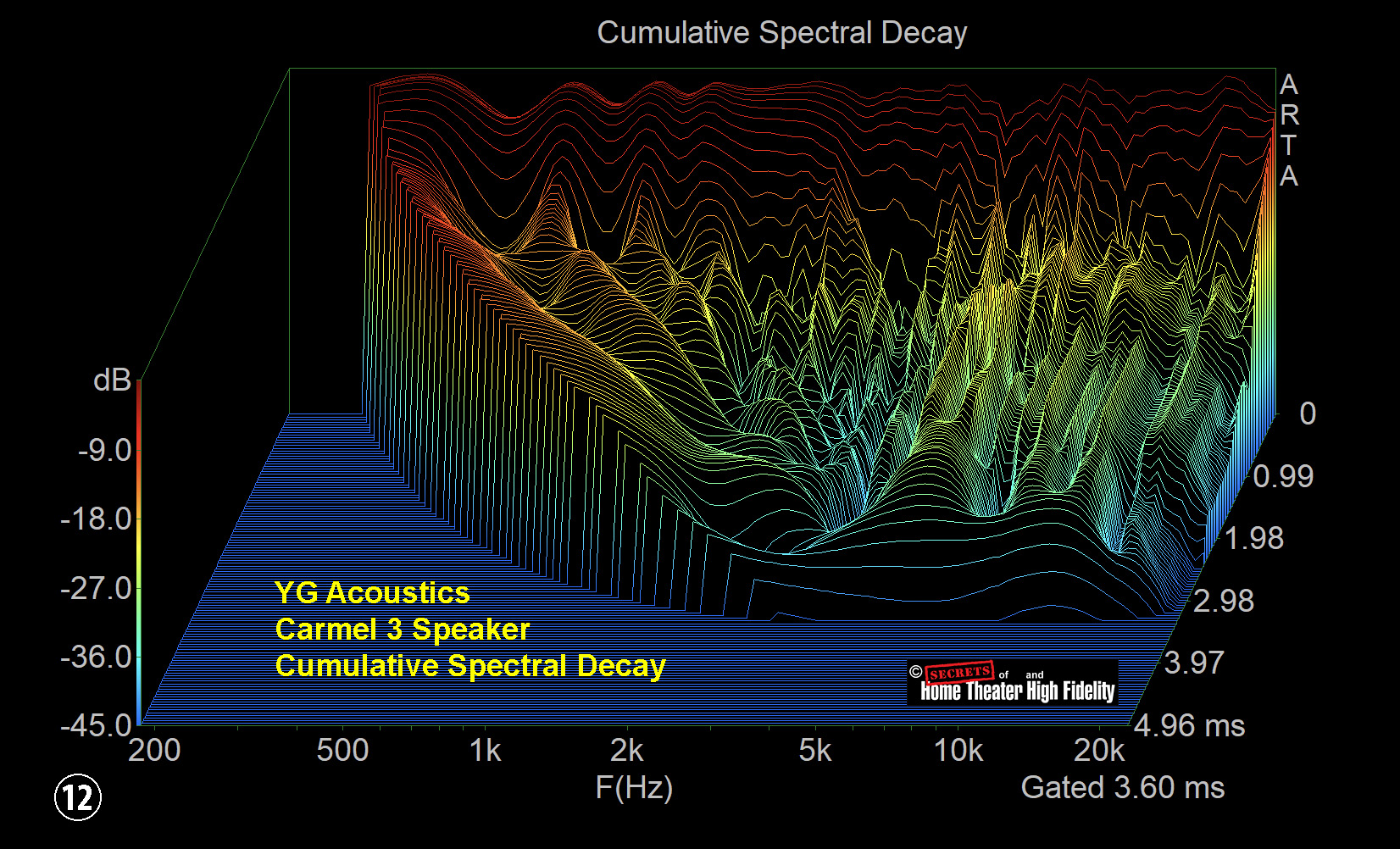
The Cumulative Spectral Decay (CSD) is shown in Figure 12. There are some resonances that may be due to the aluminum enclosure.
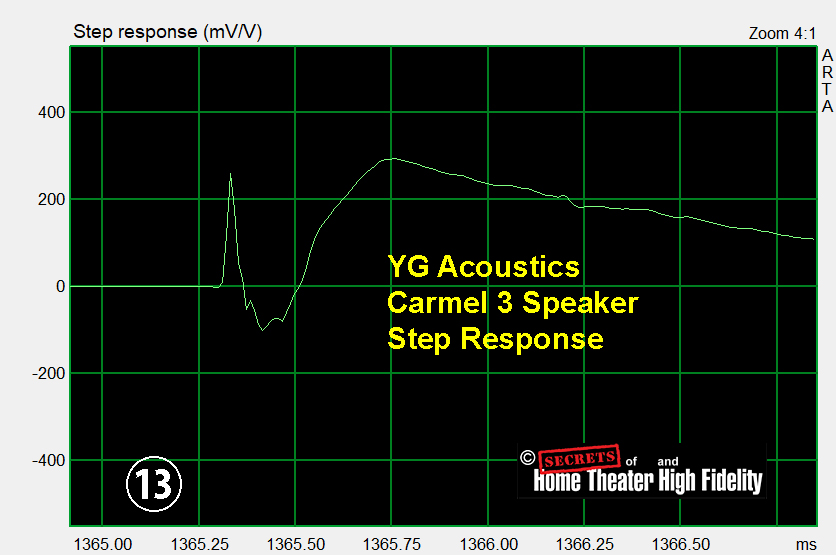
The Step Response is shown in Figure 13. The tweeter and mid-bass driver are very near coincident, probably because the tweeter is recessed into the enclosure.
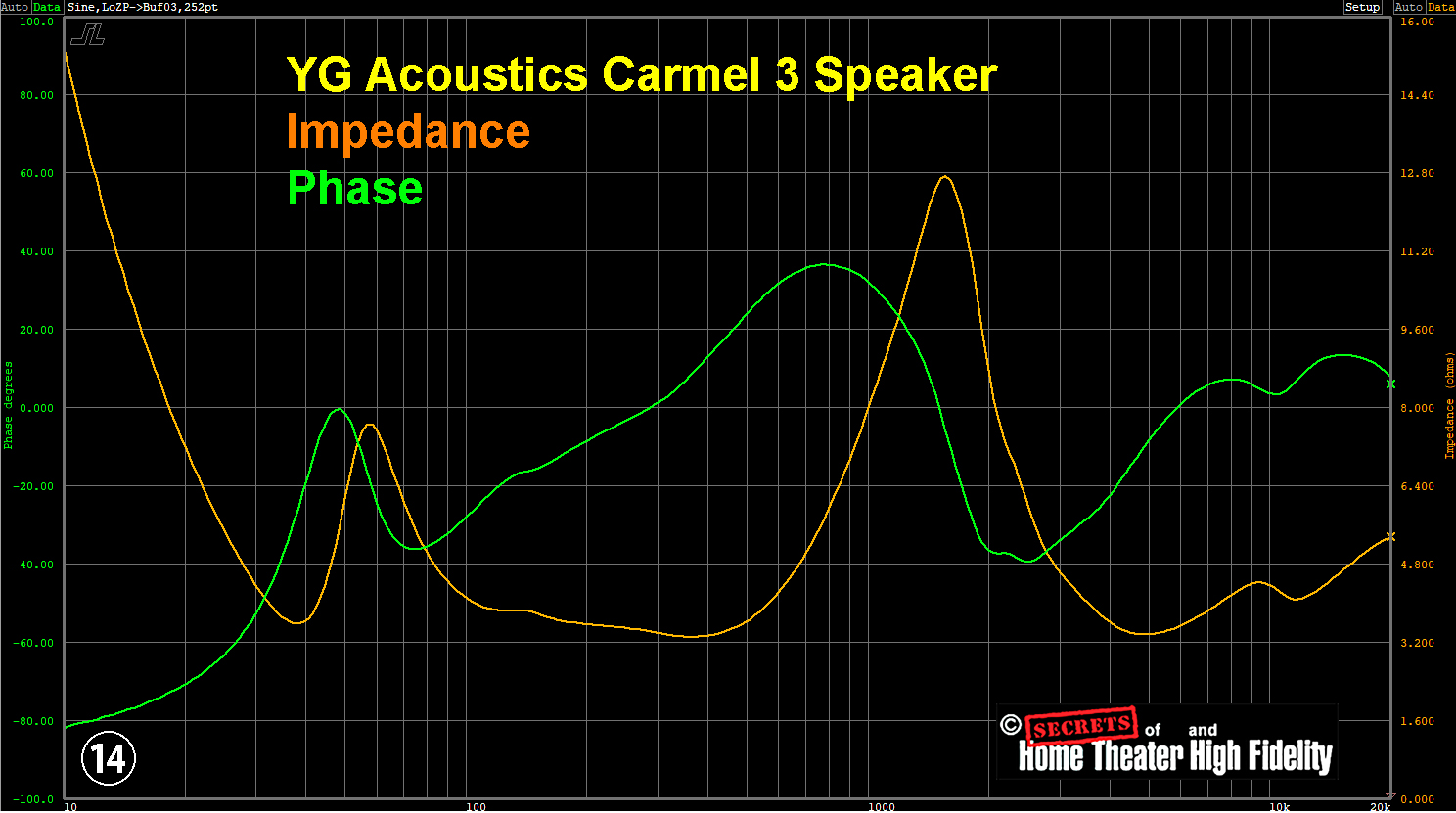
And, in Figure 14, the Impedance / Phase plot is shown. The Impedance is 15 Ohms at 10 Hz, and 12 Ohms at 1.7 kHz (the crossover point). Other than that, it stays close to 4 Ohms. The Phase is -80° at 10 Hz and +37° at 800 Hz.
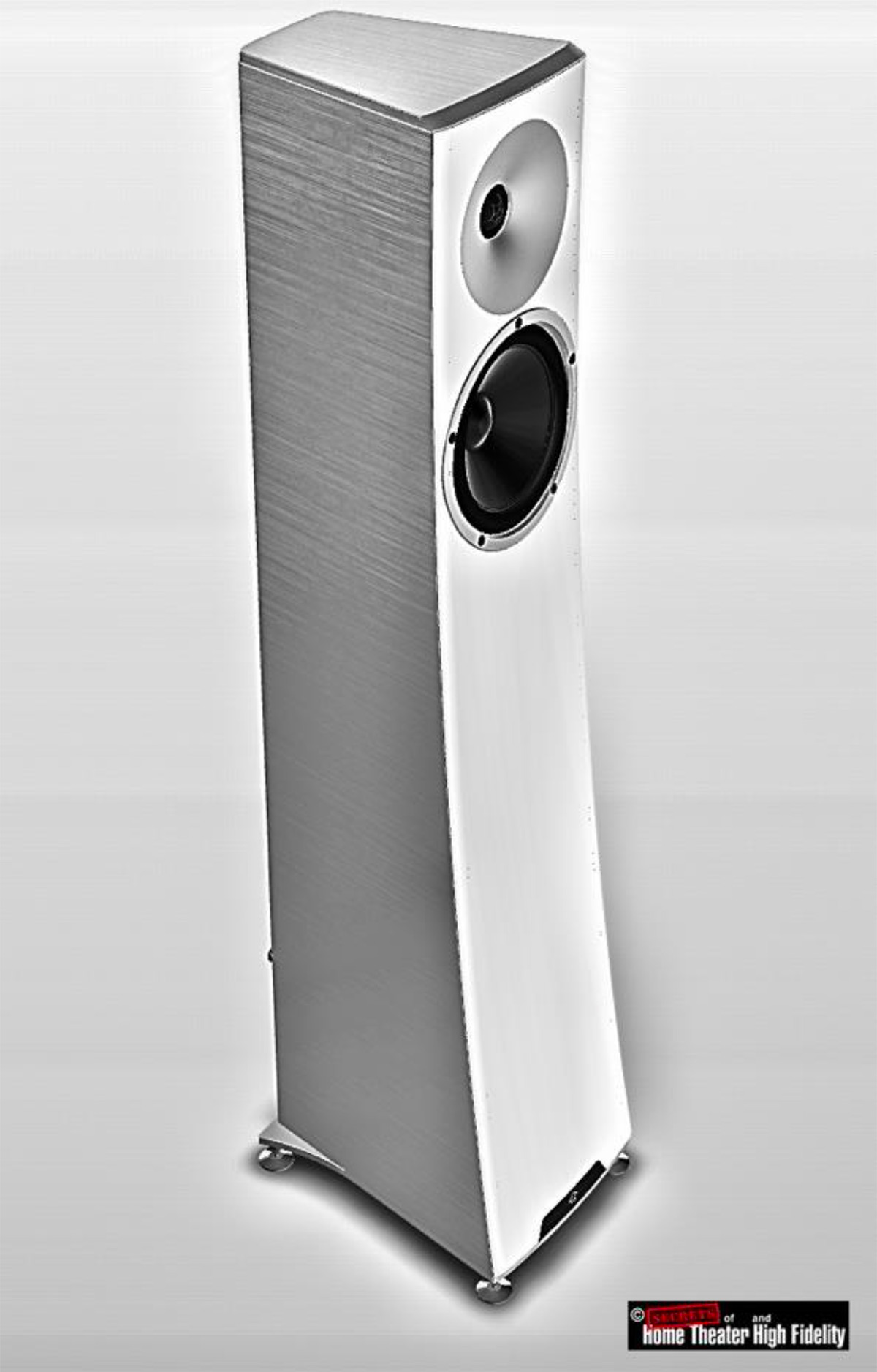
YG Acoustics’ Carmel 3 shows how far precise engineering and advanced materials can push a compact two-way speaker.
- Silk-dome tweeter
- Predominantly 2nd-ordered harmonic distortion
- Good response off-axis
- 12” woofer on the side of the enclosure
- Grilles
Its fully machined aluminum enclosure creates an inert platform that’s difficult to replicate with wood or composite cabinets. This structural rigidity reduces resonances, panel flex, and stored energy, allowing the drivers and crossover to operate with remarkable transparency. The hybrid silk-dome lattice tweeter, horn-loaded and mounted on a sculpted aerospace-alloy frame, offers controlled directivity, low distortion, and broad dispersion without the harshness or edge often associated with metal-diaphragm designs. Paired with the quick, piston-like aluminum mid-bass driver, the Carmel 3 delivers exceptional coherence and wide-band linearity that surpasses its compact size and two-way configuration.
Equally impressive is the engineering sophistication of the Ultracoherent™ crossover. This network is not just a standard second-order filter but a highly optimized assembly of direct-path and auxiliary components guided by multi-domain simulations. Bench measurements confirm these design choices: low harmonic distortion across the spectrum, dominant 2nd-order harmonics for a warm sound, excellent off-axis response thanks to the horn-loaded tweeter, and a well-managed spectral decay with only minor high-frequency resonances.
Ultimately, the Carmel 3 blends precision, neutrality, and musical engagement at a very high level. Despite rumors of an “edgy” presentation, my listening tests revealed a speaker that is inviting, refined, and tonally balanced. From its expertly machined aluminum enclosure to its sophisticated crossover and carefully engineered drivers, the Carmel 3 succeeds in delivering a presentation that is both accurate and emotionally compelling. It stands as a testament to what can be achieved when a manufacturer pursues engineering excellence without compromise.