 YouTube
 Facebook
 X
X LinkedIn
 Pinterest
 Instagram

 Chris Eberle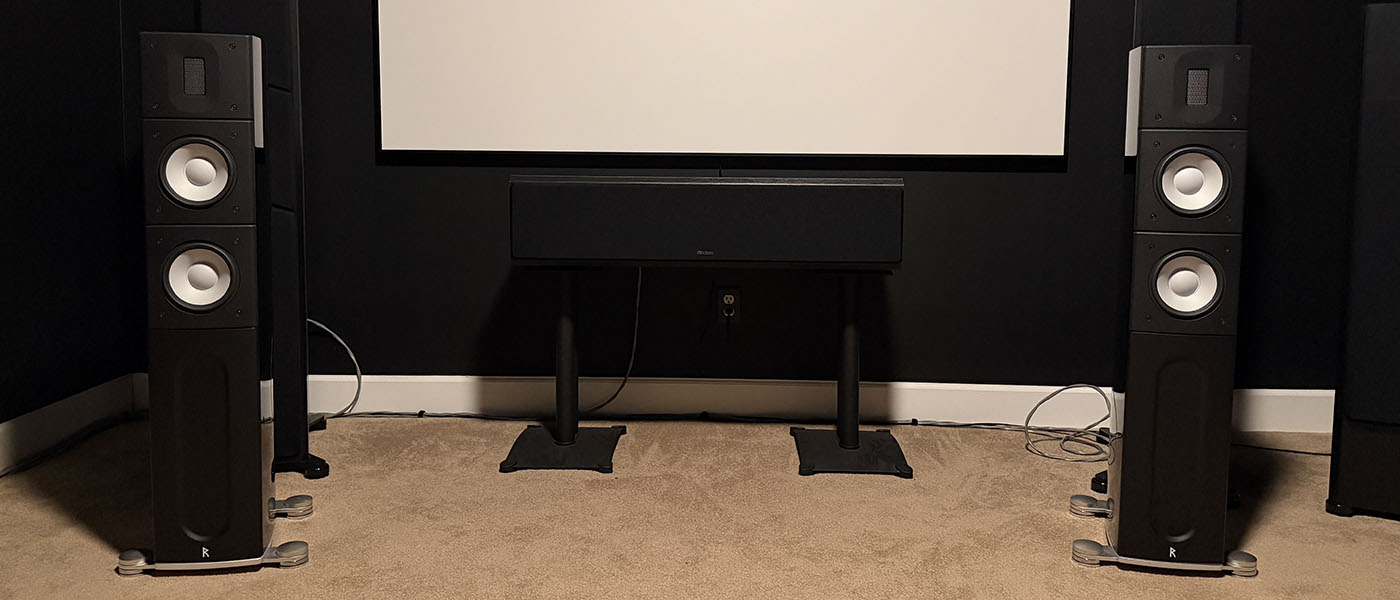
The Raidho X2.6 is a floor-standing speaker with a planar magnetic tweeter, two aluminum/ceramic woofers, bass porting, and a premium aesthetic. Available in a white or black piano gloss finish, it features metal front baffles, heavy support for the drivers’ moving parts, and substantial outriggers for inert sound and rock-solid stability. Though not inexpensive at 21,000 Euros a pair, they use technology found in Raidho’s flagship TD6 tower, which costs a cool 230,000 Euros.
Raidho X2.6 Floor-standing Speaker
- 2.5-way vented floor-standing speaker
- Full range coverage from 32 Hz to 50 kHz
- Planar magnetic tweeter with wide dispersion
- Two 6.5” aluminum/ceramic woofers
- All-metal front baffles
- Available in black or white piano gloss
- Cast aluminum outriggers with ball bearing isolator feet
From its founding in 2003, Raidho Acoustics has stood for high-end audio with a high-end aesthetic. With three distinct lines of speakers, it has something for everyone, including those seeking the ultimate statement piece. For them, there’s the TD6, which costs a cool 230,000 Euros. But if you want a lot of that performance and your budget is more like 21,000 Euros, there’s the X2.6, which I’ll be checking out today. It’s a 2.5-way vented floor-stander with a planar magnetic tweeter, aluminum/ceramic woofers, and a hand-wired crossover featuring Nordost cables. All-metal front baffles, black piano finish, and heavy metal outriggers complete something that is as much form as it is function. Let’s take a look.
Type:
2.5-way vented floor-standing speaker
Crossover point:
140 Hz & 3.5 kHz
Frequency range:
32 Hz – 50 kHz
Sensitivity:
87dB @ 2.83V
Nominal impedance:
>6 ohms
Tweeter:
planar magnetic w/waveguide, 2.75” x 1.5”
Woofers:
2x 6.5” ceramic coated aluminum
Dimensions (H x W x D):
41.93” x 8” x 16.14” (front outrigger 14.17”)
Weight each:
66 lbs.
Company:
SECRETS Tags:
Raidho, x2.6, floorstanding speaker, tower speaker, planar magnetic tweeter
- Amphion Argon7LX Floor-standing Speaker Review
- GoldenEar T44 Floor-standing Loudspeakers
- YG Acoustics Carmel 3 Floor-standing Speakers Review
Secrets Sponsor
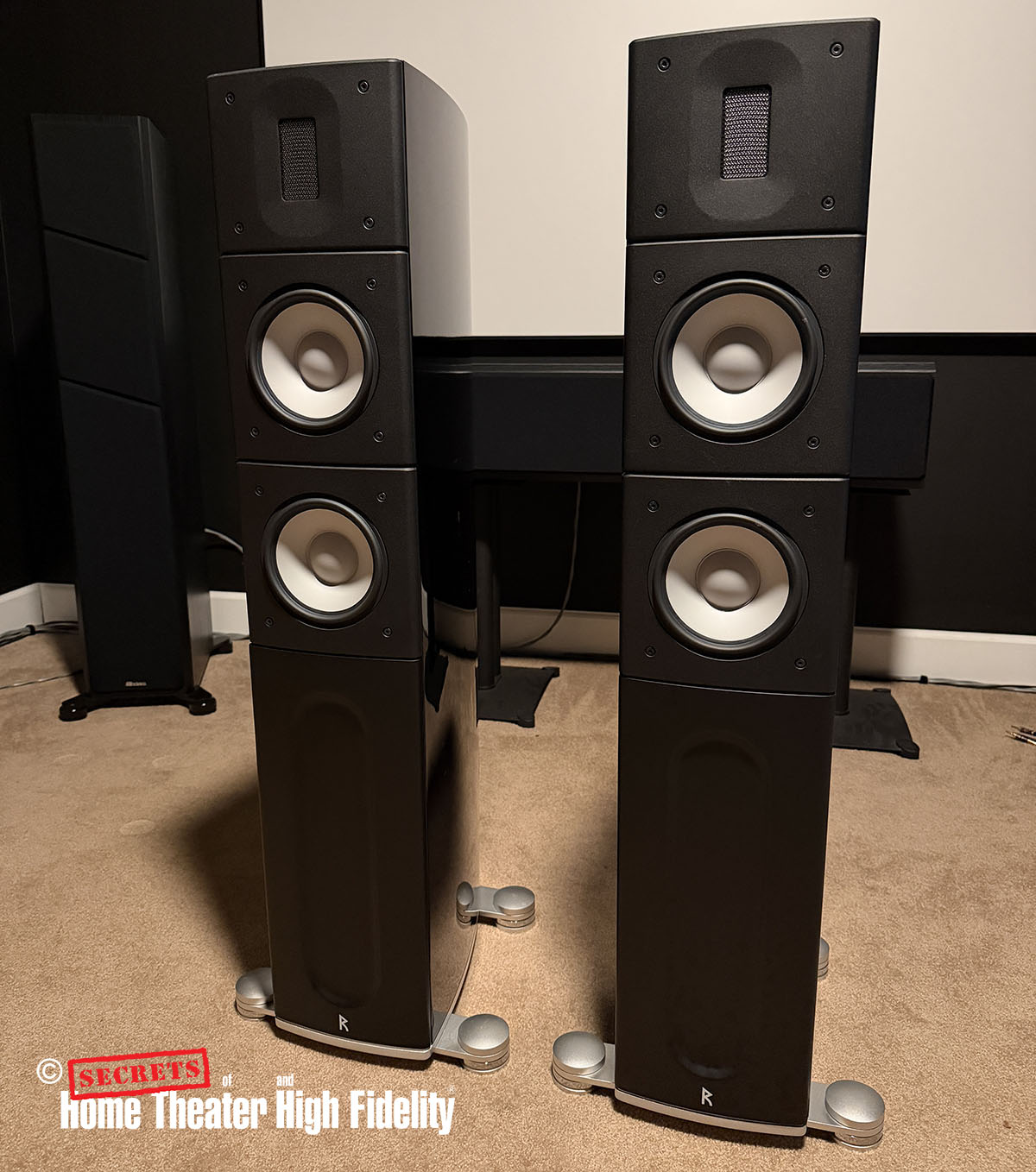
The Raidho X2.6 uses a lot of metal in its construction, more than I’ve ever seen before, in fact. The front baffles are cast aluminum, and there’s one for each driver independently mounted to the heavy MDF cabinet. The finish on my samples was piano black, and they are available in piano white as well.
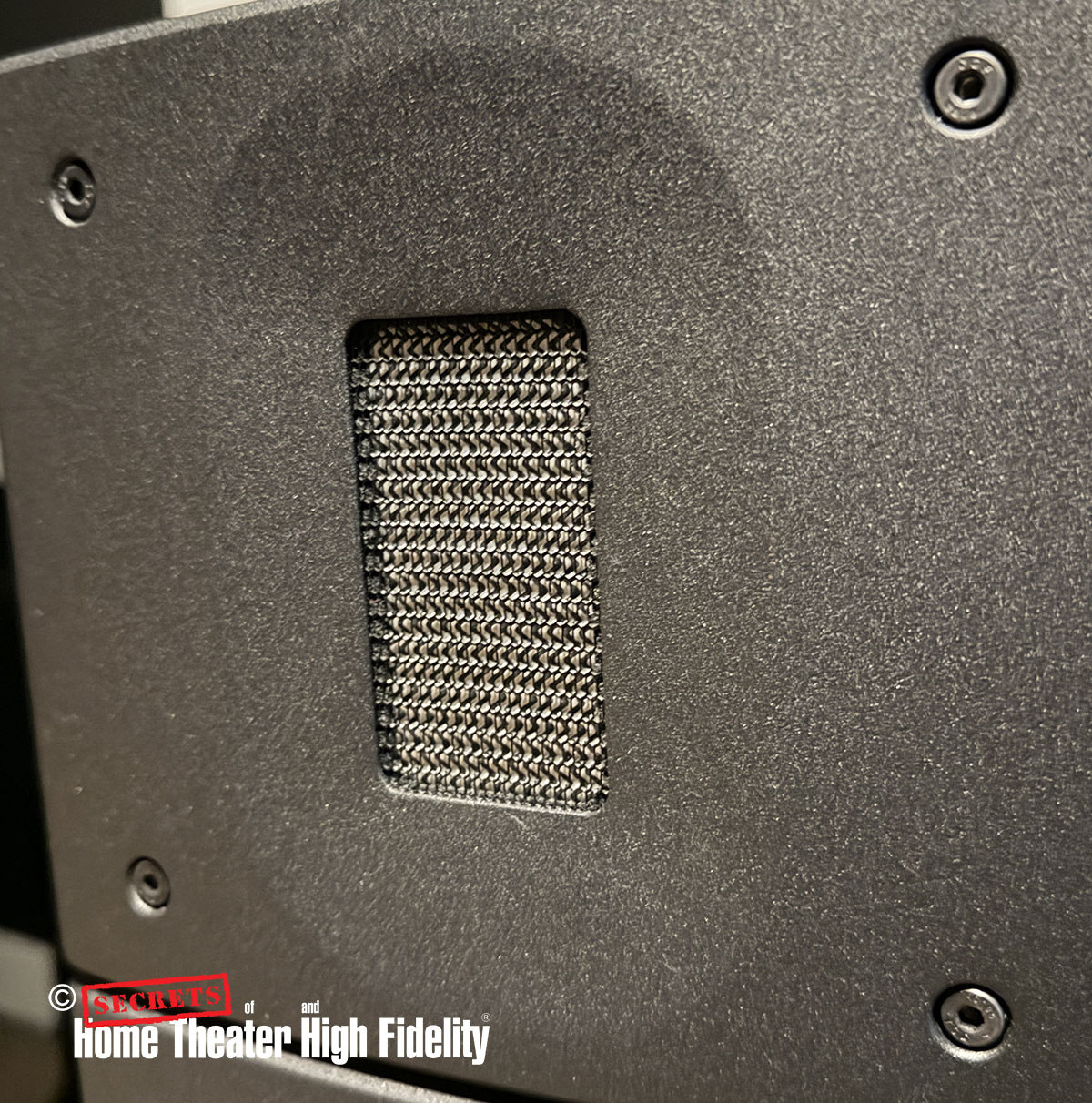
There are no grills, so the drivers are on full display. The tweeter is a planar magnetic design and represents the tie-in to Raidho’s flagship TD6 towers. The diaphragm is relatively large at 2.75 by 1.5 inches, and it is fronted by a grid-style waveguide. The material is 11 microns thick and weighs just 20 milligrams. Coupled with a powerful magnet, it is incredibly responsive. This makes it very accurate and airy with no perceptible noise floor. Sound literally comes from nothing.
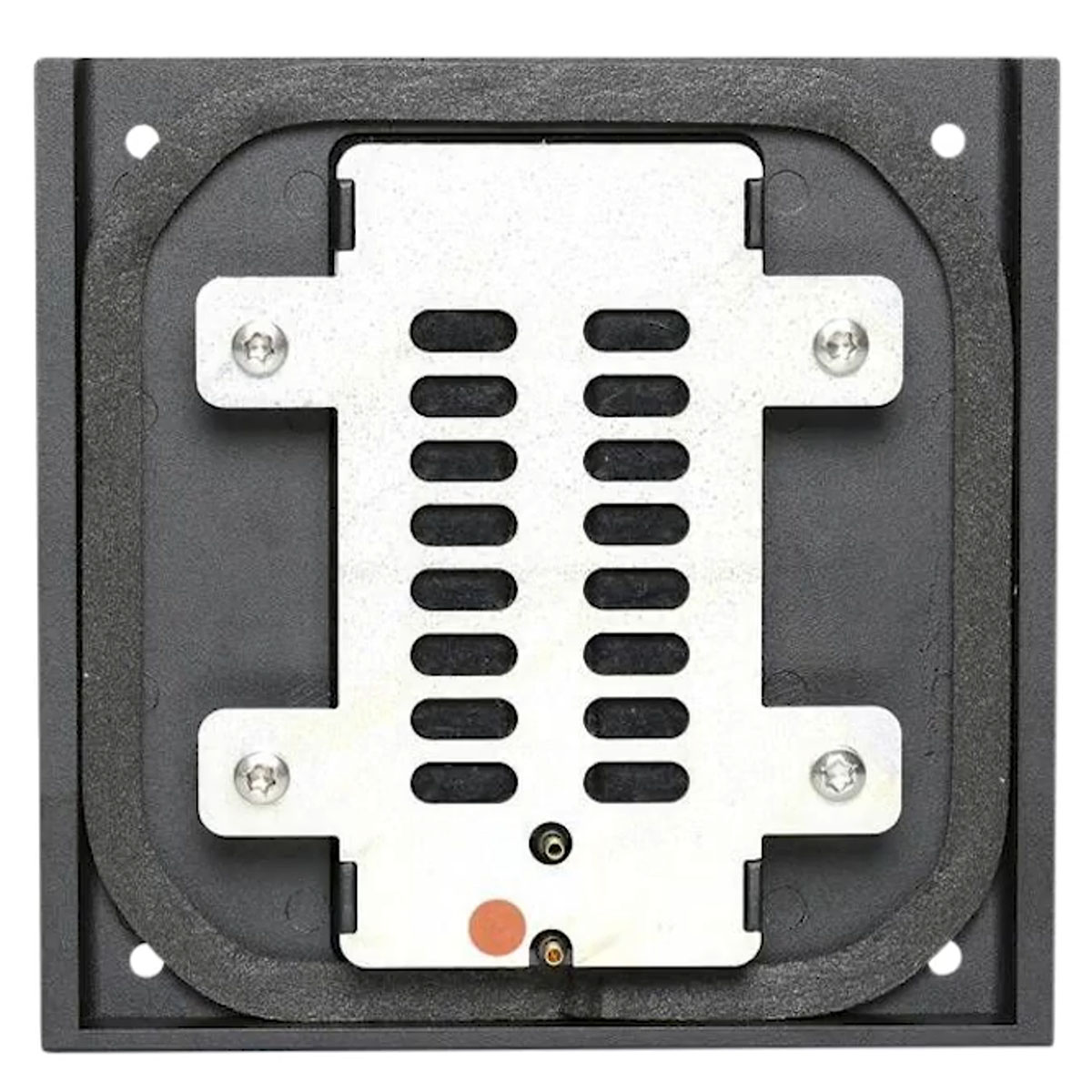
You can see in the above photo that the film is securely supported by the metal front baffle and a substantial plate in the back. The only thing that is vibrating here is the film.
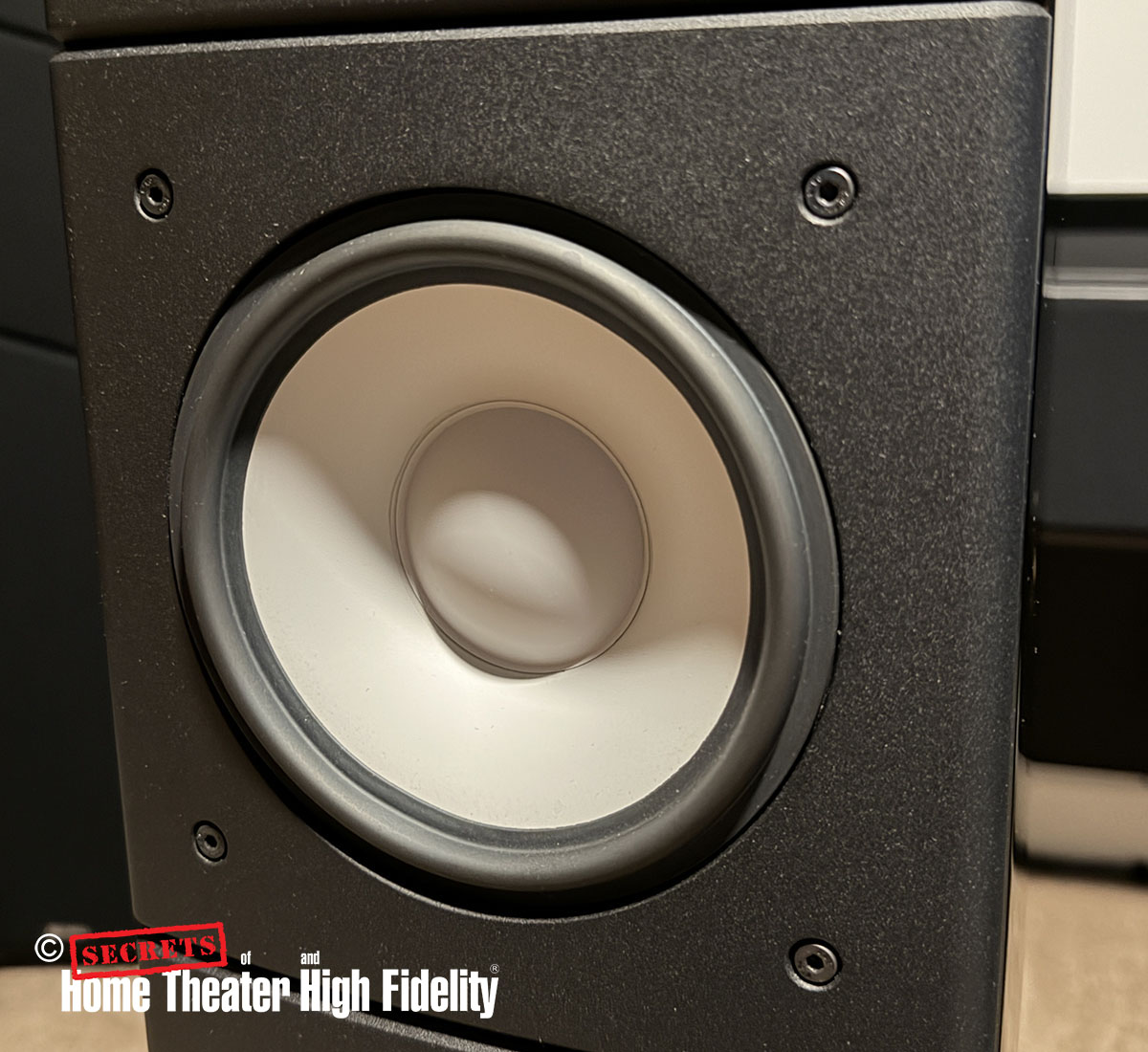
The two woofers are 6.5 inches across and are made from aluminum with a thin ceramic coating. This makes them super stiff and light. The surrounds are butyl rubber with plenty of travel. I heard a 20 Hz test tone clearly when testing them during installation.
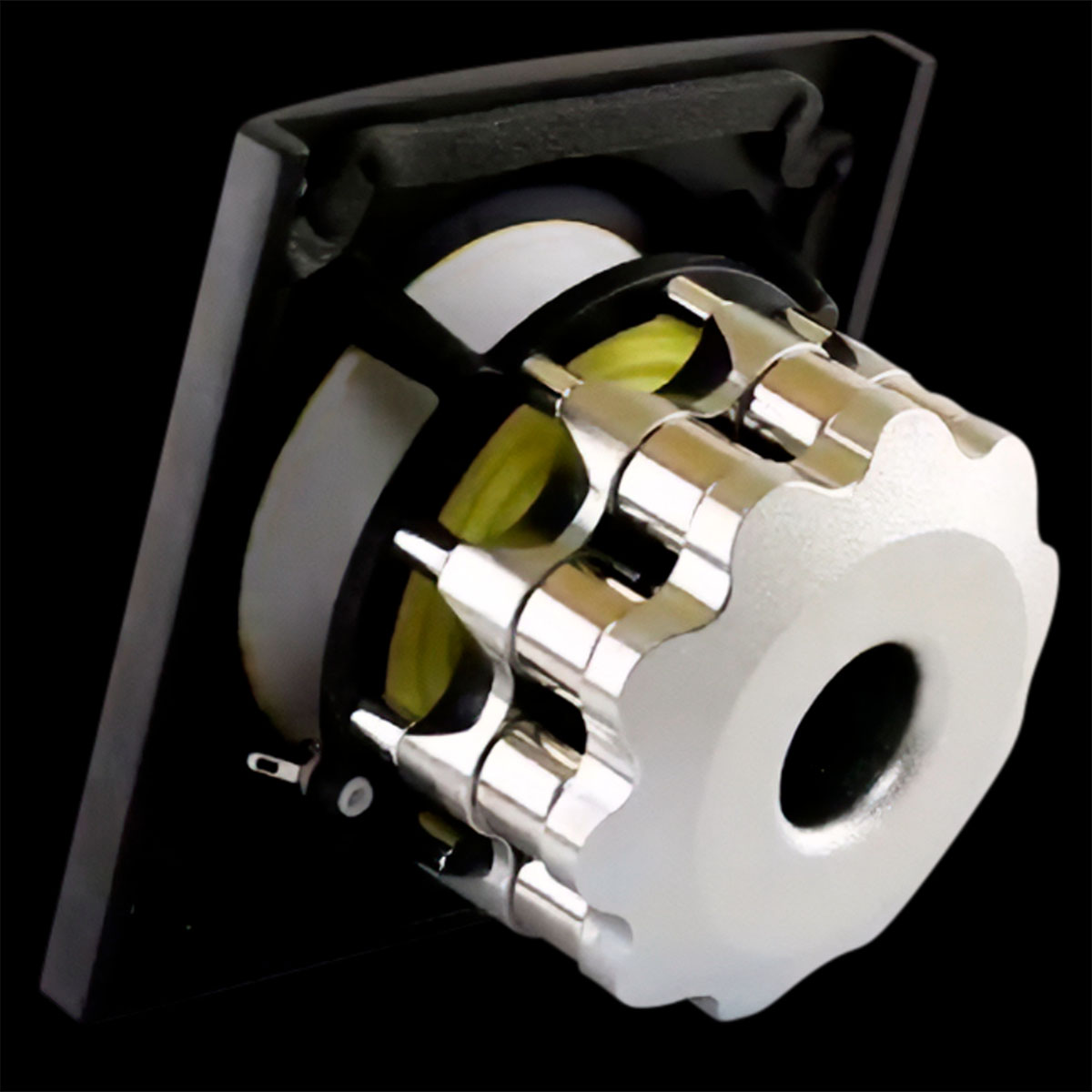
The woofers are backed by the most substantially braced spider I’ve ever seen. This immense casting houses the magnet and voice coil and prevents anything from vibrating that is not the cone. Coupled with the metal baffle, it weighs as much as many bookshelf speakers.
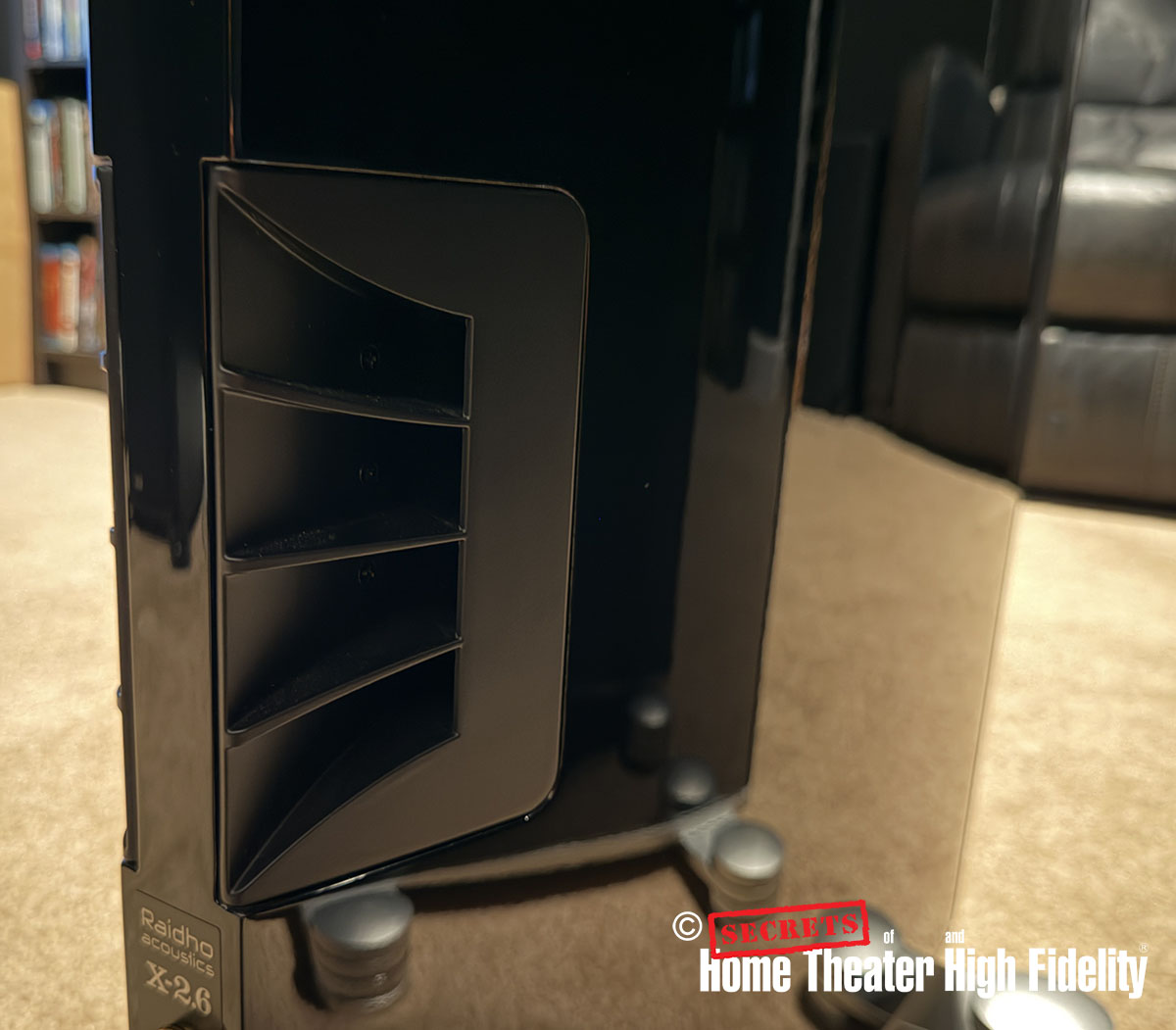
Bass extension comes from two rear-firing ports, which look a bit like exhaust vents. They move air at high velocity, which I was able to experience when I put my hand in front of them during heavy bass tracks. They expel quite a breeze!
The cabinets are thick MDF and devoid of right angles and flat surfaces. They are narrow from the front at eight inches and taper to just 1.5 inches in the back. The outriggers increase the total footprint to 14.17 inches. Total height is just over a meter, or just under 42 inches.
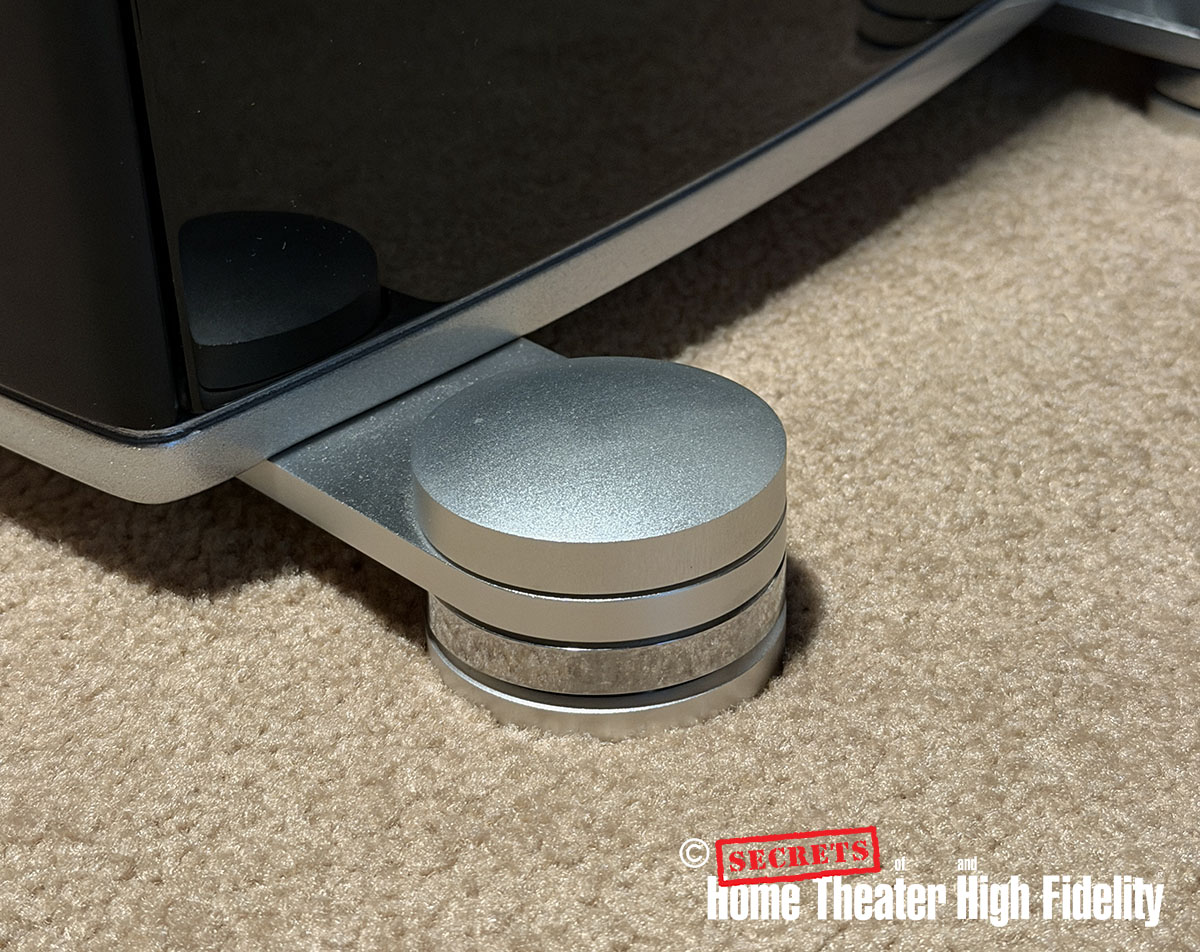
The outriggers are substantial aluminum castings and include metal feet with ball bearing support. You can swap them out for rubber or spikes if you like. My samples had no padding, which wasn’t an issue as my room is carpeted. The outriggers bolt up to the cabinets with Phillips-head screws, three in front and two in back.
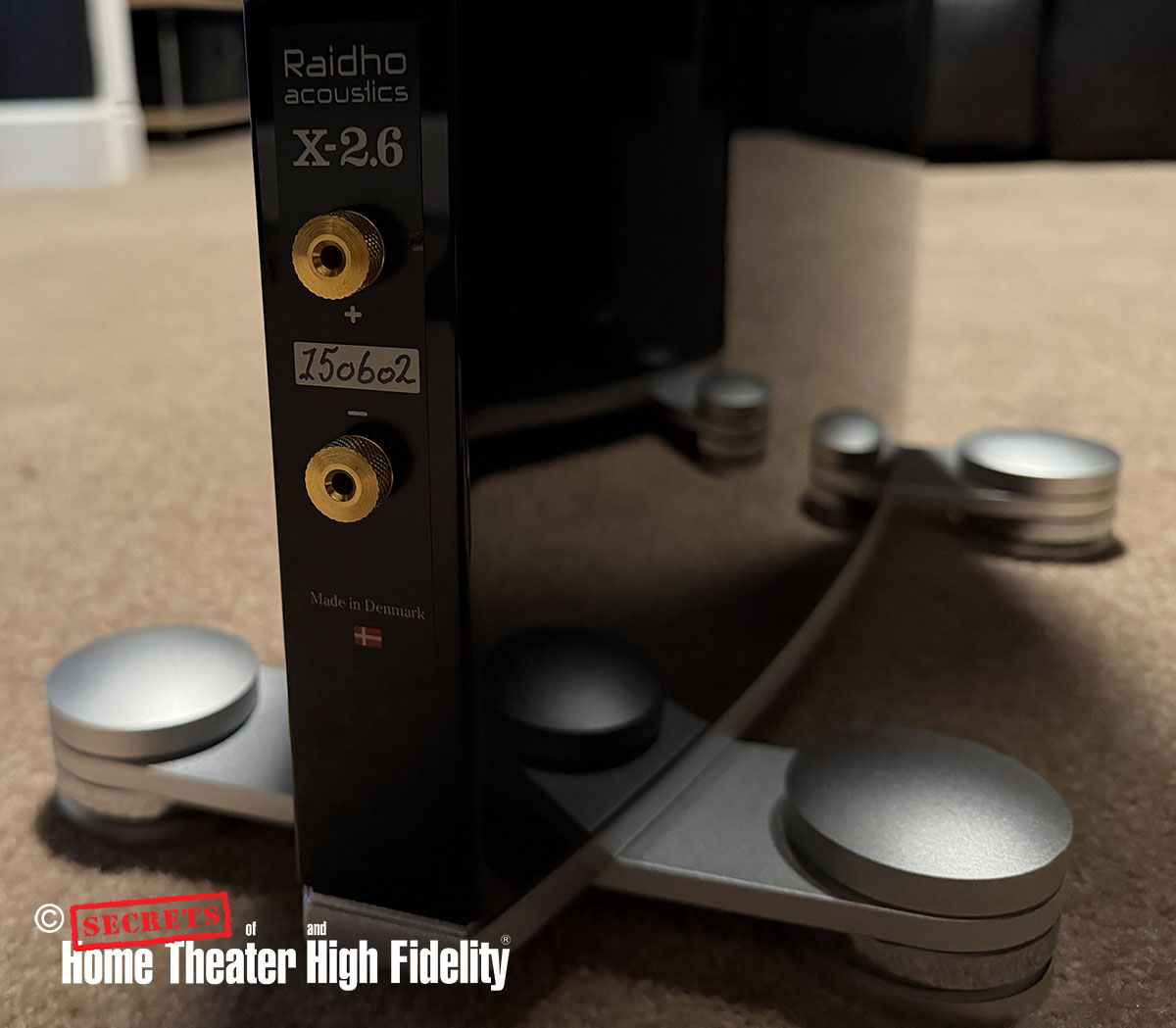
The cable jacks are something I haven’t seen before. Large, gold-plated fittings thread into them, which are sized for banana plugs. They are too fat for traditional spades, and there isn’t enough grab area for thick bare wire. You would need large spades or the Blue Jeans locking bananas that I use.
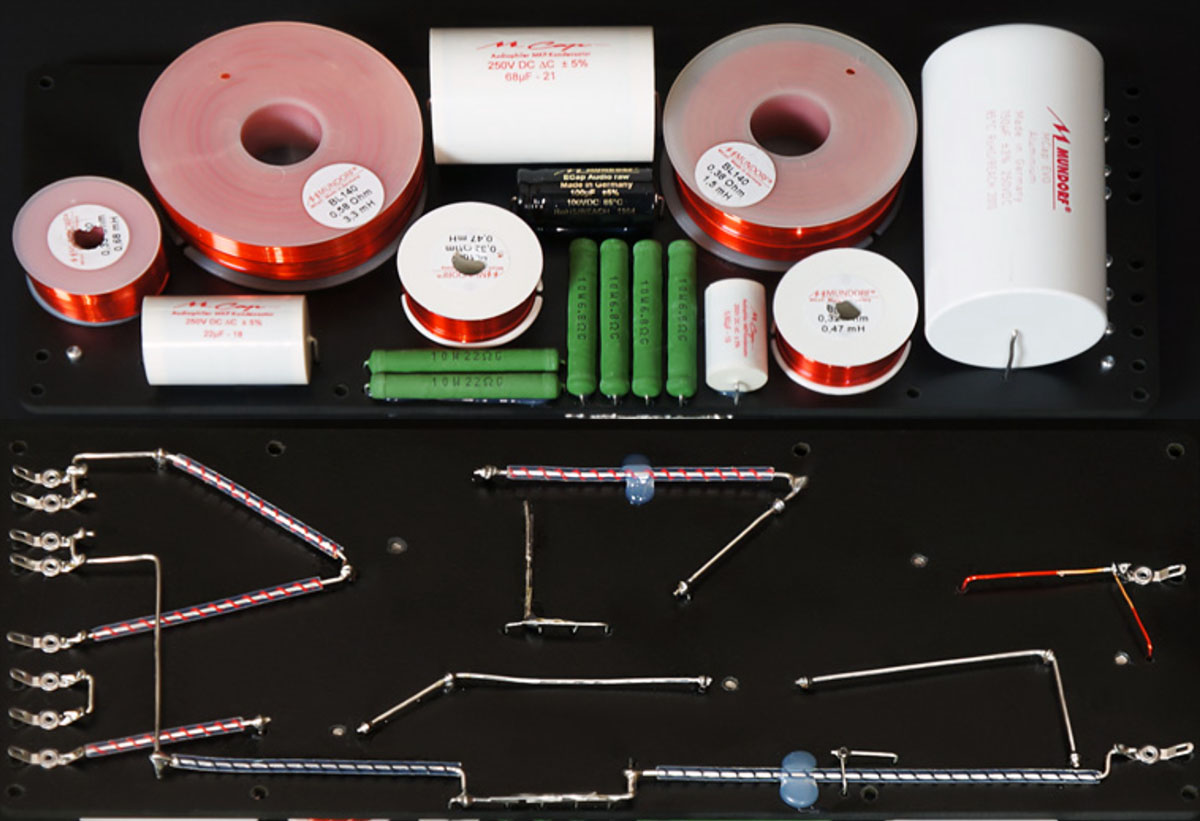
Inside the X2.6, you’ll find a handmade crossover board with Nordost wiring, also made by hand. It sets the points at 140 Hz and 3.5 kHz.
At 66 pounds apiece, the X2.6s are manageable by one person, though piano black can be slippery. I used gloves to carry them in from the garage. I found the hardware for the outriggers and speaker posts in a bag. The outriggers bolted right up, and I tightened the feet down. They are a two-piece design with ball bearings in between.
The gold-plated cable jacks went in next, and they cheerfully accepted my locking bananas for a tight fit. My 10AWG Blue Jeans speaker cables went straight into an Emotiva XPA 5 power amplifier driven by an Anthem AVM 70 processor. All surround processing was turned off so the X2.6s could receive direct two-channel signals. My source was an Apple TV, and music streamed from Apple Music over AirPlay.
Finding the ideal position took a bit of trial and error. I started with a traditional toe-in with the X2.6s eight feet apart, eight feet from my chair, and the convergence point two feet behind my head. This sounded a bit harsh to my ears at anything above middle volumes. Strings and high woodwinds were focused but very hard-edged. The answer was to toe them out, almost facing straight ahead. The tweeters have a very wide soundstage, but their center position should be avoided. Were I to set them up for more seats, I would place them further apart. In fact, I found I could put them as far apart as I wanted, and they still played a strong phantom center image. They have more than enough power to fill a large room and to create a wide sweet spot. As long as no one has a tweeter pointed directly at them, they sound amazing. With tweaking complete, I got comfortable for some serious listening.
Secrets Sponsor
I started with classical selections as I usually do and quickly discovered that the X2.6s are incredibly neutral. I say that about a lot of speakers, but these take neutrality to another level, so much so that if I went back and rewrote some past reviews, I’d be less likely to use the term. These speakers pull no punches and are super finicky about recording quality. Remember, I’m talking strictly about classical at the moment.

Wiener Philharmoniker & Yannick Nézet-Séguin, “Neujahrskonzert 2026 / New Year’s Concert 2026 / Concert du Nouvel An 2026”
San Fransisco Symphony & Michael Tilson Thomas, “Mahler: Symphony 1”
Academy of St Martin in the Fields, Jean-Jacques Kantorow, and Stella Chen, “Beethoven & Barber: Violin Concertos”
I started with the Vienna Philharmonic’s New Year’s Eve concert, a live performance, of course, conducted by Yannick Nézet-Séguin. The orchestra sounded super tight, both rhythmically and tonally. The sound was expertly balanced with no section dominating unless the music called for it. The X2.6s were accurate to a fault. As I turned the volume up, I encountered a clear boundary past which the separation of instruments became muddled. Rather than tweaking placement, I tried other orchestral recordings. A performance of the Barber and Beethoven Violin Concertos by Stella Chen and The Academy of St. Martin-in-the-Fields demonstrated that, given the right recording, I could play orchestral music on the X2.6s as loud as I wished with no resolution penalty.
This was further proved when I played my go-to Mahler Cycle from the San Francisco Symphony. These recordings from the early 2000s are perhaps the finest reproductions of orchestral music in existence. The performances are incredible, and the fidelity and balance are a benchmark. I have yet to hear anything better. The symphonies sounded amazing on the X2.6s. Every nuance and subtlety was clearly rendered. Tiny effects like a cello glissando in the First Symphony grabbed my attention. I truly hadn’t heard that bit before.
I also noticed that the speakers put foreground elements decidedly in the foreground. The bassoon solos in Beethoven’s Violin Concerto, for example, were unusually prominent, in a good way. When the violin resumed the helm, it was placed clearly in front of the orchestra.
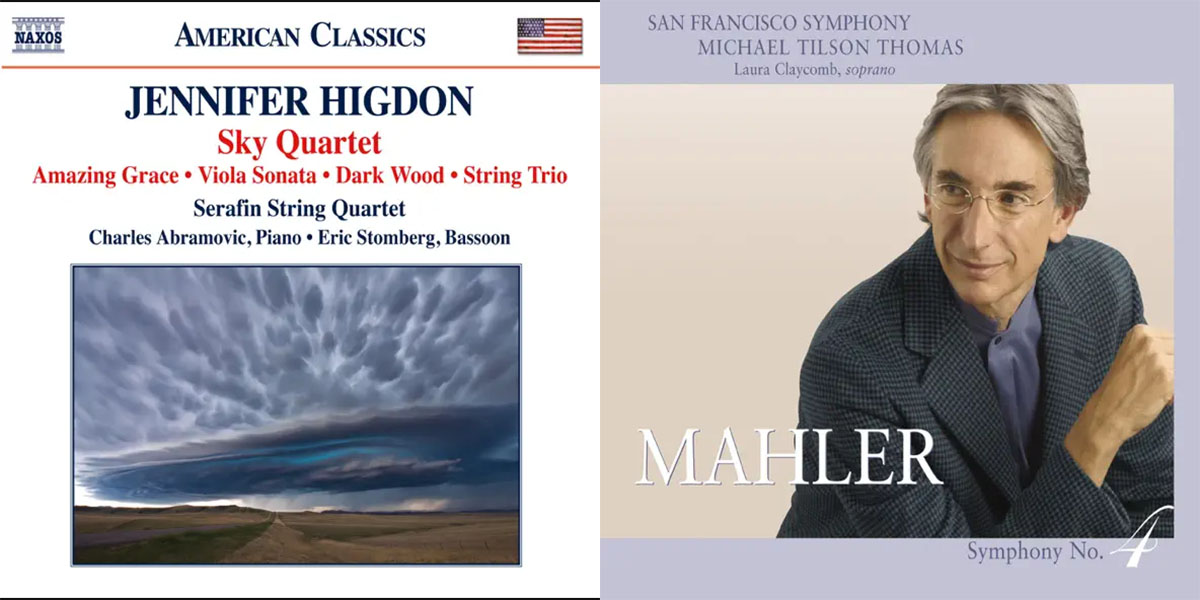
Jennifer Higdon, “Sky Quartet / Amazing Grace / Viola Sonata / Dark Wood / String Trio (Serafin String Quartet, Charles Abramovic, Piano, Eric Stomberg, Bassoon)”
San Fransisco Symphony, Michael Tilson Thomas, Laura Claycomb (soprano), “Mahler: Symphony No. 4“
Chamber music like Jennifer Higdon’s Dark Wood for bassoon, violin, cello, and piano was also well rendered. Instruments were clearly separated while remaining balanced. The X2.6s excelled at string quartets, too. Though I am not a fan of like-instrument ensembles, I could easily spend hours listening to selections like Higdon’s Sky Quartet and String Trio.
Before moving on to the rock portion of my sessions, I tried an experiment with the fourth movement of Mahler’s Fourth Symphony. It features a soprano solo that is one of the most beautiful in all symphonic literature. San Francisco was up first with Laura Claycomb. She sounded lovely with plenty of airiness and a beautiful floating quality. But then I remembered hearing it with Sylvia McNair, one of my all-time favorite singers. I found her recording with the Berlin Philharmonic from 1993 and instantly remembered why she is my favorite. Her voice has a crystalline clarity that is completely unique. Her vibrato and pitch are as close to perfect as humanly possible. The X2.6s had no problem showing me the differences between the two singers.

Pantera, “Far Beyond Driven”
Metallica, “72 Seasons”
Listening to rock and metal on the X2.6s quickly showed me their greatest strength. Their neutrality with classical music did not carry over to heavy music, and that was a very good thing. I started at the extreme end with Pantera (RIP Dimebag) and their album, Far Beyond Driven. Most speakers deliver mush when music is this distorted, but the X2.6s were able to outline the guitar and bass lines to where the band sounds truly like an ensemble rather than a wall of nebulous sound. I could actually understand Phil Anselmo’s lyrics, and that is no small feat considering that he screams beyond the top of his lungs. Dimebag’s riffs were super clean and precise, and truly showcased his amazing talent. The bass lines rode underneath the mix perfectly controlled and balanced with lots of presence. The X2.6’s ports extended the fun down to subwoofer level.
I often use Metallica in reviews because their recordings are a challenge for any speaker. Usually, their compressed sound makes them flat and uninteresting, but the X2.6s made them sound good. I could play them as loud as I wished, as they maintained their composure and clarity. These are the first speakers that actually made me want to listen to an entire Metallica album.
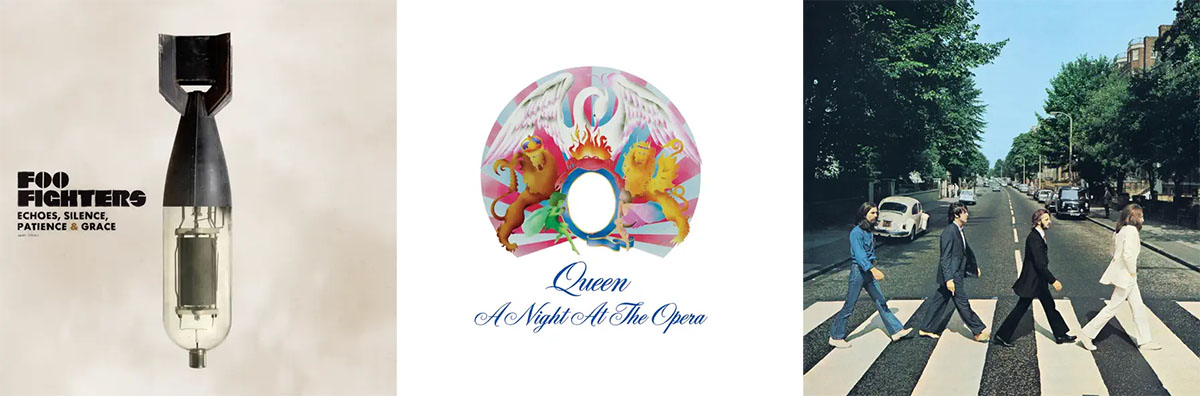
Foo Fighters, “Echoes, Silence, Patience & Grace”
Queen, “A Night At The Opera”
The Beatles, “Abbey Road”
Moving back in time, I played some faves from Foo Fighters off their 2007 album, Echoes, Silence, Patience & Grace. The X2.6s really captured the feel of their sound and style, which is a high-end studio vibe with carefully controlled reverb, tight drum lines, and a hint of bass. The Foos’ trademark layered guitars remained prominent in a nod to the arena but never got too loud or over-distorted. Dave Grohl’s vocals played in the foreground with all his techniques on full display, from clear lyrical lines to his trademark guttural screaming.
Next up was Queen and their legendary album, A Night at the Opera, from 1975. Their arena sound was clear with lots of air and space around Freddy Mercury’s vocal and piano lines. Brian May’s solo in Bohemian Rhapsody had tremendous tone color with a warmth I don’t often hear. Bass lines also made an appearance with tight control and balance.
I finished up with some Beatles’ classics like Come Together and Here Comes the Sun from Abbey Road. Their signature sound is a mix of club and studio with minimal reverb and a tight ensemble between the four players. Vocals were displayed clearly in the center with accompanying instruments to the sides and the drum in the back. Again, I found the word “accurate” coming to mind.
Through all my listening sessions, the precision and neutrality of the X2.6s were their prominent feature. For rock and heavy music, they have an addictive quality. They truly capture the feel of each band’s performance style and their recording aesthetic. Metal is especially well done here because I could listen to it loud without the mix turning to mush. Clarity was there at all volumes. For classical music, the X2.6s won’t do poor recordings any favors. They are the most neutral speakers I’ve heard, and as such, they would make me seek out better versions of performances I already own. If you want to audition classical recordings for a reference collection, I can think of no better speakers to do it with.
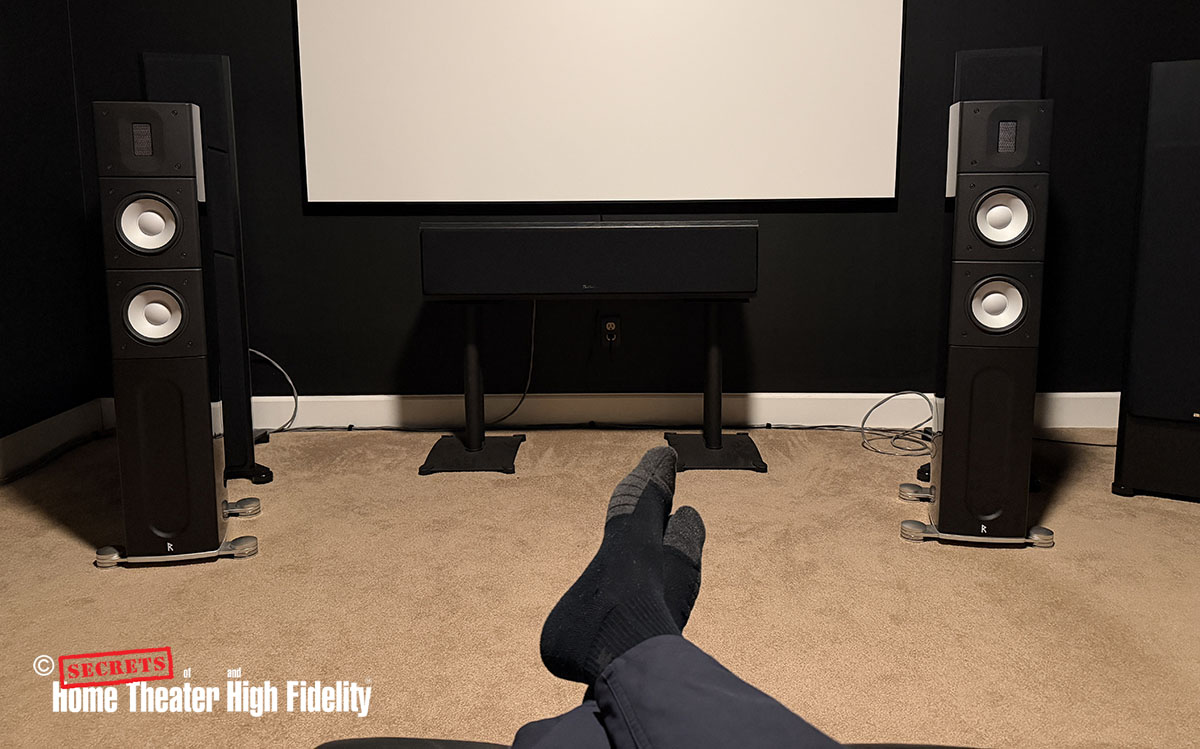
The Raidho X2.6 floor-standing speakers put six-figure technology into a five-figure product. They aren’t inexpensive, but they are a great value in high-end audio.
- Unfailingly neutral, precise, and accurate
- Addictive for rock and heavy music
- Impressive bass for their size
- Gorgeous to look at
- No flaws of consequence
It’s nearly impossible to fault the Raidho X2.6 floor-standing speakers. Their designers set out to create a perfectly neutral and accurate speaker, and they achieved that goal. They’re so neutral that they make most of the speakers I’ve heard before sound colored. They take accuracy to another level. And therein lies a quandary.
I’m a fan of neutral speakers, and I’ve said so on many occasions. The X2.6’s accuracy gives rock and heavy music an addictive quality. They capture the feel of every band’s performance style and their recording aesthetic in a way I haven’t heard before. I could listen to Pantera and The Beatles, and everyone in between, all day and twice on Sunday.
But my main interest is classical. As I’ve also said on many occasions, there is a huge gap between the best and the worst orchestral recordings. The X2.6s are almost too good here. They demand the best fidelity and balance from orchestral tracks. Anything short of reference quality sounds fine until you hit the volume barrier. Then, it’s less enjoyable. This is a small thing that I don’t see as a flaw, but as something that comes with audio gear that is so meticulously precise. And I can’t say it better than that. The X2.6 floor-standing speakers are incredibly good at their job, and Raidho is to be highly commended. If you want to rock out at arena volume levels, or you want to build a library of classical reference recordings, there are none better in my experience.