 YouTube
 Facebook
 X
X LinkedIn
 Pinterest
 Instagram

 Glenn Young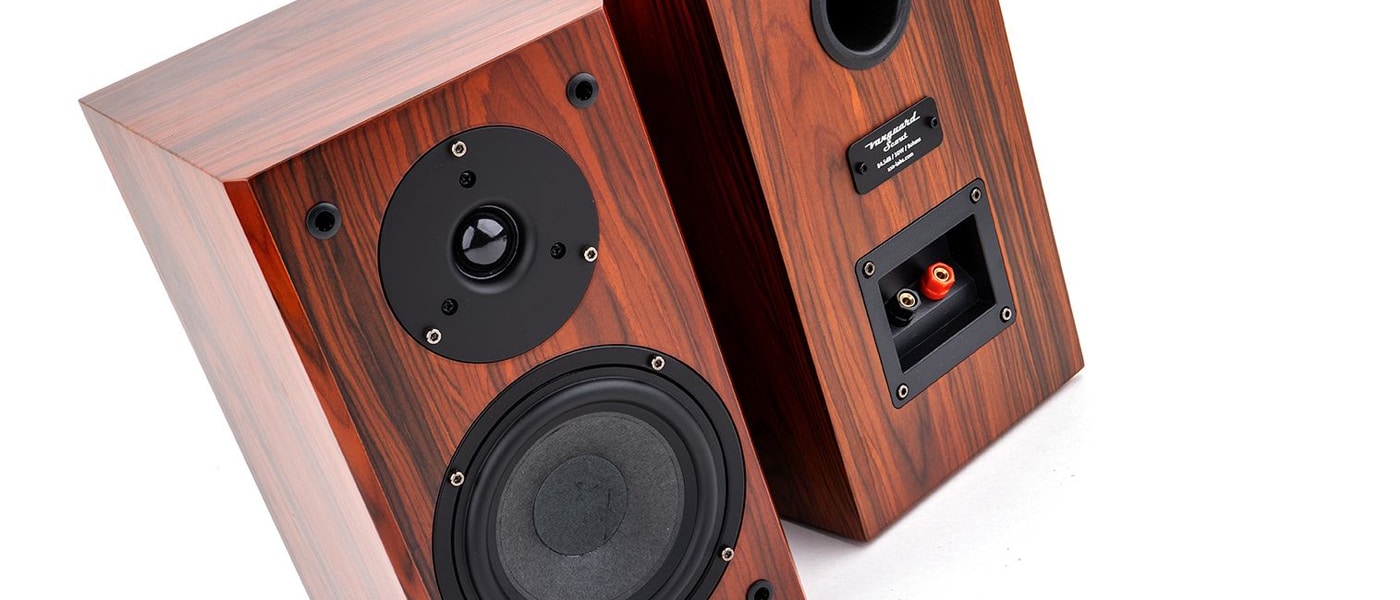
But if you’re one who lives for live concert-level volumes, there are better choices available. So, even with volume limits, the Vanguard Scout speakers and Caldera-10 subwoofer both perform far, far above what their modest prices might lead you to believe.
I’ve been pondering long and hard over how controversial this Vanguard Scout speaker and Vanguard Caldera-10 Subwoofer introduction (and this review) should be… I believe that I’ve discovered hidden virtues in these products that no other review seems to have touched on. But these revelations have required a combination of hard work and good luck!
There are multiple reviews on the internet claiming that these products are “pretty good for the money, but not giant killers.” I disagree. When set up properly in a symmetrical room – with absorptive room treatments – with complementary amplification – and when not asked to play stupidly loudly – the Scout speakers and Caldera10” subwoofer can hold their own with most any $5,000 to $10,000 speaker combo I’ve heard.
VANGUARD SCOUT SPEAKERS AND CALDERA-10 SUBWOOFER
- The Vanguard Scout speakers’ 5.5-inch ported paper woofer has very surprising bass for such a small driver
- The Scout’s 1” soft-dome tweeters sound sweet and natural, but lack the utmost in high-frequency extension
- The Scouts can play at volumes much higher than you might expect
- The Scouts’ genuine rosewood finish is to die for!
- The Vanguard Caldera-10 subwoofer has it all – articulation, deep bass response, and enough speed to match seamlessly even with the super-fast Scout woofers
- This gear comes with a three-year warranty
- The pricing on this gear should make it a favorite of every audiophile
After receiving the Vanguard Scout speakers and Vanguard Caldera-10 subwoofer for review, it took me a day or two to set them up. My listening room is large with the Vanguard Scout speakers on the long wall. Here are the positions where I started with the Scouts:
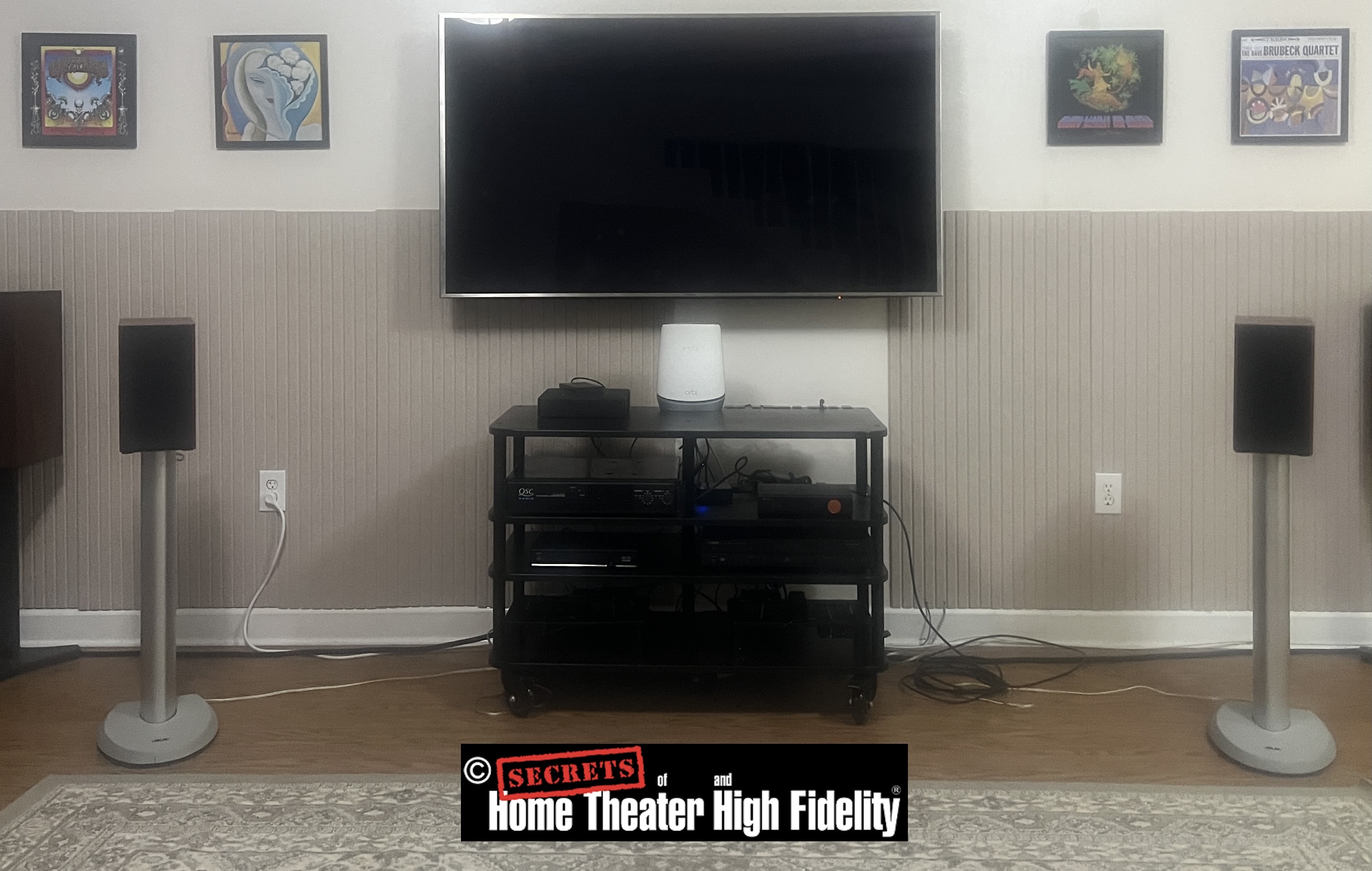
And after listening for a while, these are the positions that I ended up with for the Scouts:
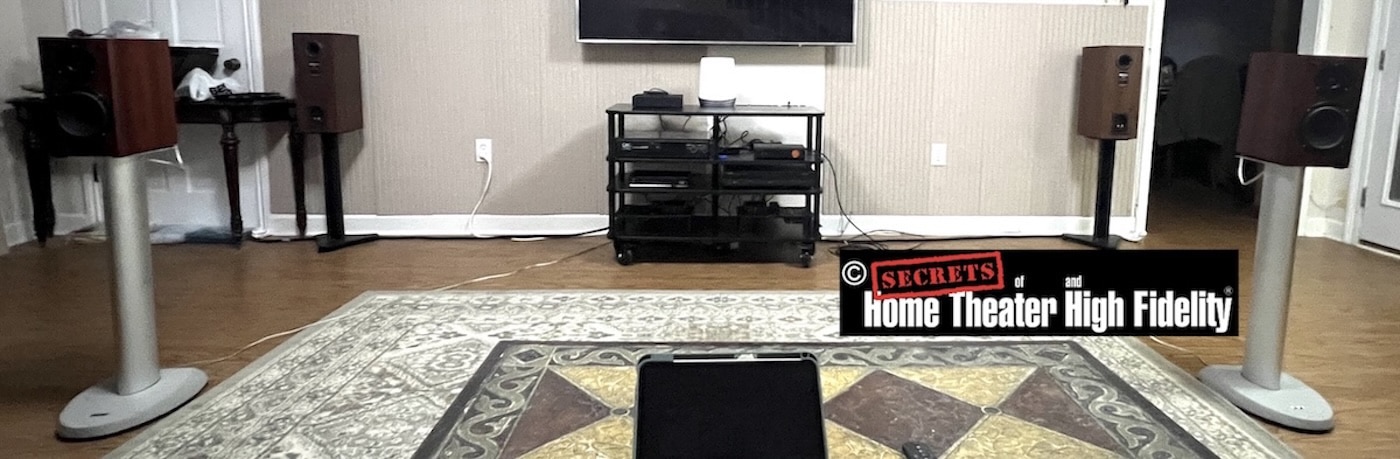
Out of convenience, I set the Vanguard Caldera-10 subwoofer next to a hallway entrance.
Then an audiophile friend of mine came to visit. And I decided to seriously prank him. I let him examine the Mini monitor-sized Scouts and the modest-looking Caldera-10 sub, and then I seated him without telling him anything about the equipment. The first cut was one by the Manhattan Transfer titled “Cantaloop (Flip Out!). ” My friend had heard this song many times in my room and always played by larger and much more expensive components. I deliberately set the volume to a higher level than normal for this cut.
As the first voices hit, my friend’s jaw literally dropped! The soundstage was floor-to-ceiling tall, wall-to-wall wide, and with a depth beyond the back wall of the room! Then the bass notes came in, and my friend began exclaiming no, No, NO!! My friend was stunned that such small speakers could throw such a huge soundstage and that such a small sub could make my entire listening room shudder.
Then, once the track ended, and he was asking how the equipment could perform like that, I told him the price of the gear we were listening to – $299/pair for the Vanguard Scout speakers and $199 for the Caldera-10 subwoofer. I was concerned that my friend was about to have a heart attack!
And although the Scout speakers and Caldera subwoofer can provide that level of performance, I think it is unlikely that the majority of purchasers will ever hear it. To do what I’ve described, numerous aspects (mostly of setup) must come together.
Many (most?) purchasers will use the Scout speakers as desk monitors for a computer gaming system. From close range, on a desktop, with monitors and computer cases strewn about, the speakers will sound great – but not at their best. To sound their best, the speakers should be in a spacious room on stands that place the tweeters at approximately ear level. Since I’m rather tall, 29” stands worked out perfectly for me.
The listening room must be generously treated with sound absorbers. Echoey rooms need not apply. If you want the soundstage that the Scouts are capable of, you’ll not want any room reflections muddying things up.
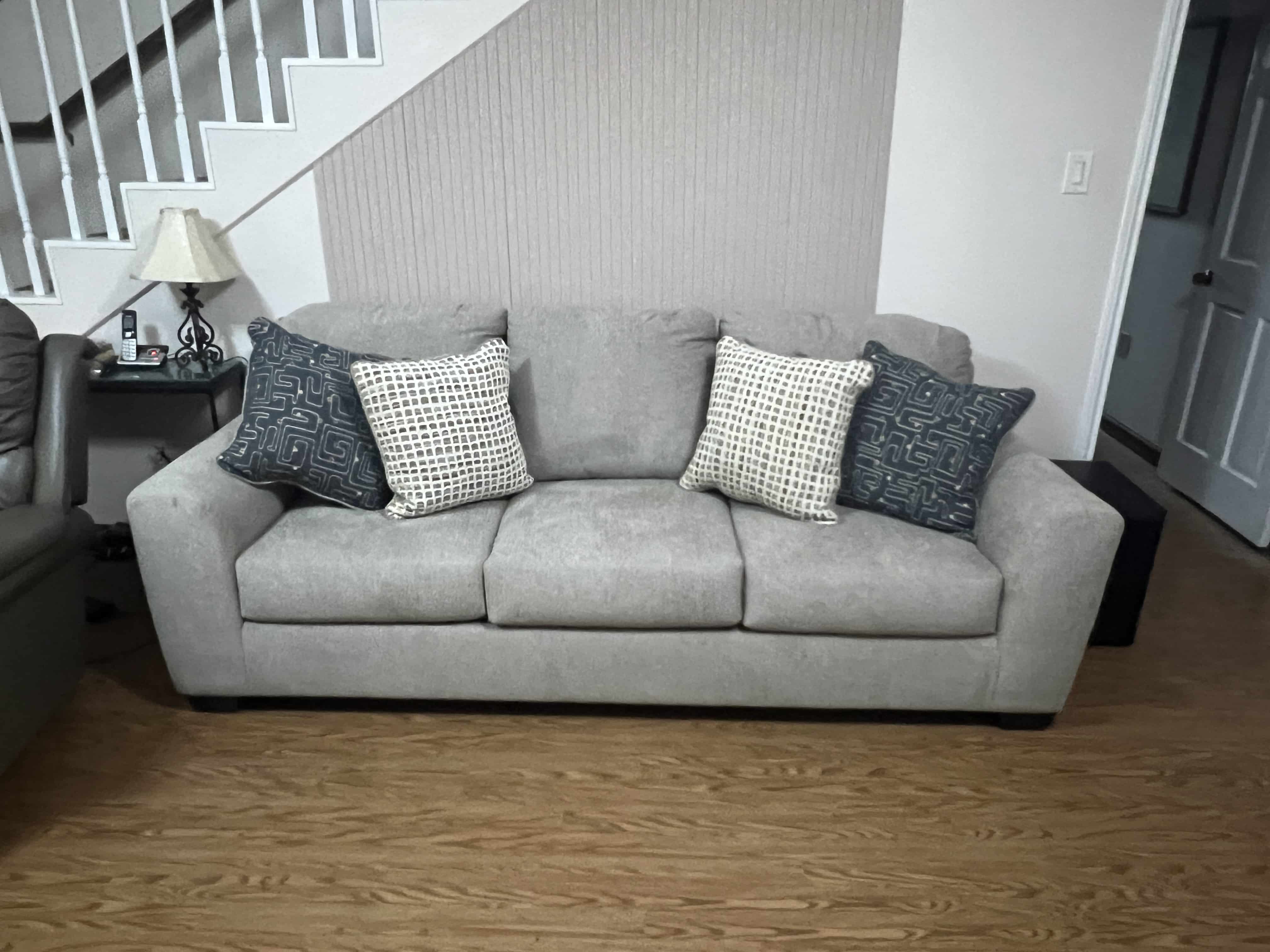
To further reduce room sound, you will want to place the Scouts much wider than the typical isosceles triangle points and closer to the listening position than usual. And finally, you do not want to toe-in the speakers too much. A little goes a long way.
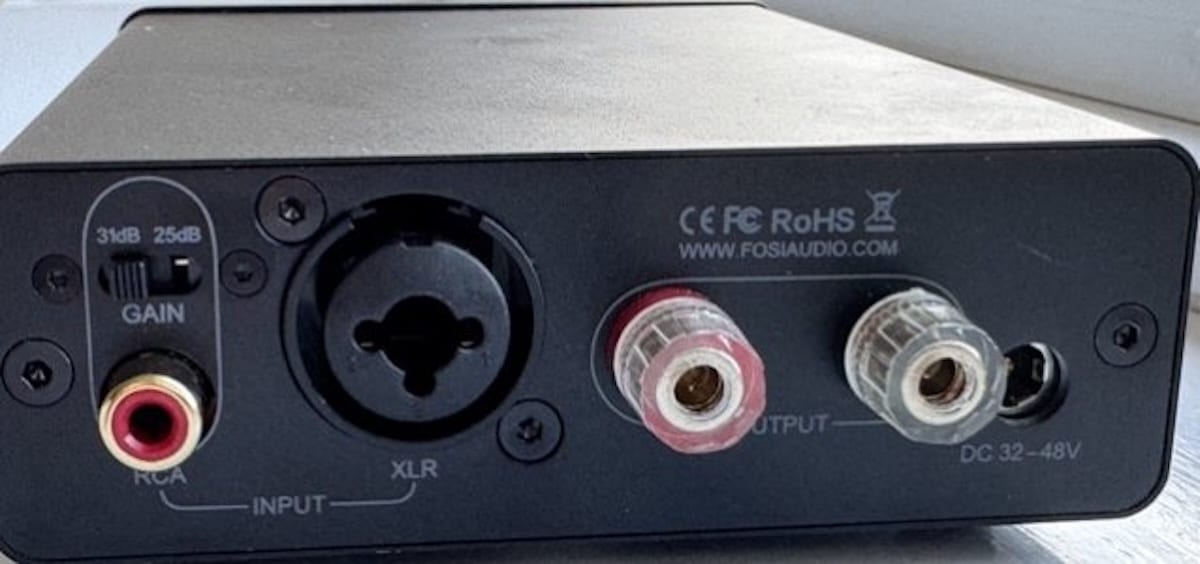
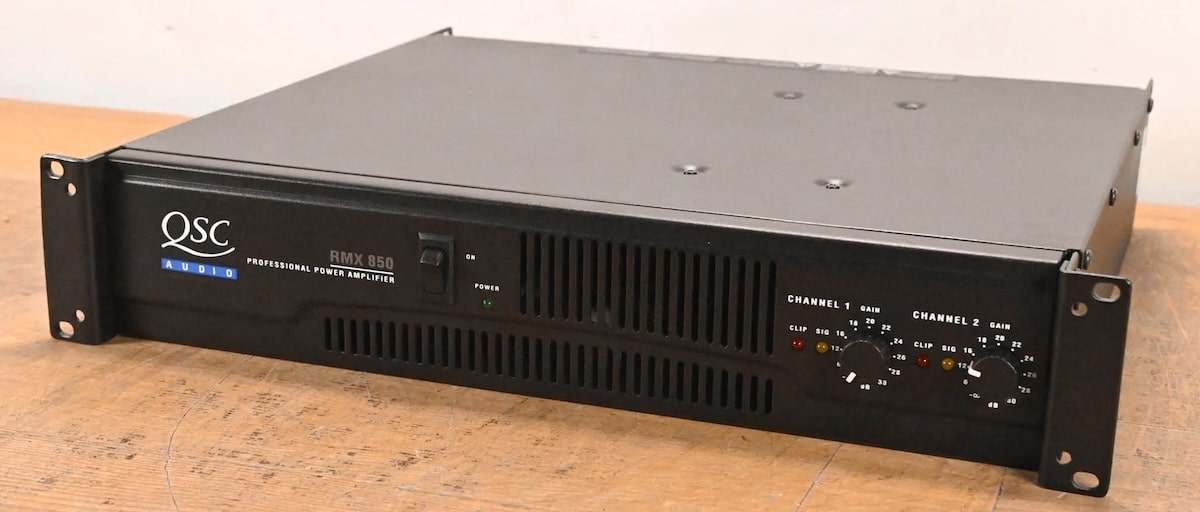
I must also comment on amplification. The Scout speakers are CLEARLY marked 50-watts / 8-ohms. This would lead many to believe that no amplifier with an output of greater than 50 watts should be hooked to the Scout. This would be a grievous misconception. I started my listening with a Fosi V3-mono, Class-D amplifiers rated at about 110 watts at 8-ohms. Although the Scout speakers would play very loudly with the Fosi amplifiers, the dynamics were profoundly lacking. I tried a second amplifier, the QSC RMX850 “pro” amplifier (rated 200 wpc at 8-ohms), and my oh my, did this light bottle-rockets under the Scouts! This was the amplifier I used for the rest of my listening.
As an aside, Vera-Fi Audio (U.S. Distributors of the Vanguard products) also has an integrated “Ranger” amplifier that, although Class-D, has special circuitry intended to banish the “Class-D blahs.” I have requested a review sample and will keep you informed!
I guess it also bears mentioning that all my listening was done without the grilles.
Vanguard Scout Speakers
Cabinet Description:
2-way, rear bass-reflex ported
Cabinet Finish:
genuine Rosewood on all surfaces
Cabinet dimensions:
12” tall x 6.6” wide x 10” deep
Sensitivity:
84.5dB / watt
Maximum Power Handling:
50 watts RMS
Impedance:
8 Ohms
Bass Response:
60 Hz @ -6dB
Treble Extension:
Not specified
Weight:
12 lbs.
Bass driver:
5.25” diameter paper cone
Treble driver:
1” soft dome
Price:
$299.00 / Pair
Vanguard Caldera-10 Subwoofer
Cabinet Description:
Rear-ported, bass-reflex
Cabinet Finish:
Black vinyl wrap on all surfaces
Cabinet dimensions:
16” tall x 13” wide x 15” deep
Plate Amplifier:
Stereo RCA In/Out, Stereo speaker 5-way binding posts for In/Out – Volume pot – Low-
Pass filter pot:
Phase Switch 0-180-degrees – Mode switch (auto-standby-on) – IEC power connector –
On/Off switch:
200 Watts @ 4-Ohms
Driver:
10” Long-Throw doped paper cone with butyl rubber surround – 4-Ohms
Weight:
32 lbs.
Price:
$199.00 each
Website:
Company:
SECRETS Tags:
VANGUARD, SCOUT, CALDERA-10, SUBWOOFER, BOOKSHELF SPEAKERS, Vera-Fi Audio
- Fluance Signature Series two-way speakers / reviewed 11/2018 by Taps Das
- Totem Mites bookshelf speakers / reviewed 06/2009 by Richard Stevens
Secrets Sponsor
The Vanguard Scout Loudspeakers:
Bass – The Vanguard Scout speakers, despite their diminutive size and modest bass driver, can play surprisingly loudly. Do not confuse this with stupidly loudly – if you want a party speaker, this isn’t it. But the little 5.25” paper drivers will do a very good job of sounding not only loud but also dynamic.
Many small drivers lose their ability to remain dynamic as the volume increases, but (given generous wattage), the Scouts rise to the challenge.
Midrange – The Vanguard Scout’s midrange has been described as “warm,” and so it is – unless you hang the speakers out in the middle of the room (as I did). When placed away from boundaries, the “warmth” of the midrange goes away, leaving a startling clarity. In fact, the midrange is one of the Scout’s best features! It is open, smooth, and transparent like no speaker in this price range should be! You wouldn’t think that a 5.25” two-way speaker would excel at midrange transparency, but the Scouts do. Like tube sound? The Scouts will let you hear the differences in the tubes you’re using. Like stunning transparency? Use the best solid-state amp you can find – the Scouts will let you know what you’re listening to!
Treble – Yes and no. The Vanguard Scout’s treble is so well-blended into the midrange that you will never, ever be able to hear the crossover. The lower end of the dome tweeters’ frequency response is not only smooth but also has the power-handling ability to go loudly with the woofer without breaking up, bottoming out, or changing tone.
As to upper treble extension, this is the ONLY place I can legitimately criticize the Vanguard Scout speakers. The treble is smooth and is reasonably well-extended, but the soft-dome tweeters just don’t have the shimmer that lower-mass drivers like ribbon tweeters can provide. Don’t even TRY to get that shimmer back with equalization, either. Any such attempt is likely to result in blown tweeters! The treble is very good but not great. Live with it!
Dynamics – With my HRT balanced DAC and Fosi ZP3 preamplifier playing through the Fosi V3 Class-D mono amplifiers, the Vanguard Scouts sounded like mush. An OK center image, perhaps, but no dynamics at all. At first, I blamed this on the Class-D amplifiers.
I then switched to a QSC RMX850 “pro” amp, leaving the front end alone. This made a positive difference in both imaging and dynamics.
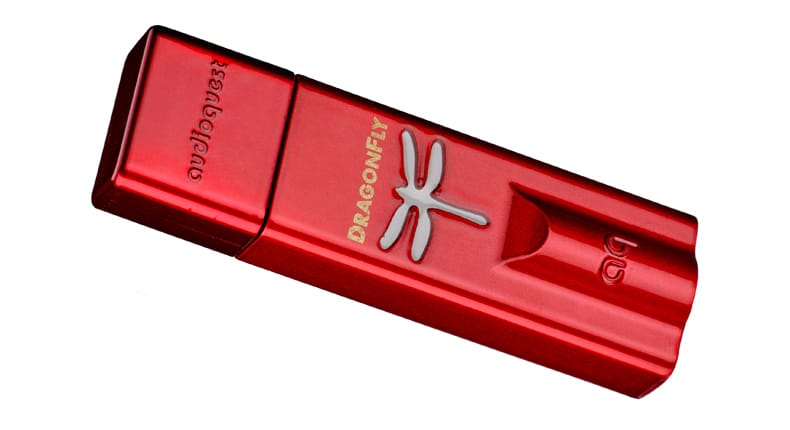
Finally, I decided to try eliminating both the HRT DAC and the Fosi ZP3 preamp but adding back the Fosi V3 mono Class-D amplifiers. For a front end, the AudioQuest Dragonfly Red was used, its digital volume control replacing the preamp function. The Dragonfly worked well for imaging, dynamics, and tone, but sounded slightly rough in the treble.
Equipment Used For This Review:
Roon Nucleus One with SSD Library drive and TIDAL streaming service
iPad running Roon Remote as a wireless system controller
AudioQuest USB Cables
HRT Balanced USB DAC
AudioQuest Dragonfly Red DAC
IXOS unbalanced analog interconnects
AudioQuest balanced analog interconnects
Fosi ZP3 balanced preamplifier
Emotiva 24-bit Virtual Copper wireless subwoofer transmitter/receiver
Fosi V3 Class-D mono amplifiers
QSC RMX850 “pro” amplifier
Various speaker cables
Vanguard Scout loudspeakers on 29” stands
Vanguard Caldera-10 subwoofer
M&K 12” sealed subwoofer
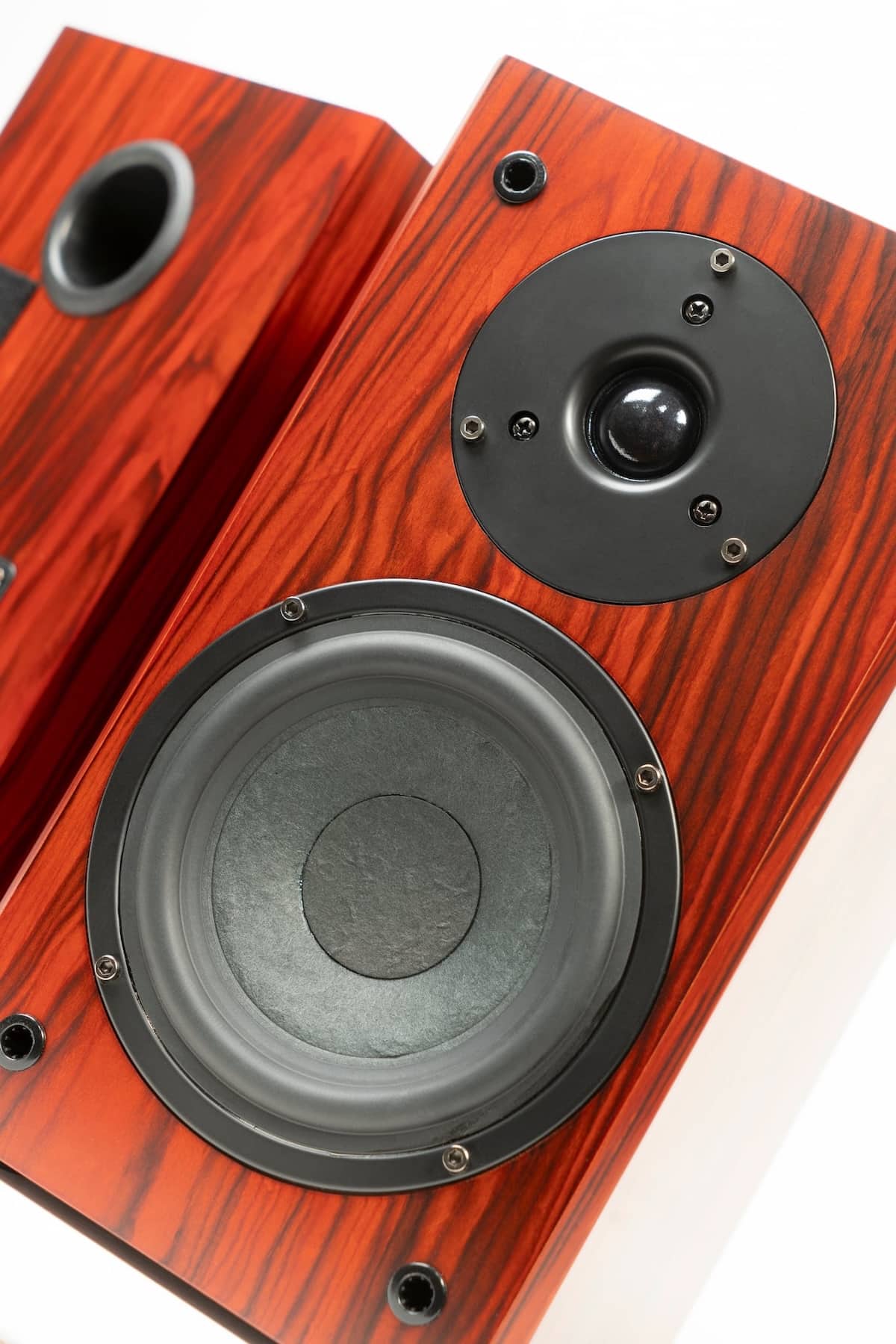
Appearance – I haven’t touched on this yet, but it deserves a paragraph (or more) on its own. The Vanguard Scouts are some of the most beautiful speakers I’ve ever seen (and I’ve seen more than a half-century worth of speakers)! The cabinets are veneered in genuine rosewood on all six surfaces. Edges are mitered at the front of the cabinet to avoid acoustic effects as the sound waves leave the cabinets. The finish of the rosewood panels is so smooth that I initially thought it was a synthetic surface. The semi-gloss finish is absolutely perfect. The drivers are inset and secured with stainless-steel(?) hex-head hardware. The rosewood bottom is fitted with four felt feet to avoid scratching the finish. The grille is made of thin, milled particle board with an acoustically transparent grille cloth.
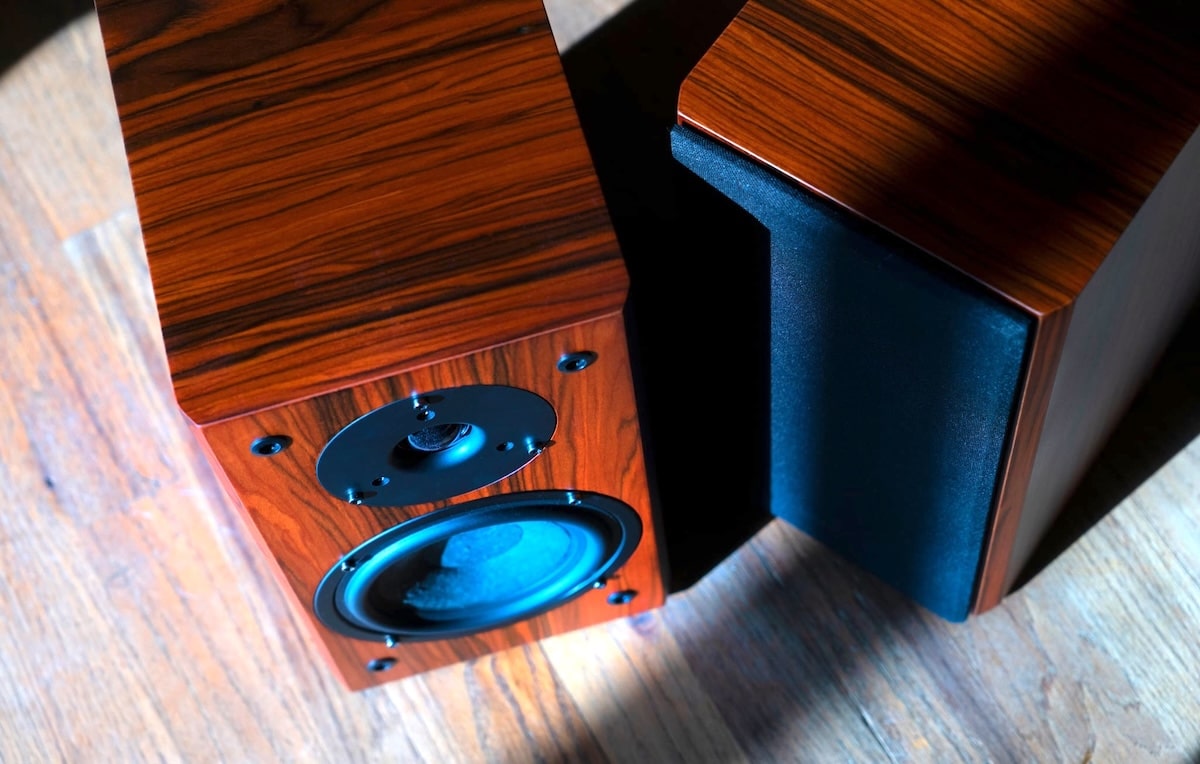
Break-in – Many speakers these days do not require a break-in period at all. The Vanguard Scouts are not in this group. Over the first few days that I listened to the Scouts, their sound changed in both the treble and the bass. The bass driver became able to play lower bass notes at the same volume as its midrange. The dome tweeter became capable of reaching higher notes with the same alacrity that it previously played lower notes. Overall, the speaker’s sound became more open and relaxed. So, don’t judge the sound of the Vanguard Scout before 40 to 60 hours of break-in.

The Manhattan Transfer, “The Junction”
The song by the Manhattan Transfer, “Cantaloop (Flip Out!),” has much to recommend it as a demo track. The vocals start very softly but quickly build to a very loud crescendo. Deep bass is added to the vocal track, and then some VERY deep bass is added. Vocal solos and harmonies fill the song, and toward the middle, a wickedly competent piano is added. Overall, this song will test the full range of the speaker under review. I found that the Vanguard Scout speakers were quite sensitive to placement in my room. Placed too close to the back wall, the bass became muddy. As they were moved forward into the room, the vocals became more and more tactile until, at a point near the middle of the room, they acoustically disappeared, leaving a HUGE soundstage that was wide, tall, and deep! Careful room placement will transform the Vanguard Scouts from merely good speakers to absolutely great ones. With the right room placement, the Scouts’ one flaw (insufficient treble extension) can easily be ignored.

Paul Simon, “Graceland”
From Paul Simon’s “Graceland” album comes another of my favorite test tracks, “I Know What I Know” with General M.D. Shirinda and the Gaza Sisters. What I like the most about this track is its acoustic complexity with one source recorded atop another. The Vanguard Scouts did as good a job as I’ve heard from any speaker in untangling the knotted acoustic threads of this song.
Vanguard Scouts Conclusion – Ignoring their price, the Vanguard Scouts give you absolutely everything (except extended bass and high treble) that you’d get for one, two, four, or even eight thousand dollars per pair. Used with a subwoofer, you’ll probably not even miss the high-treble extension. Considering their price, I find it insane that you can buy a pair of speakers with this much performance for $299. At the time of this review, I have speakers in-house costing 2x and 5x the price of the Scouts, and I can say without hesitation that the Vanguard Scouts are better speakers. ANYONE considering a speaker purchase in the near future should definitely visit VeraFiAudio.com and look closely at the Scouts.
The Vanguard Caldera-10 Subwoofer:
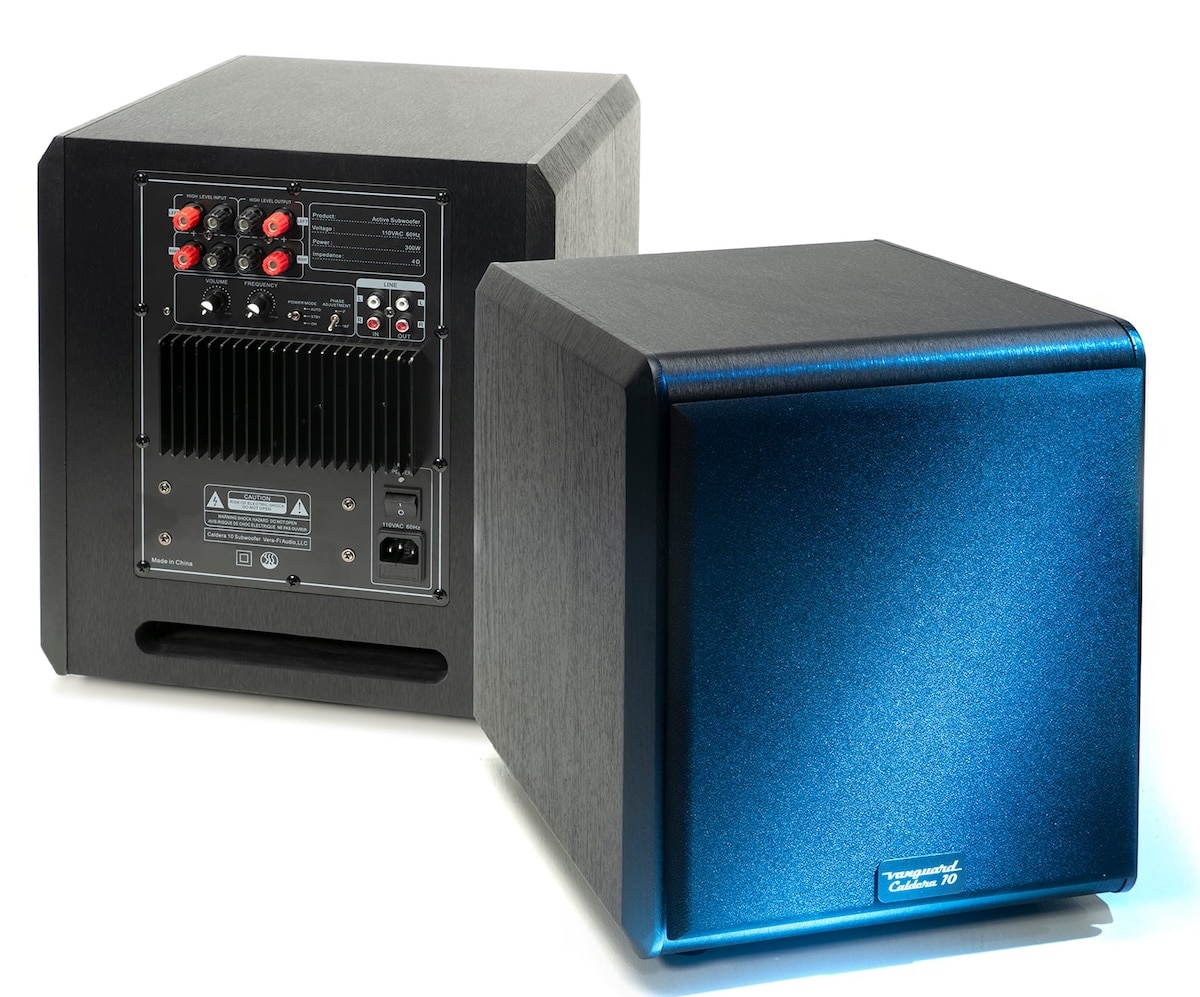
The Vanguard Caldera-10 is a relatively small, rear-ported box containing a plate amplifier and a paper-cone, doped 10” woofer. The designer (wisely in my opinion) chose not to attempt subwoofer response below about 30 Hz. To do so would have required a larger cabinet, a more powerful amplifier, and/or a driver with significantly longer travel.
But what bass the Caldera-10 does produce has pitch control and speed. Unlike the “home theater thump boxes” that dominate the market, the Caldera-10 does not continue resonating after a note has stopped. This is not to say that the Caldera-10 lacks punch – it doesn’t. In fact, when called for, the Caldera-10 can be one of the punchiest subs I’ve ever heard, but ONLY when called for.
I’ll also note that placement can add almost an octave to the Caldera-10’s bass extension. I placed the review sample of the Caldera-10 immediately adjacent to the opening of a 50’ hallway, and when bass notes came along that matched the resonant frequency of the hallway, the entire house shuddered. This was fun for movies, but only occasionally so for music.
I eventually placed the Caldera-10 along the speaker wall in a right/left pairing with my M&K sealed-box 12. I was NOT using an upstream electronic crossover. The Scouts were being run full-range, and the two subs were being blended-in (mostly by ear) for the underpinning.
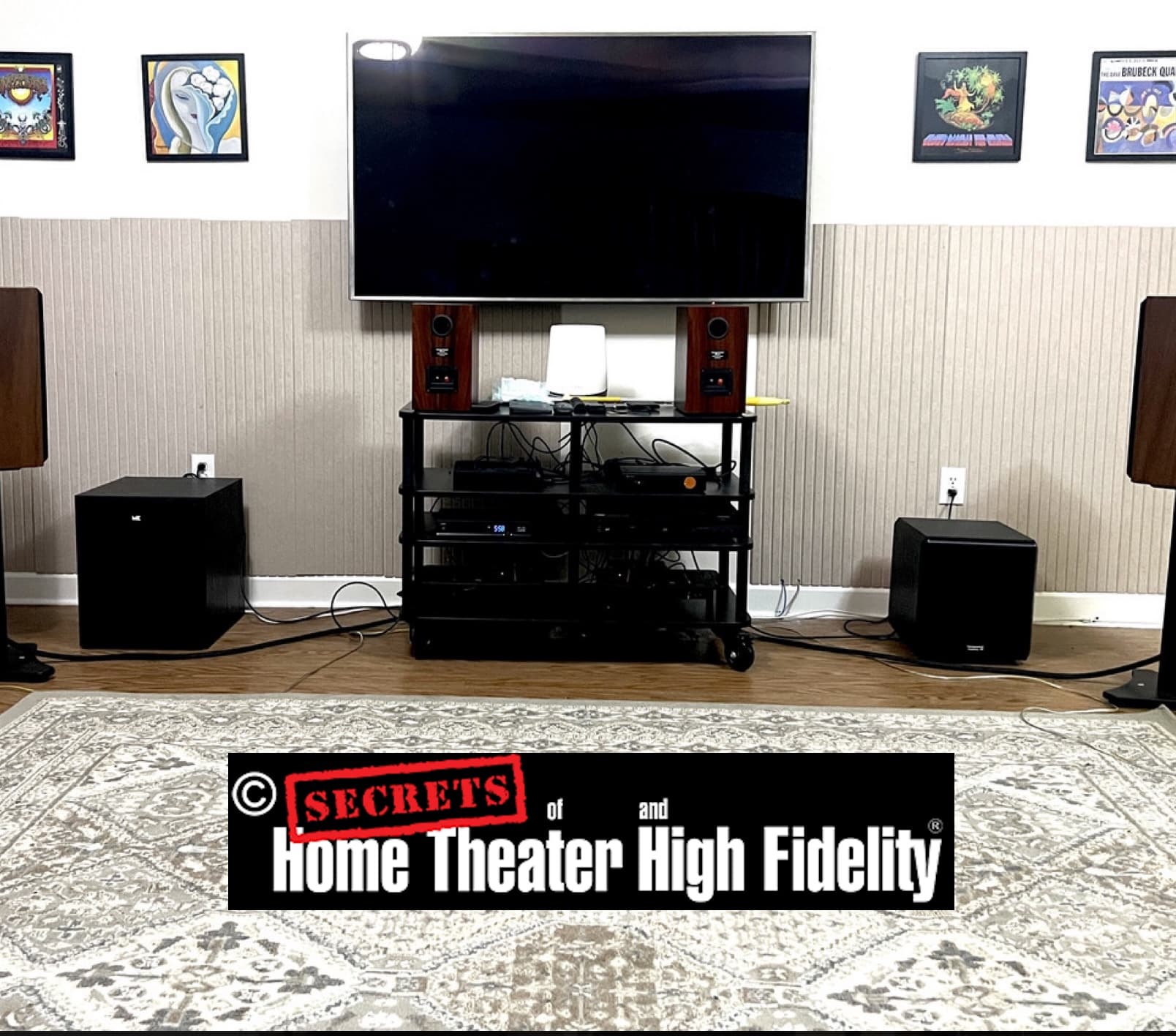
At this point, I encountered several minor issues with my Caldera-10. Two of the three are vanishingly trivial, and I mention them only in hopes of saving you the same issues:
1. In addition to the power on/off rocker switch of the Caldera-10, the plate amp has a three-way toggle switch. The three positions are “Auto,” “Standby,” and “On.” I managed to fat-finger this toggle to a position between the “Auto” and “Standby” options, making the sub’s function intermittent. So, if you happen to encounter intermittent operation of your Caldera-10, look closely at the position of your toggle switch.
2. The plate amp has a variable low-pass frequency knob. The knob has only two frequencies marked: all the way down is 20 Hz, and all the way up is 200 Hz. This is inadequate because the user has no way of knowing if the knob has a linear or log taper. The minimal user’s manual that comes with the sub does not say. The volume knob also has only two markings: “Min.” and “Max.” Again, the user would be well served to know if the volume knob is a linear or log taper control.
3. The plate amp’s “Auto” feature was unusable for me because of timing issues. For example, a bass note would come along, and after a tenth to a fifth of a second’s delay, the sub would wake up and give a grunt. But then the sub would (apparently) go to sleep again until the next bass note came along. This meant that the sub was never in synch with the source signal. Every time a drum was struck, I’d hear the initial strike through the satellite speakers, and then, after an audible delay, the subwoofer would wake up and follow. Once awakened, the timer should keep the sub on for five minutes or so to prevent these startup delays.
Most Caldera-10 owners don’t experience this bug. Vanguard is aware of this issue and is working to banish it at the time of this review.
The “easy fix” for this, of course, is to put the sub’s plate amp in its “On” position and leave it there either all the time or else to switch it on before conducting a listening session. The plate amp uses minimal power while not actively amplifying, so it is fine to leave the Caldera-10’s plate amp on all the time.
Vanguard Caldera-10 Conclusion: To my ears, the Vanguard Caldera-10 is the best bargain in small subwoofers. It delivers $600 subwoofer performance for $199. Anyone in the market for a small sub would be foolish not to consider the Caldera-10 as a prime candidate.
Secrets Sponsor
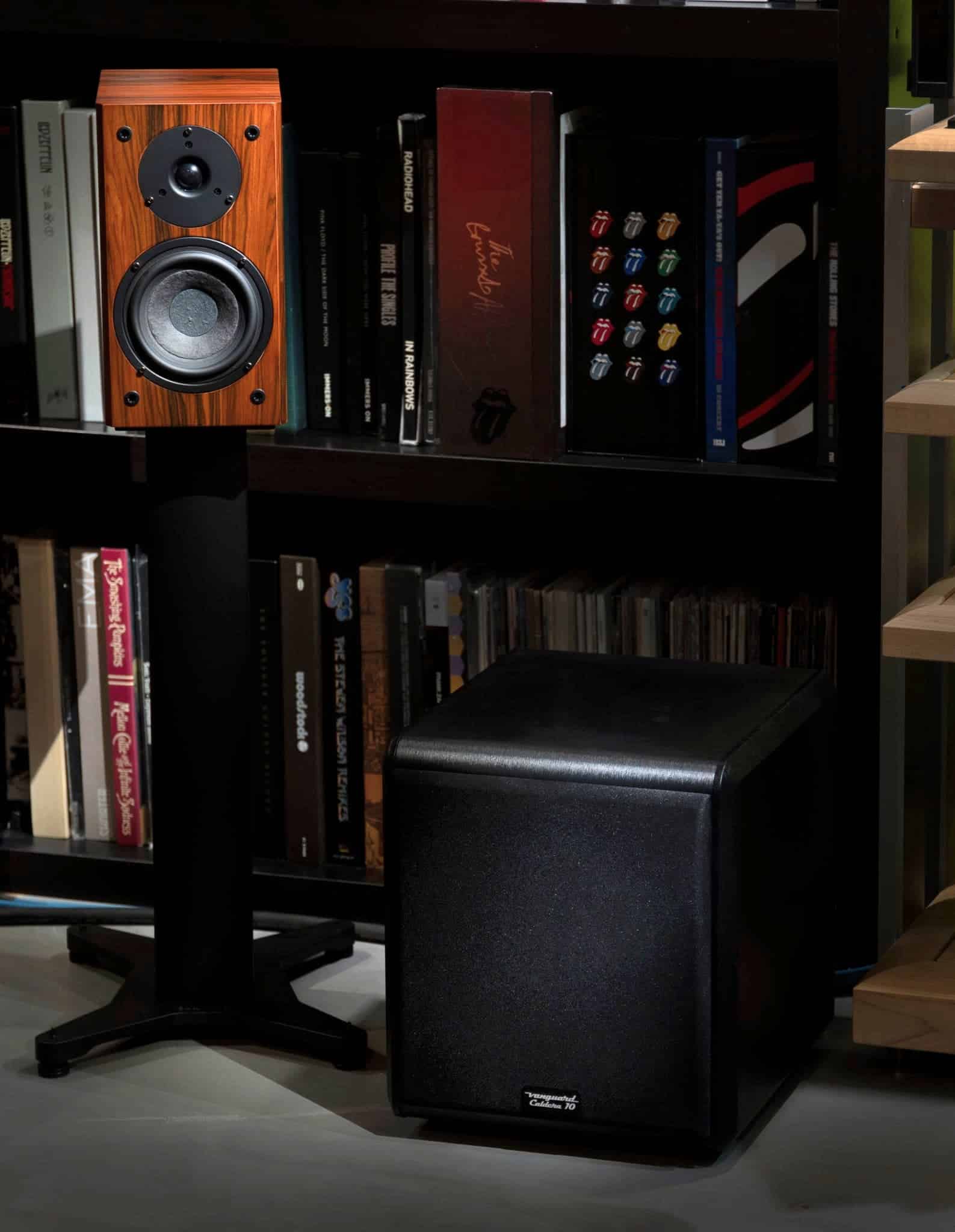
The Vanguard Scout speakers and Caldera-10 subwoofer are some of the highest-value components I have ever reviewed. For performance on a budget, try these!
- Best rosewood finish I have ever seen on anything!
- The Scout speakers can image like mini monitors while playing as loudly as tower speakers.
- The Caldera-10 subwoofer is a top pick for BOTH music and movies.
- The prices for these components absolutely can’t be beaten.
- Improved “auto” function on the Caldera-10
- Better manuals for both the Scout speakers and the Caldera-10