 YouTube
 Facebook
 X
X LinkedIn
 Pinterest
 Instagram

 Secrets
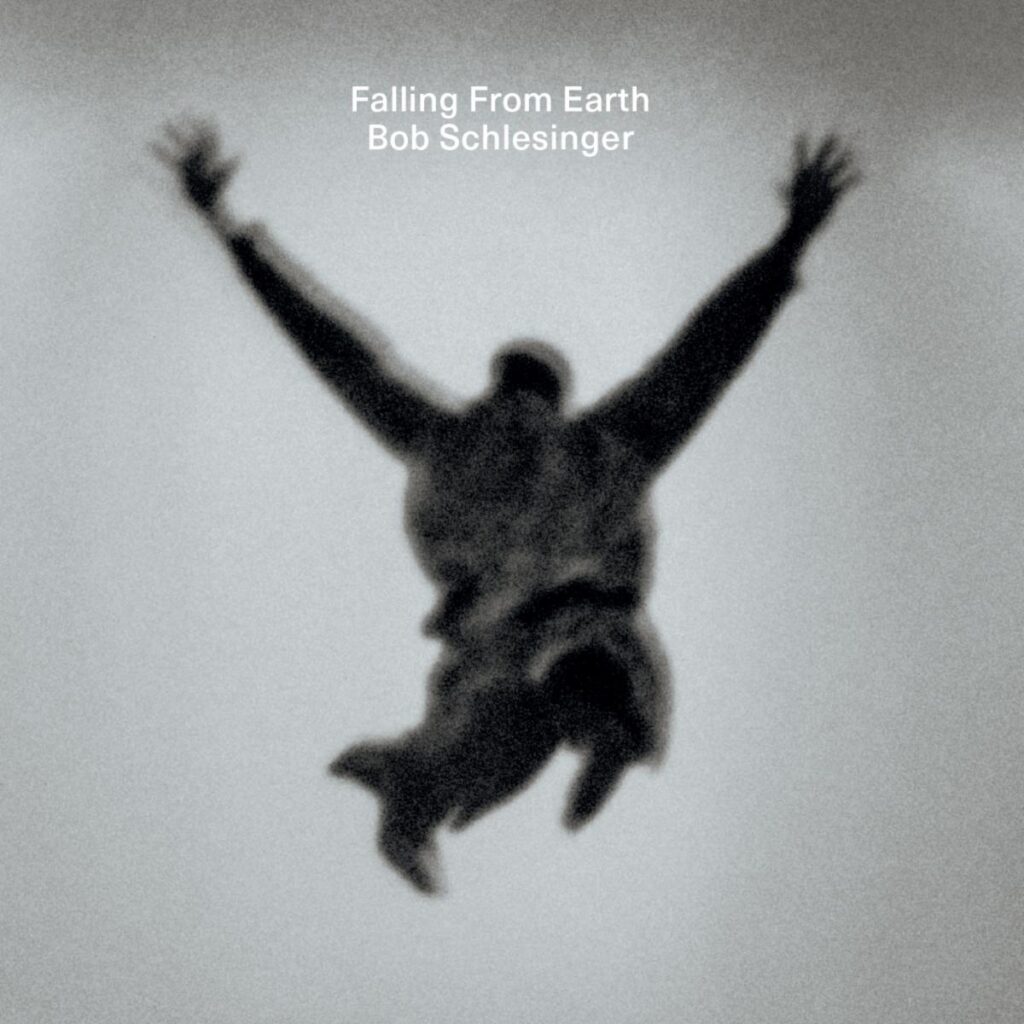 Falling From Earth
This tasty double LP set features some innovative and enticing new Jazz compositions along with a few novel covers of some classics. While I am not familiar with Bob Schlesinger’s work personally, his skill as a piano player and a composer/bandleader is more than readily apparent here. The supporting musicians include guitar virtuoso Mike Stern, Eddie Gomez (yes, he who performed extensively with the late Bill Evans) on acoustic bass, and Billy Drummond on drums.
According to the liner notes, Schlesinger originally recorded the initial core of this album in 2018, and it was scheduled for release the following year, but that was put on hold due to the pandemic. During the downtime, Schlesinger and engineer-producer John March reexamined all the work from the sessions and elected to include additional material in the final release that we have before us.
I am certainly glad that they elected to do so, as the first side begins with a 13-minute existential jam session titled “Easy Off Ramp.” Mike Stern’s guitar features prominently on the first 3 sides of this package, and he, along with Schlesinger on piano and keyboards, really digs in and takes us all sorts of places musically. While it may have initially been recorded as a jam session, it feels much more structured and leads the listener on a bit of a journey. The interplay between Schlesinger, Stern, Kevin Axt on bass, and Steve Hass on drums is extraordinary. Mike Stern’s guitar sound is unmistakable, and it kind of spearheads the whole track. The feel of it just dovetails with the whole title concept of “where would you go if you actually fell from Earth?”
Side B is strong, starting with Axt’s driving funky bass groove on “Bait Tone Blues.” Schlesinger plays some nice funkified stretches on both piano and organ, while Hass’s drum kit is just pounding away in (say it with me one more time) a most “funky” abandon. Finally, Stern’s guitar is a rapid-fire, jazzy assault during his solos. The overall musicianship is frankly impressive!
“Brush Stroke” is an up-tempo sweeping rollercoaster of a sonic ride that showcases this group at its technical and melodic best. Dean Oldencott is the keeper of the drum skins on this one, and he gives as good as he gets on this track. It is, at the same time, exploratory, but grounded in soulful blues architecture. The performance drives us close to the edge but never goes fully off the rails.
“Common Ground” slows things down with a smooth, deep, and introspective journey. Stern’s guitar just envelopes the listener, and you feel like you are floating along. Schlesinger’s sublime piano work is the perfect accompaniment here, adding to the reflective nature of the piece. I couldn’t help thinking about my late father when listening to this track. Great memories of times we spent together, even though (I thought) we were very different people, but now that I’m older, we would have been more similar than I realized. Eddie Gomez and Billy Drummond are just so tasteful on bass and drums, respectively, here.
“Left Field” sounds like a slinky, funky take on a Vince Guaraldi cut from “pick your favorite Charlie Brown Peanuts TV Special.” It’s bizarrely cool in that context. It’s probably my favorite track on the whole set.
After three sides of having Mike Stern featured so prominently on guitar, Side D is completely guitar-less, which, while curious at first, turned out to be a nice way to wind down the entire 2 LP set. Schlesinger, Gomez, and Drummond make a gifted, tight, and enjoyable trio for the final 3 tracks.
The LPs themselves feel and sound like a high-quality production. Pressed on 180 gram vinyl, the platters were completely flat, with no noticeable surface noise or undue clicks or pops. Clean as a whistle!
Falling From Earth is an especially worthwhile and top-notch listening experience!
Carlo Lo Raso
Secrets Sponsor
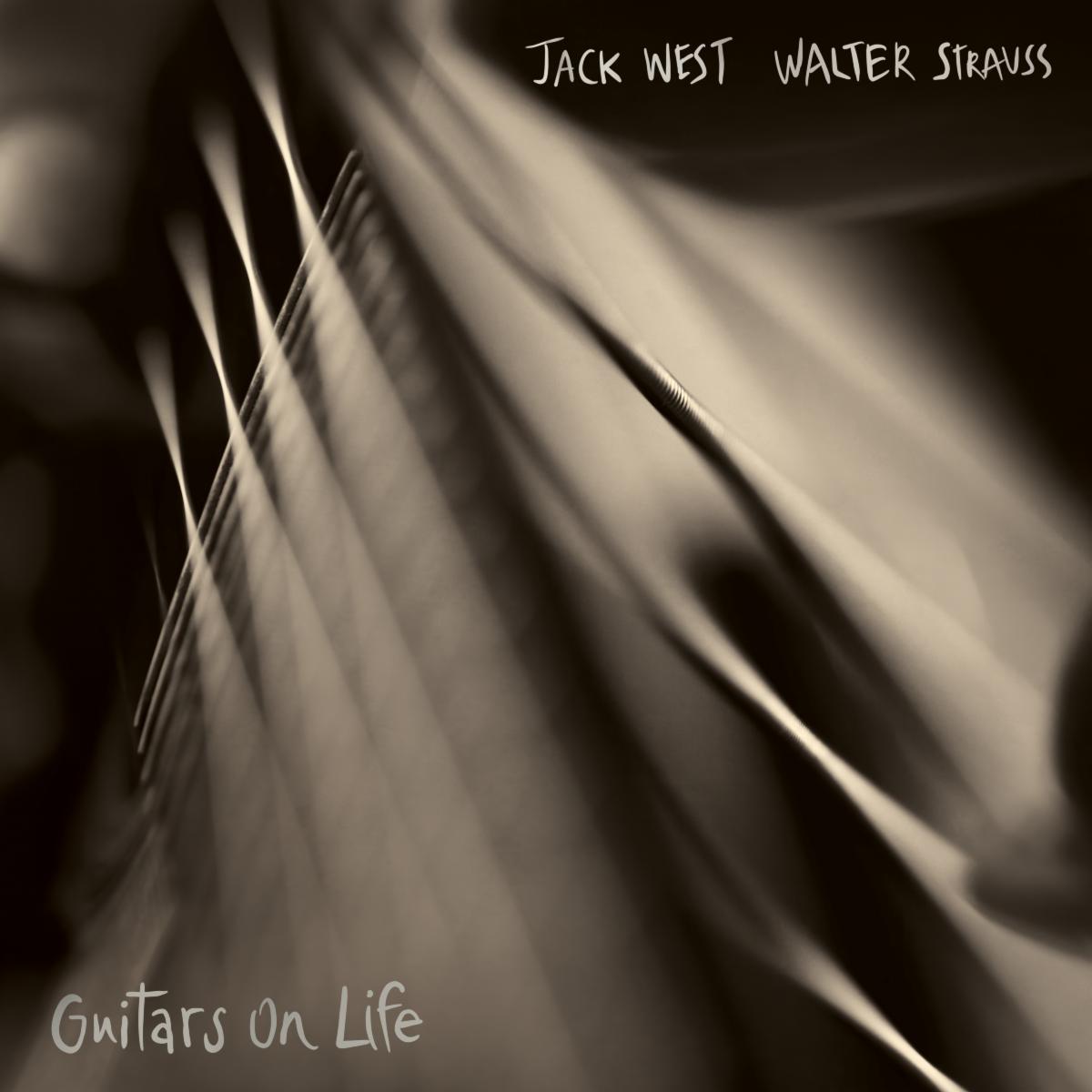 Guitars on Life
From the aesthetic design of the instrument to the wide-ranging sounds it can produce, I love the guitar in all its forms. I could never learn how to play it properly to save my life (Lord knows I’ve tried), so perhaps that makes me appreciate those who truly excel at it all the more. If you have similar sentiments to my own, then queueing up Guitars on Life by Jack West and Walter Strauss will be an excellent way to pass some time or be part of a guitar mutual admiration society. In a nutshell, this album is composed of two exceedingly talented and experienced players, each on an acoustic guitar…and that’s it. West is placed to the left and Strauss to the right, and they both sound tremendous. Sounds simple, no?
The acoustic interplay between their guitars is truly beautiful, with not just the expected picking, chord changes, and playing dexterity, but the sounds, beats, and rhythms that they are both able to extract from their instruments while staying in touch with what the other is doing is something that a neophyte such as myself finds extraordinary. I feel like there are nods to Leo Kottke, among others, that I hear throughout the album, but the music is completely their own, except for their unique cover of Stevie Wonder’s “I Wish,” which is a standout track.
The recording itself is excellent, with most tracks using only two microphones and recorded with both players together, live in the studio with no overdubs; all the details, along with the intimate sense of space, seem to be all there in spades. I could easily make out the positioning of West and Strauss in front of me, and on the track “Across the Bardo,” for example, the sounds of Jack West’s fingers sliding up and down the neck strings were so clear and so detailed. Another favorite track was “OO.” West was essentially playing the rhythm part, but he was doing quite a bit of rhythmic tapping and slapping on his guitar’s body, and the sounds of the initial impacts on, and the resulting reverberations from, the guitar body were so clear and distinct that I could almost feel them as I was listening. And then Strauss’s lead part was so tastefully done with its speed and almost “zippy” tone that it all made for a great contrast of sound and composition.
The album was mastered by Chris Bellman at Bernie Grundman Mastering and is pressed on a super-cool looking clear injection-molded PET plastic, which is said to be a more eco-friendly, 100% recyclable alternative to traditional vinyl. I personally think it makes the LP look visually striking, and I’d like to see more content produced in this manner. Sonically, the LP sounded excellent with no noticeable surface noise, pops or clicks, and an appealing overall tonal balance on the guitars themselves. This one got played a lot!
Carlo Lo Raso
Secrets Sponsor
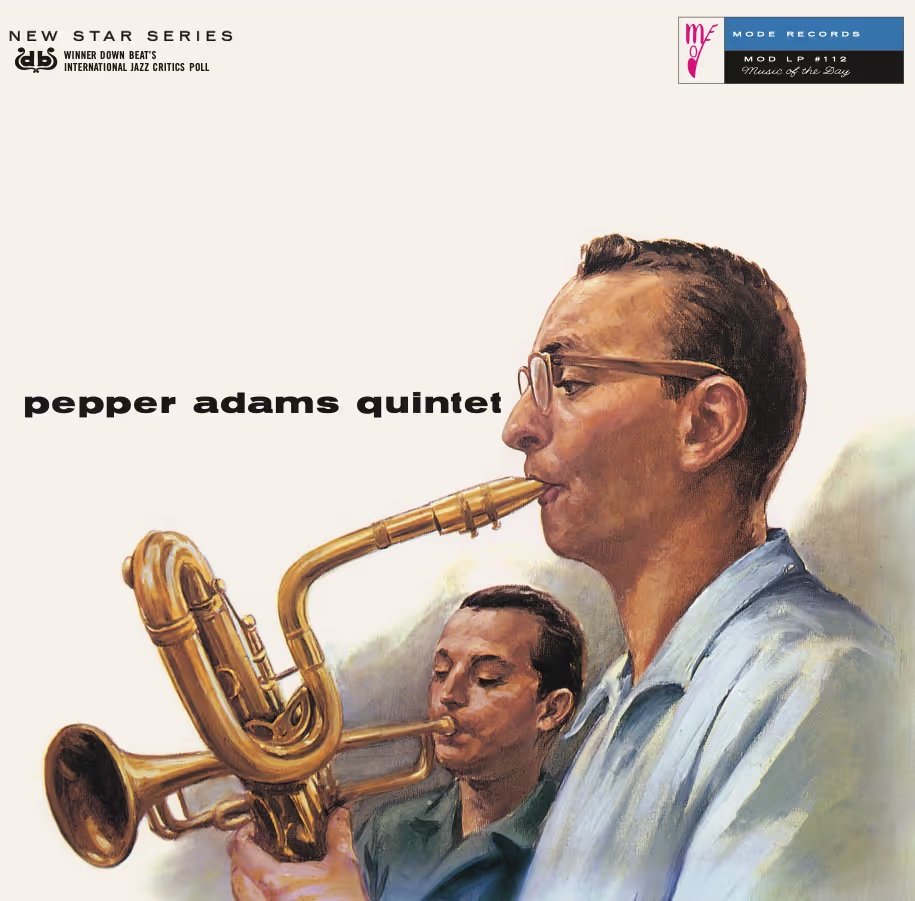 Pepper Adams Quintet
Originally released in 1957 on the small and short-lived Mode Records label, Pepper Adams Quintet is a stylish representation of the up-and-coming West Coast Jazz scene. The band lineup consists of Pepper Adams on baritone sax, Stu Williamson on trumpet, Carl Perkins on piano, Leroy Vinnegar on bass, and Mel Lewis on drums.
These are serious players with plenty of experience by 1957 (and with more yet to come), so it’s no surprise that this is a tight and swinging quintet. And we properly “swing” right into things with the opening track, “Unforgettable.” The whole track has a slightly cinematic feel to it, and Adams’ baritone sax solo is upfront, clear, and detailed with a palpable sense of presence and weight to it. Stu Williamson, as if rising to the challenge, follows up with a beautifully clean and fluid trombone solo. Carl Perkins perfectly supports with a blues-tinged piano solo, matching the obvious skill of the gents on the horns. LeRoy Vinnegar’s bass playing is both smooth and easy to follow with a nicely defined low end, and Mel Lewis’s drum work matches his counterparts in dexterity and skill.
The goodness continues on the up-tempo “Baubles, Bangles, and Beads” with Adams, Williamson, and Perkins contributing more spotless, weaving, and frankly killer solos, at speed. Vinnegar and Perkins just plow through this track like a perfectly timed, non-stop rhythm freight train. Unlike some other stereo mixes of the time, this album’s production seems very well balanced, and the performers seem to be more thoughtfully laid out in the sound stage. The presentation is not in the hard Left and Right panning style as I was prepared for. Their lower-key and slightly sumptuous performance of “My One and Only Love” is beautifully rendered yet still feels light and agile as opposed to being too slow and weighed down. “Muezzin’” has to be my personal favorite track of the lot. The whole performance bops and swings and just exudes effortless cool in its execution. As I said in the opening, this is a tight ensemble, and they are exceptionally well captured on this LP.
And a few words about this particular release are in order. The attention and care that have been lavished on the liner notes, artwork, biographical information, session notes, and release notes are outstanding. It’s the sort of stuff that geeks like me fawn over, presented substantively. The quality of the printing, paper stock, and jacket construction is of a very premium level throughout.
The album itself is pressed on 180-gram vinyl and is cut at 45 RPM. This particular release was an all-analog mastering from a 15 IPS Dolby Flat Master tape by Bernie Grundman, with plating and pressing performed at Gotta Groove Records. The overall sound quality of the LP is superb with no noticeable surface noise or blemishes to be heard on either side. Impressively clean and vivid for something recorded in 1957. This Gammaut pressing is limited to only 2000 copies, and all told is decidedly worth the $50 bucks it will set you back. Sublime cool never sounded so good!
Carlo Lo Raso
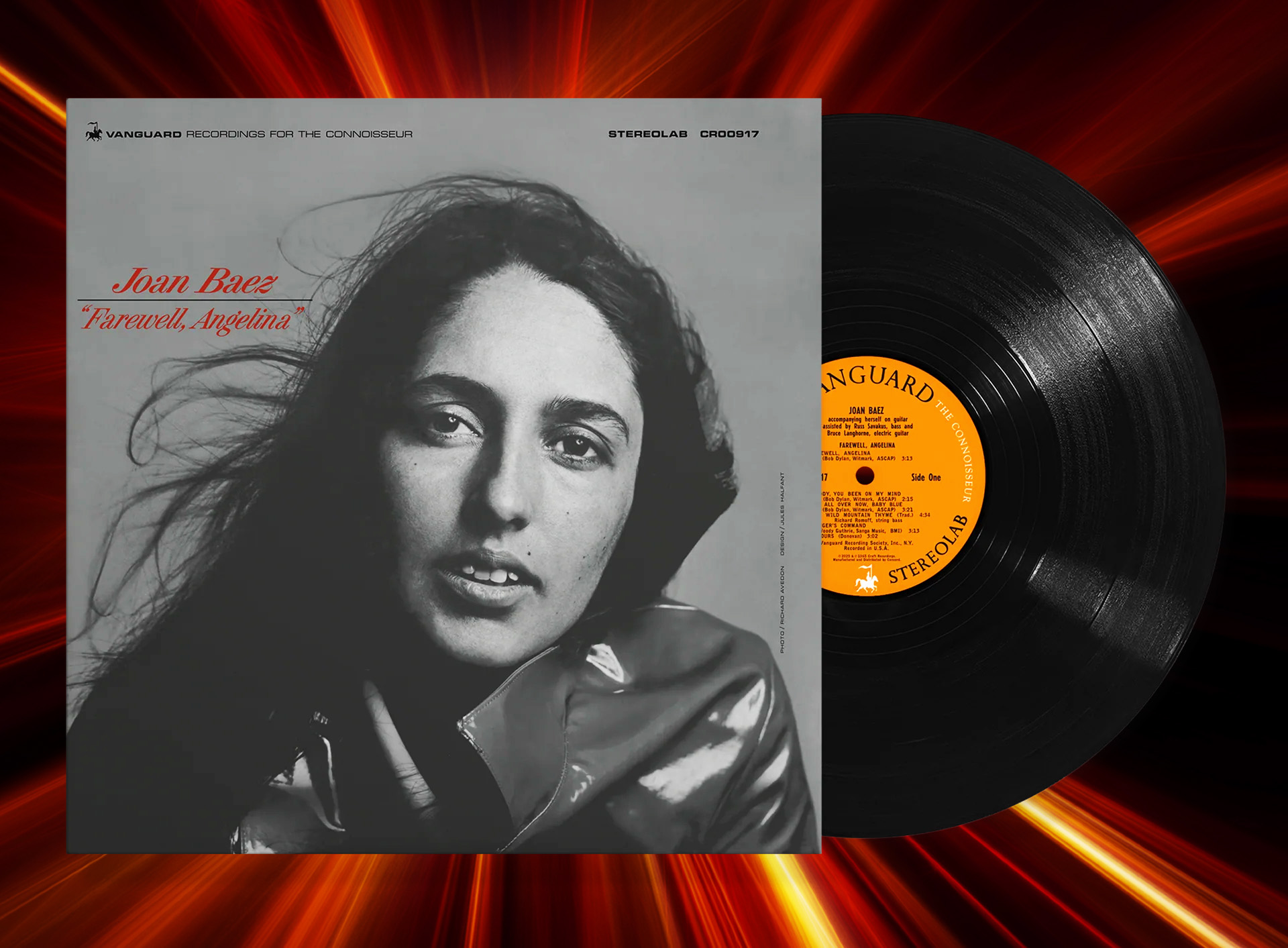 Farewell, Angelina
Farewell, Angelina marks the sixth studio album by American folk icon Joan Baez, one of the most influential voices of the 20th-century folk revival. First released in 1965, the record reached #10 on the Billboard 200 and remains a cornerstone of Baez’s catalog. A classically trained vocalist with a crystalline soprano, Baez brought centuries-old ballad traditions and social-justice songwriting into the mainstream, preserving the lineage of Anglo-American storytelling while giving voice to contemporary struggles for peace and justice. Her interpretations carried both ancient resonance and modern urgency, making her a defining voice of conscience and culture.
The album showcases Baez’s unique ability to connect traditional folk material with the cutting-edge songwriting of her time. Alongside classic folk ballads, the album features early works by Woody Guthrie, Pete Seeger, and, most notably, Bob Dylan, whose creative partnership with Baez helped usher folk from coffeehouses into mass consciousness. Baez’s championing of Dylan’s material in the early 1960s was pivotal, bringing his songs and the emerging politically charged singer-songwriter movement to a global audience.
Joan Baez & the Civil Rights Movement
Beyond her musical brilliance, Baez became a steadfast voice for moral courage. She marched with Dr. Martin Luther King Jr., performed at the 1963 March on Washington, helped integrate audiences in the South, and risked jail for acts of non-violent resistance. In Baez’s hands, folk music was not nostalgia; it was action. Her voice, often unaccompanied and achingly pure, became a soundtrack to resistance, bridging art and activism and inspiring generations of musicians to treat song as a vehicle for justice.
Historical Context: Vanguard Records & the Folk Revival
Signed to Vanguard Records, Baez rose during the folk revival’s golden era, when acoustic performance, lyrical truth, and historical memory converged in Greenwich Village clubs, Cambridge coffeehouses, college campuses, and the Newport Folk Festival. Vanguard favored documentary-style production: warm, intimate, and honest, capturing performers with minimal studio manipulation. Farewell, Angelina reflects this approach: voice forward, arrangements spare, emotion central.
Vanguard Recording Techniques & Microphones
Vanguard prided itself on audiophile-grade production long before the term was widely used. Known for clarity and natural acoustic capture, their sessions typically favored:
Neumann U-47 & U-67
Telefunken ELAM 251 & AKG C12 (select sessions)
Schoeps / KM-series small-diaphragm condensers
for guitar detail and room realism.
Minimal processing philosophy
● natural reverb● simple mic placement
● quiet rooms, clean gain stages
● emphasis on capturing performance, not constructing it
The result was, and remains, a vivid, transparent recording style that places Baez directly in front of the listener, breath and guitar string harmonics intact.
A True-Analog Audiophile Reissue
This edition is cut directly from the original analog master tapes by Kevin Gray at Cohearent Audio, using a fully analog chain. No digital steps. No “clean-up.” Just the sound heard in the original studio, organic, dynamic, alive. Pressed on 180-gram vinyl at Fidelity Record Pressing and housed in a tip-on jacket, this reissue preserves the warmth and immediacy intended at the time of recording. In an era when digital intervention can “polish” history, this pressing honors the raw integrity of the original tapes.
Timeline: Joan Baez—Major Activism & Key Performances
| Year | Event/Performance | Significance |
| 1959 | Newport Folk Festival debut | National introduction; hailed as “Queen of Folk.” |
| 1960–61 | Tours college campuses | Helps spark the student folk boom |
| 1963 | March on Washington, performs “We Shall Overcome.” | Civil Rights landmark moment |
| 1964 | Opens Institute for the Study of Nonviolence | Promotes Gandhian non-violence |
| 1965 | March from Selma to Montgomery | Walks alongside MLK |
| 1965-67 | Public anti-Vietnam War stance | Encourages draft resistance; appears in teach-ins |
| 1967 | Imprisoned for anti-draft actions | Symbol of non-violent protest |
| 1968 | Supports Cesar Chavez & farmworkers’ movement | Bridges folk activism to labor rights |
| 1969 | Performs at Woodstock (6 months pregnant) | Defines an era’s cultural conscience |
| 1972 | Hanoi Christmas visits | Peace mission, broadcasts message for POW release |
| 1980s–present | Human rights advocacy worldwide | Global voice for freedom & justice |
Tracks:
Side A:
1. Farewell, Angelina2. Daddy, You’ve Been On My Mind
3. It’s All Over Now, Baby Blue
4. The Wild Mountain Thyme
5. Ranger’s Command
6. Colours
Side B:
1. Satisfied Mind2. The River In The Pines
3. Pauvre Ruteboeuf
4. Sagt Mir, Wo Die Blumen Sind.
5. A Hard Rain’s A-Gonna Fall
The Sound
For a 60-year-old recording, this album really shines. I compared it to the digital version streamed via Qobuz. The vinyl has clearer sibilance and more bass (other instruments accompany her).
I was in college during those days, and I remember her for her politics as well as her music.
If you are a Joan Baez fan and are into vinyl as well, you will love this recording.
John Johnson Jr.