 YouTube
 Facebook
 X
X LinkedIn
 Pinterest
 Instagram

 Chris Eberle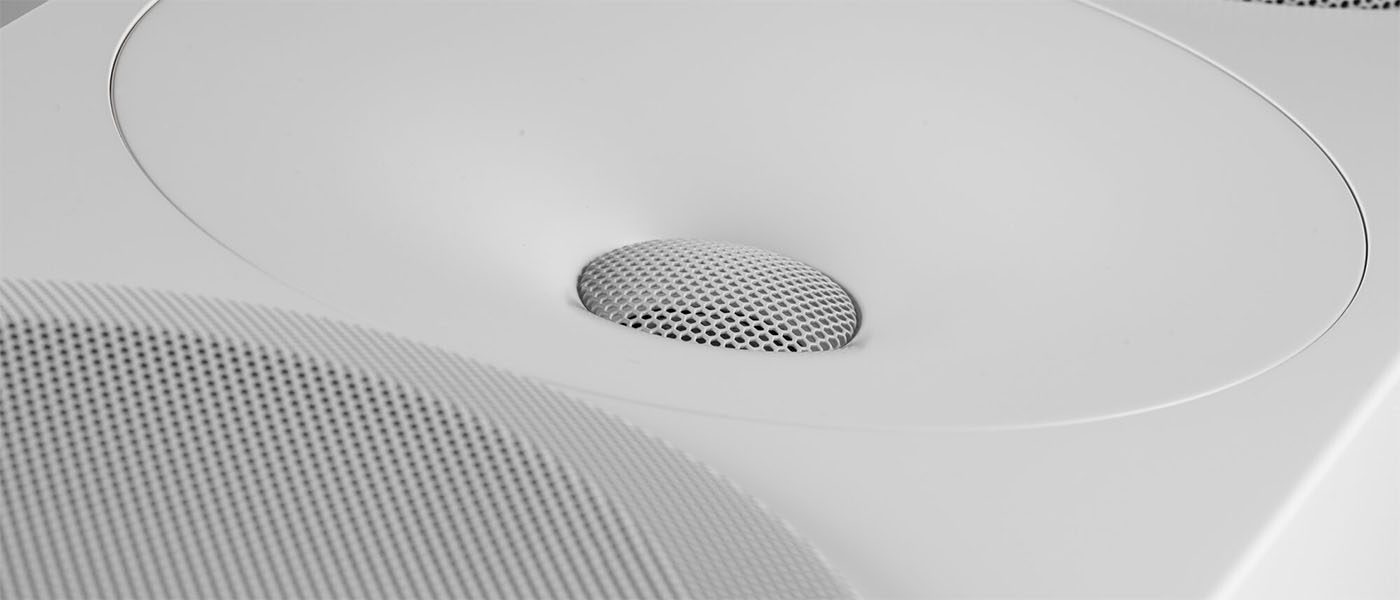
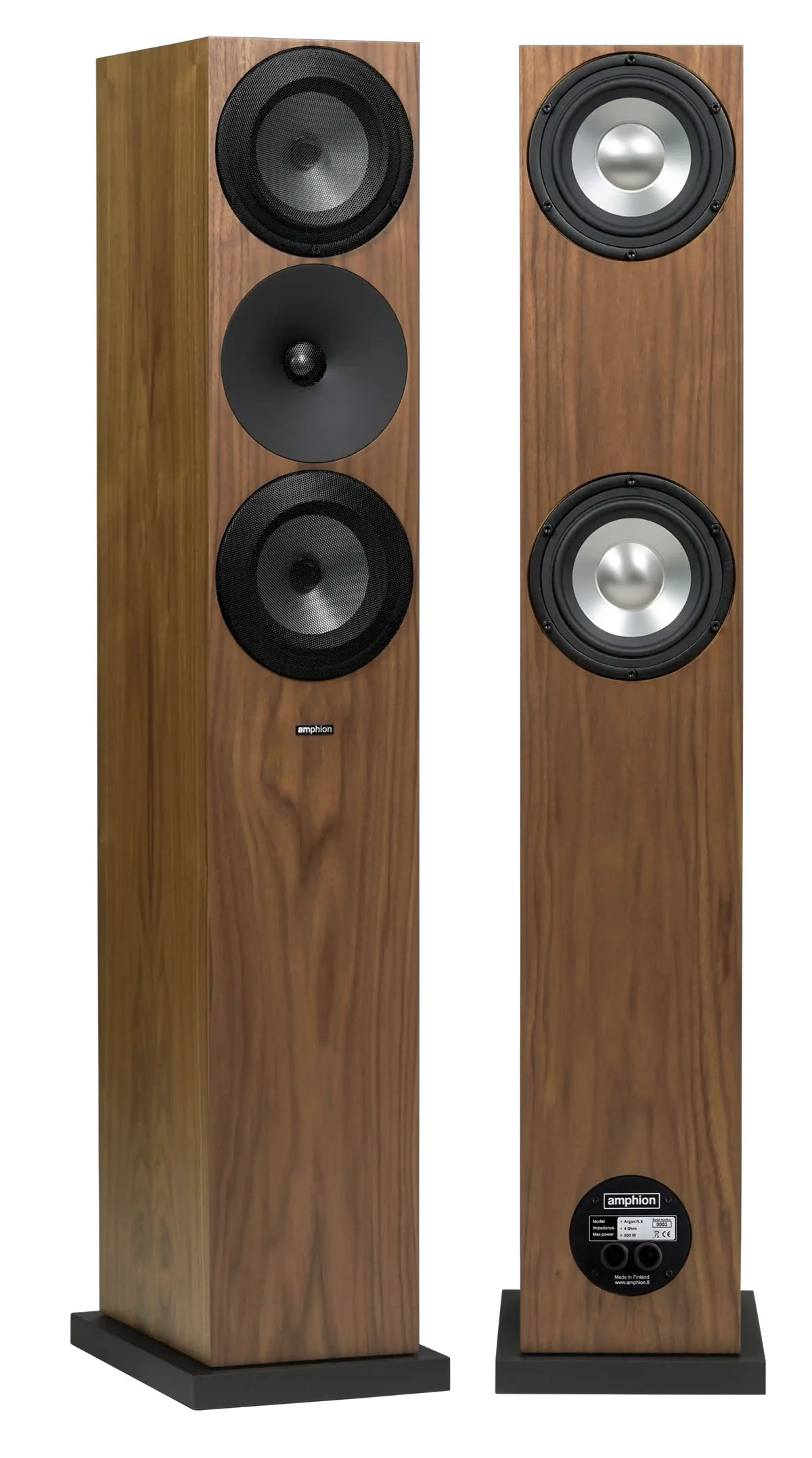
The Amphion Argon7LX is a full-range tower speaker with precise imaging, premium build quality, and high style. Handmade in Finland, these sealed cabinets sport a one-inch titanium dome tweeter with a wide-dispersing waveguide, two phase-aligned woofers, and two passive radiators in back for deep and controlled bass. Available in three distinct cabinet finishes, they look as beautiful as they sound.
Amphion Argon7LX Floor-standing Speaker
- Full-range tower speaker
- Two-way sealed cabinet with dual passive radiators
- One-inch titanium dome tweeter with waveguide and response to 55,000Hz
- Controlled bass down to 28Hz
- Available in three different cabinet finishes
- Simple and elegant styling
- Handmade in Finland
In Greek mythology, Amphion was a son of Zeus and, with his twin brother Zethus, built the city of Thebes using the power of music to magically raise its walls. Amphion is also the name of a foundation established by composer Elliot Carter and his wife Helen, dedicated to the performance of contemporary music. What better name could be used for a company that makes high-end audio components?
Established in 1998, Finland’s Amphion Audio has always been known for its simple and elegant design and precise neutral neutral-sounding speakers. They’ve taken this philosophy to their naming convention by titling the different models after noble gases. Noble gases are called such because they are nonreactive and stable, as well as odorless and tasteless. Amphion speakers are sonically neutral in the same way. You might think that means they’re from Canada, but it turns out the Finns have an equally firm grasp of the engineering required for neutral sound.
Amphion proudly touts the Argon7LX towers I’m checking out here as Handmade in Finland. In fact, they have earned a certification called the Finnish Work’s Flag Key, which requires that a product be manufactured in Finland with more than 50% domestic content.
The Argon7LXs are the largest towers in the Argon line and retail for $9,998 a pair. They are a sealed cabinet design with a one-inch titanium dome tweeter with waveguide flanked by two 6.5” woofers that are time aligned with phase plugs. In the back are two passive aluminum dome radiators that deliver controlled bass down to 28Hz. These speakers are an upgrade over the Argon7LS, sporting a new tweeter and a new crossover board for enhanced performance.
Type:
Two-way sealed cabinet with dual passive radiators
Frequency response:
28-55,000Hz -6dB
Crossovers:
1,600Hz
Nominal impedance:
4 Ohms
Sensitivity:
91dB
Recommended amp power:
50-200 watts
High frequency driver:
1” titanium dome w/waveguide
Low/mid frequency driver:
2 x 6.5” woofers
Passive radiator:
2 x 6.5” woofers
Dimensions (W x H x D):
9.2” x 45.6” x 13.5”
Weight:
59.4 lbs.
Price:
$9,998 per pair
Website:
Company:
SECRETS Tags:
amphion, argon7LX, tower speaker, floorstanding speaker, speaker review
Secrets Sponsor
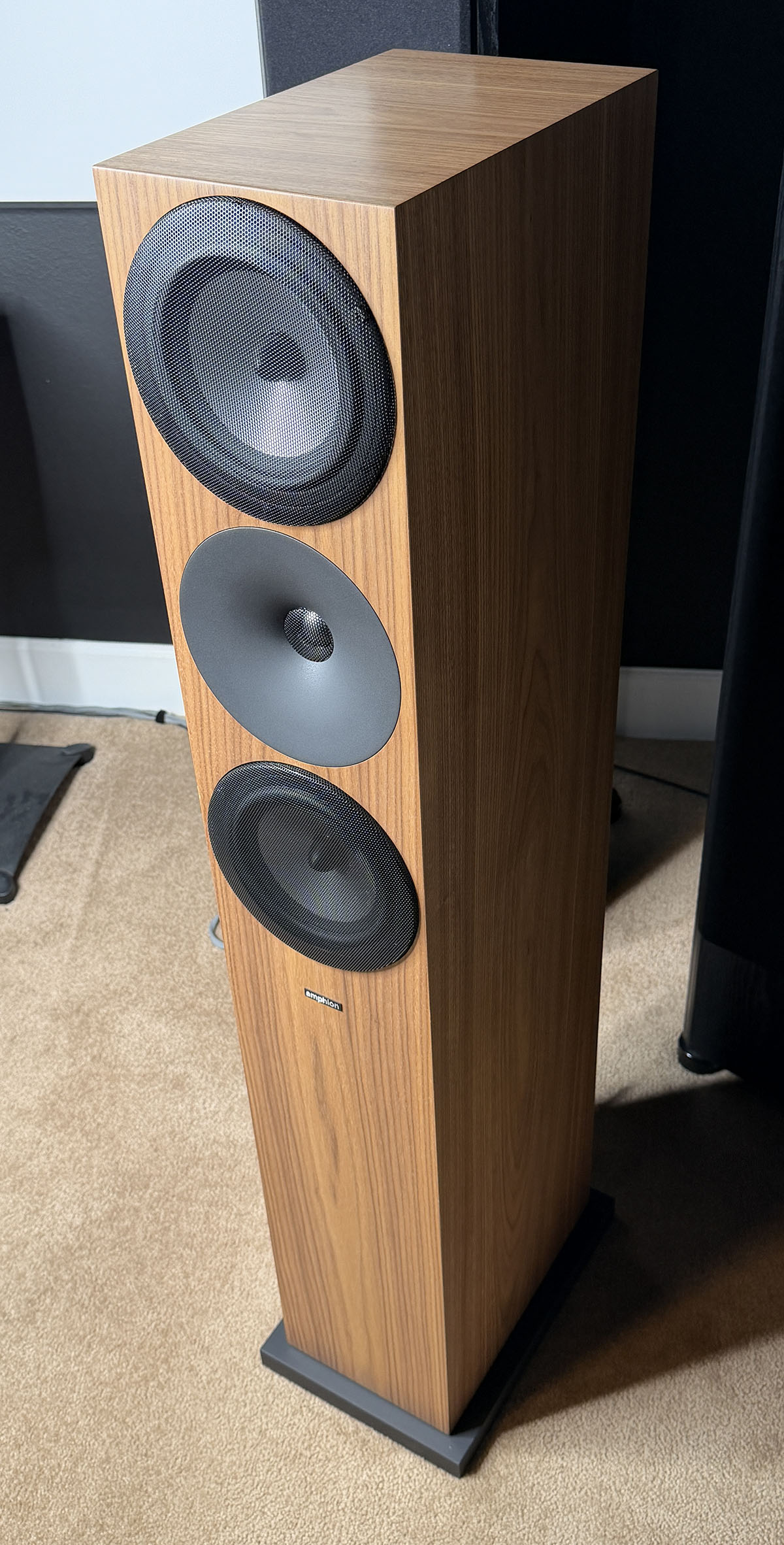
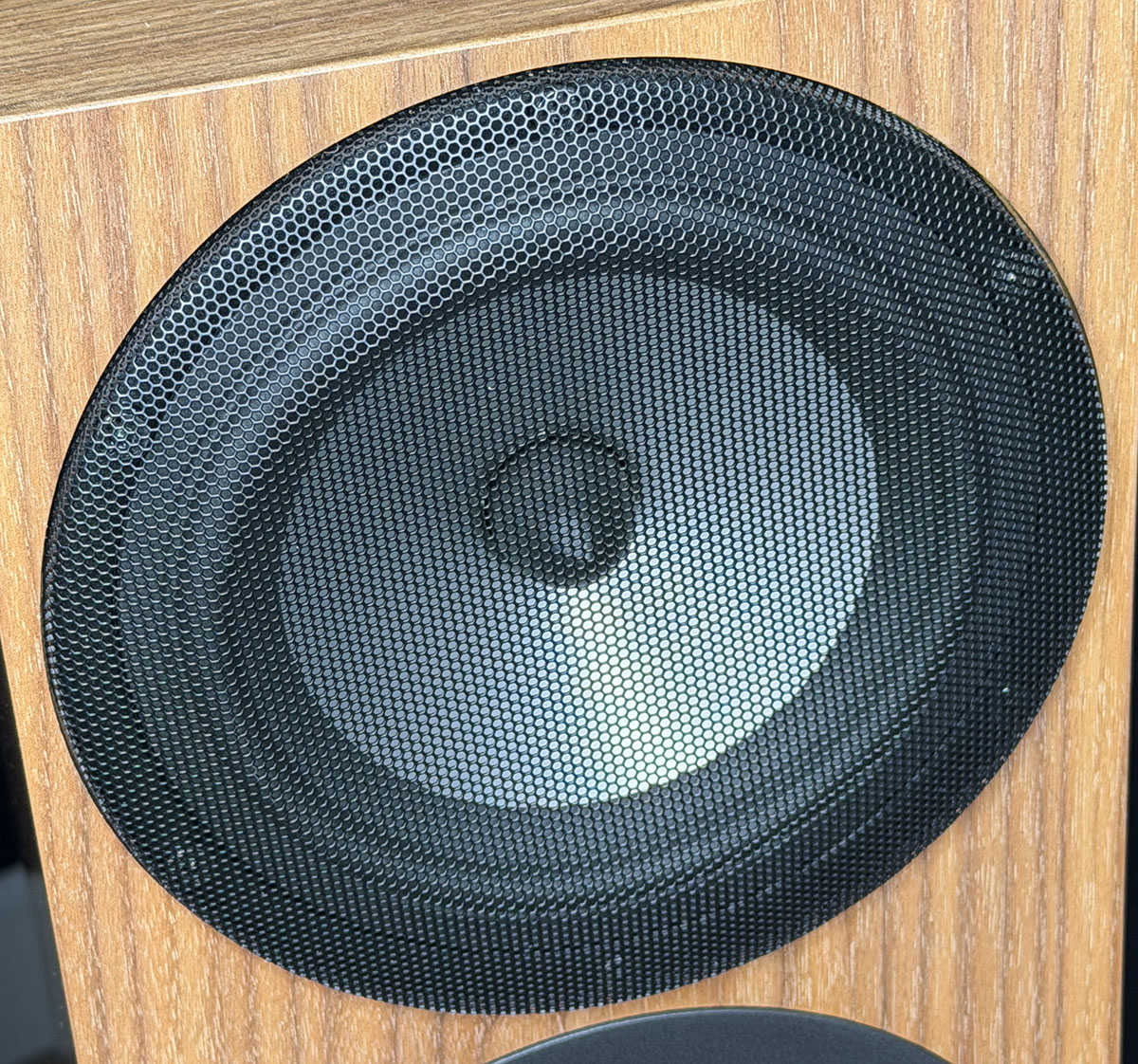
The Argon7LX is a full-range tower with a sealed cabinet. Typically, this would limit bass extension when compared to a ported design, but Amphion brings the low frequencies with two passive radiators in the back. These are 6.5” aluminum domes with long-throw surrounds. The front woofers are also 6.5 inches and enhanced with phase plugs in the center to time-align them with the single one-inch titanium dome tweeter. It achieves extremely wide dispersion and focused precision through a waveguide, which is a hallmark of Amphion’s speakers and can be seen throughout the model line. The front array brings all the benefits of a point source configuration without having multiple drivers on-axis.
There is a single crossover at 1,600Hz. This is a bit lower than similar designs, and that is done for a reason. Human hearing is most sensitive between 2,000 and 5,000Hz. If you place the crossover below that range, you are less likely to hear the frequency transition. It also reduces the power demands of the woofer. The 7LXs are a 4-Ohm speaker with a high 91dB sensitivity. They are fairly easy to drive without the need for massive amplifiers.
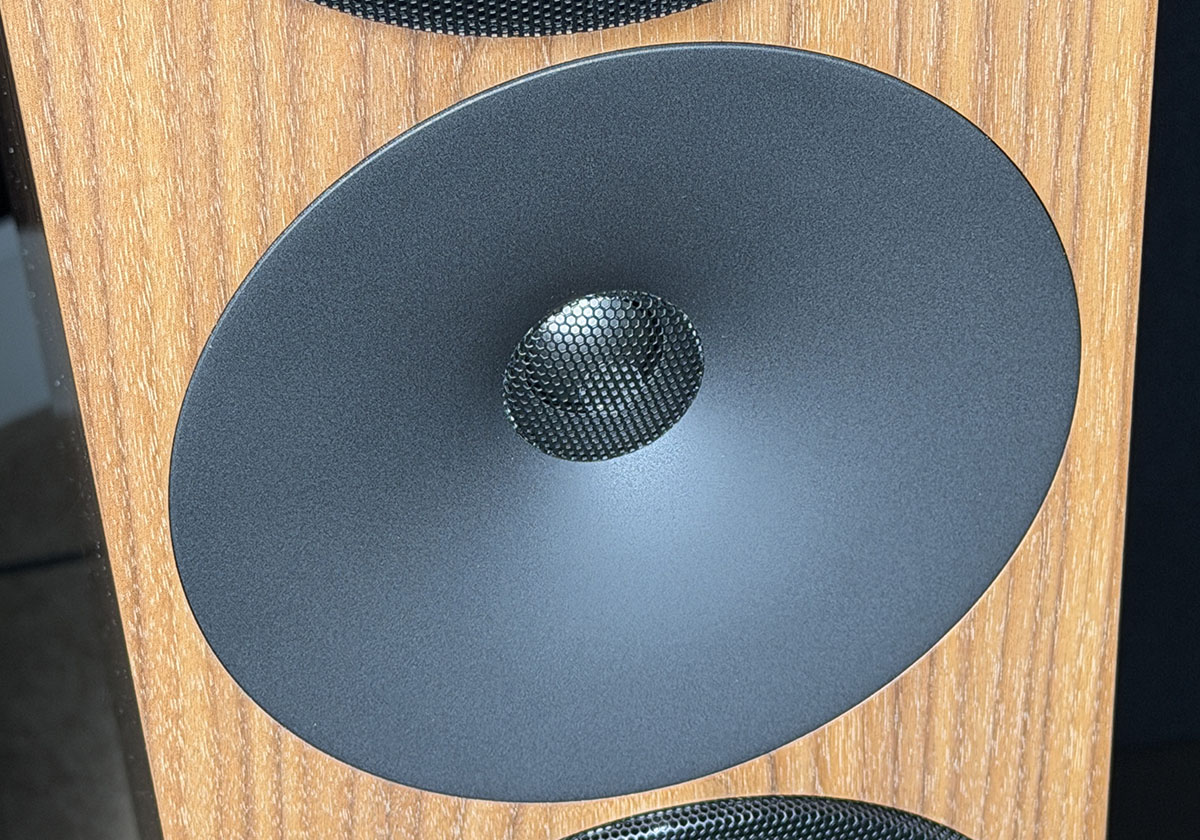
The waveguide is Amphion’s proprietary design, now in its fifth generation. Acoustic tweeter modifications are nothing new, and every speaker company has its own take. Some use physical objects in front of the dome to disperse and defocus sound. Others, like Klipsch, use horns which accelerate the air moved by the tweeter, making it very easy to drive to loud volumes.
Amphion’s waveguide does both with its shallow horn shape. Not only does this improve dispersion, but it also sets the dome back from the front baffle, which aligns it with the flanking woofers. These are further brought into focus with center phase plugs. The net effect is a point-source sound without the complexity of mounting two drivers on the same axis.
The Argon7LX cabinets are simply designed with only 90-degree angles and soft corners. They are a classic skinny tower with wide plinth-style bases. Four threaded fittings accept the included carpet spikes, or you can stick on the rubber feet that I also found in the box.
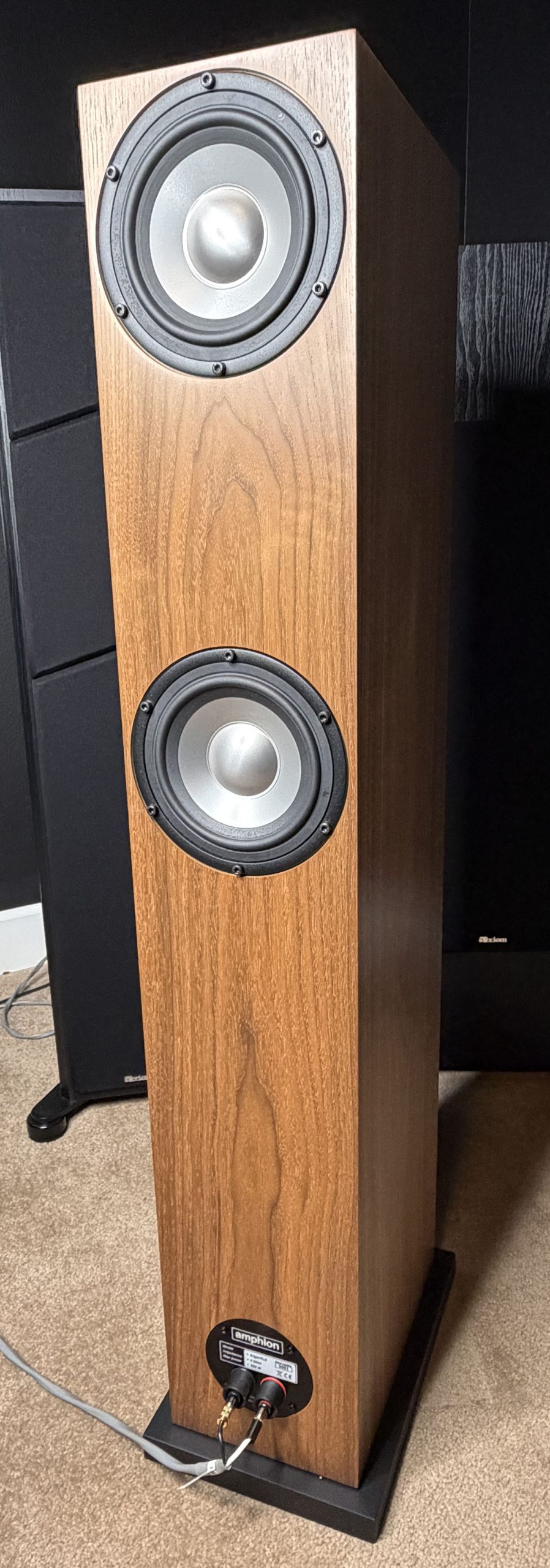
There are no grills in the traditional sense, but the tweeter is protected by a metal grate. The woofers are also covered by metal grates in the front and left exposed in the back. Three cabinet finishes are available: white, black, and walnut veneer. I received the latter with black grills and a black plinth at the bottom. You can also get custom grill colors for an additional cost.
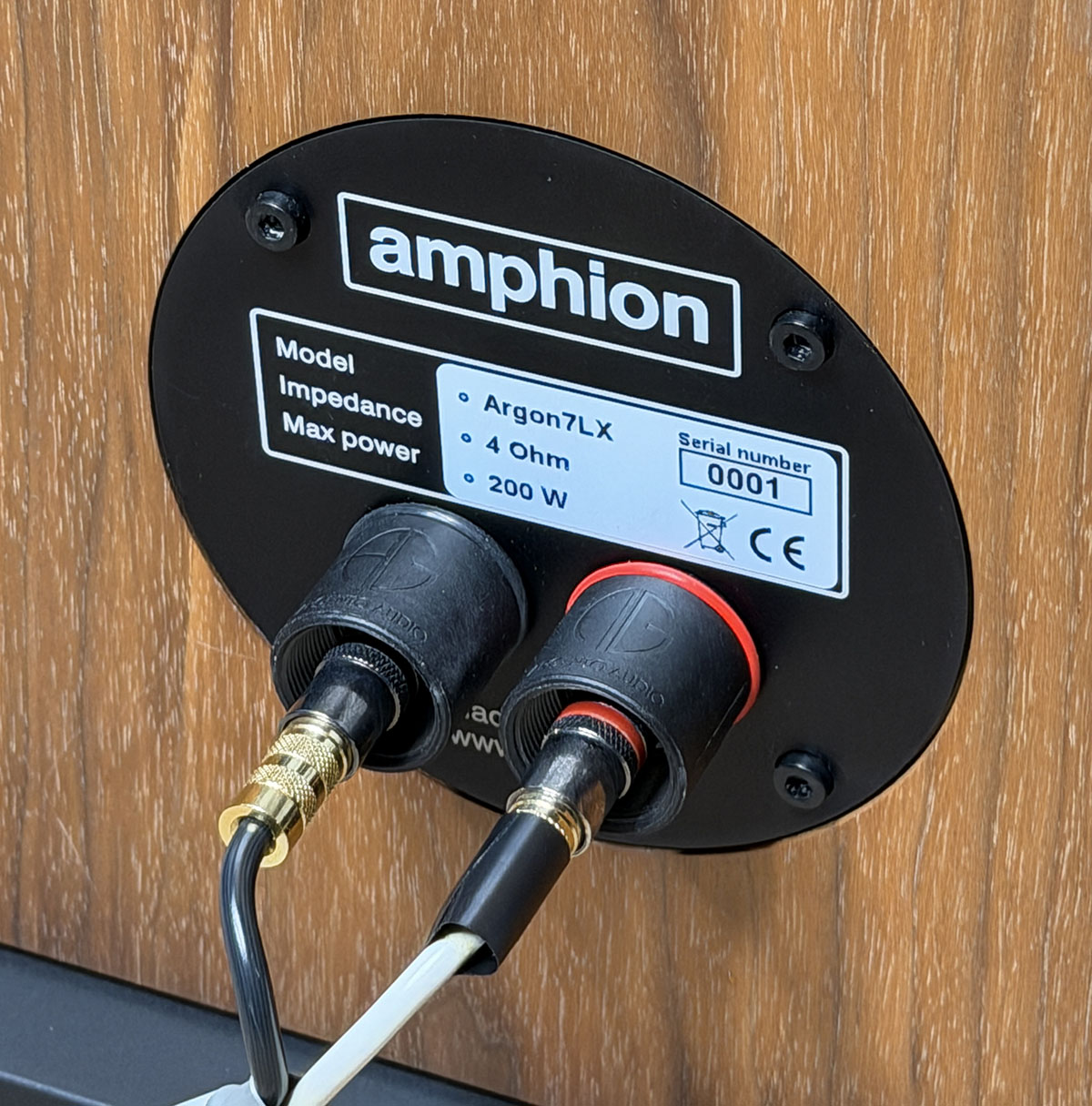
The binding posts are a design I haven’t seen before. The connectors are flush with the cabinet and surrounded by large plastic collars. You can plug bananas straight in as I did, or thread in another plastic plug to secure bare wire or spades.
The Argon7LXs arrived in large boxes made from double corrugated cardboard. They open on the long side, which makes removal very easy. Large blocks of flexible foam protect the contents, which, in my case, had already been unpacked before I got them. Despite this, they were unmarred.
The Argon7LX’s wide-dispersion design makes them very easy to place. Though there are passive radiators in the back, they can be as little as six inches from a wall or corner if you like. I started by placing them about eight feet apart and eight feet from my listening chair. They were toed in so that the convergence point was around a foot behind my head. Usually, I have to tweak this when I install new speakers, but it turned out to be the perfect setup. The soundstage is so wide that I could make the sweet spot large enough for two people.
The binding posts were different from what I’m used to, but the Blue Jeans locking bananas and 10AWG cables I’ve used for many years plugged right in. Driving the Argon7LXs were an Emotiva XPA-5 power amplifier and Anthem AVM 70 processor. Sources were a Panasonic DP-UB9000 disc player and Apple Music streamed directly to the processor via AirPlay.
Before I get into the track-by-track portion of the review, let me establish my philosophy for reviewing speakers. After hearing many hundreds of pairs either in my home or at shows, I firmly believe that the differences between products are more a matter of design and technology and not about which one is better or worse than another. Measured performance is super close between speakers of similar quality and price. So, for the listener, it comes down to which design approach you prefer. Is it ribbon tweeters and active bass drivers? Or is it planar drivers? Ported or sealed cabinet? Full range towers or bookshelves? Sub or no sub? I’m only scratching the surface here, but unless I only review one type of speaker, there will always be the question of whether or not that tech is something I enjoy listening to.
Spoiler alert: To avoid reaching for the Thesaurus every five seconds, I’m going to use the word “precise” a lot. Because no adjective better describes the Argon7LXs than that.
The Amphion Argon7LXs are a skinny tower, like many I’ve experienced. But in several ways, it’s completely different. The big one is its sealed cabinet. Most full-range models are ported to extend their bass capabilities. But ports make that bass harder to control. Amphion has managed to achieve precisely controlled bass in a relatively small tower with just a pair of passive radiators.

Bass Boosted HD, “Bass Test”
I had to chew on that for a while as I listened to a collection of bass test tracks from Apple Music. I use them to ensure that my sub is NOT playing and that I’m indeed only listening to two channels. The Argon7LXs are rated to have a -6dB point at 28Hz. Normally, I would take that with a grain of salt, especially given their moderate size and mass. The only thing about those numbers that I doubt is the – 6dB part. These speakers absolutely play cleanly and loudly to 28Hz and below. I heard 20Hz test tones loud and clear with no recession from the other parts of the music. They didn’t shake my room the same way a big sub would. But the tonality and tunefulness were unmistakable. Holy Long Throw Drivers, Batman! I watched the radiators in back vibrate to where they nearly became invisible. The amount of energy coming from them was something I still can’t wrap my mind around. I saw it, but I still don’t
believe it. I believed my ears, though. These things rock!

Foo Fighters, “There Is Nothing Left to Lose”
Metallica, “Metallica Essentials”
Pantera, “The Best of Pantera: Far Beyond the Great Southern Cowboys’ Vulgar Hits!”
I moved on to familiar rock tracks from Foo Fighters, with selections from There Is Nothing Left To Lose. Their distinct layered guitar sound was precisely rendered thanks to the time alignment of the tweeter and its flanking woofers. Dave Grohl appeared perfectly in the phantom center image while the lead guitar came from the left channel. The drums and other percussion floated in the air around the entire sound stage, creating a framework for the music. The sound stage, by the way, was vast. I did my usual walk about the room and found the sweet spot was the same width as the speakers’ positions. Outside that, there was only a subtle shift in phase, but the stereo effect did not wane. I also found little change when standing or sitting. The envelope was truly three-dimensional with height and depth as well as width.
I had been hooked by the Argon7LX’s bass, so I moved on to some metal tracks from Metallica and Pantera. Metallica’s Enter Sandman sounded about as good as the compressed recordings could, and though I consider these neutral speakers, they are precise enough to find fine details in the music that others can’t. Pantera had a bit more depth to offer, and it showed the lack of balance in the mix I had heard through other speakers. Dimebag’s lead guitar doesn’t get the forward presentation it should, but at least the Argon7LXs were able to tell that story honestly.

Strauss, Beethoven, Glinka, Sarah Watts, Laurence Perkins, Martin Roscoe, Royal Scottish National Orchestra, Sian Edwards, “The Princess & The Bear”
Turning to classical, I started with a performance of Richard Strauss’ Duet Concertino for clarinet and bassoon. This is a piece I’ve always dreamed of performing, so this listen was just as much for research as entertainment. Clarinetist Sarah Watts opened with a sublime sound and a perfect interpretation of Strauss’ melody. The Argon7LX rendered every nuance with precision and grace. Laurence Perkins’ bassoon tone then created the perfect counterpoint as the first movement ramped up its intensity. His lush solo in the second movement had the Argon’s tweeters creating their magic. They almost have the precision of the finest planar speakers I’ve heard.
On the same album was Glinka’s Trio Pathetique for clarinet, bassoon, and piano. The piano retained both its melodious and percussive nature in equal measure, which produced a precisely balanced tone and interpretation. Kudos to pianist Martin Roscoe.

San Francisco Symphony, Michael Tilson Thomas, “Mahler: Symphony No. 5”
Next up was an old favorite, Mahler’s Symphony No. 5 with Michael Tilson Thomas and the San Francisco Symphony. It is a Grammy-winning recording for a reason. Of the hundreds of performances of Mahler’s music I have heard, none have taken me to the concert hall like this one. The Argon7LXs produced a sound and experience that is truly alive, and I credit that to the tweeters, which play up to 55,000Hz. Now, you’re saying, “human hearing only extends to 20,000Hz.” That is true, and I’m sure my limit is lower than that, given my age and what I do for a living. But it is also true that I can clearly tell when a speaker’s tweeter extends into ultrasonic frequencies. It’s not what you hear but what you feel. And the Argon7LX produces that live-performance-in-a-large-space feeling.
Secrets Sponsor
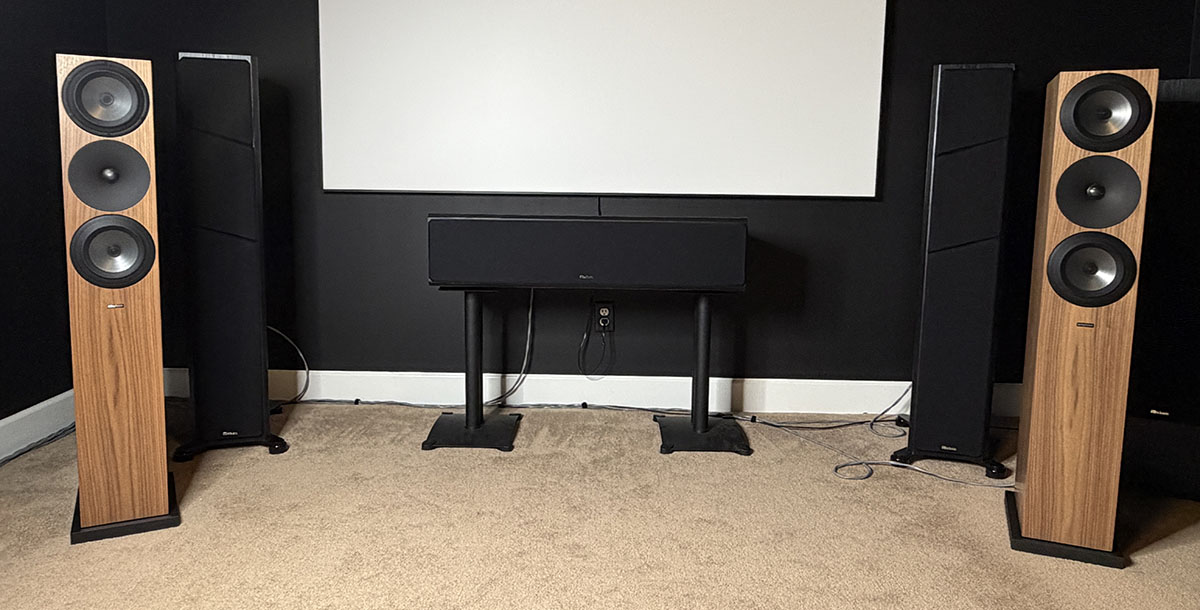
Amphion’s Argon7LX floor-standing Speakers are among the best I’ve heard, period. Considering what’s out there for hundreds of thousands, $10,000 a pair seems quite reasonable.
- True full-range sound
- Phenomenal bass extension
- Large sound stage with height, width, and depth in equal measure
- Precise imaging from the tweeter and time-aligned front array
- Easy and flexible placement
- Premium build quality with elegantly simple styling
- A pair for me on permanent loan
The Amphion Argon7LX floor-standers are some of the best speakers I’ve heard at any price. I’ve experienced plenty of more expensive products in my home, at shows, and in controlled demonstrations. These are equal to or better than all of them. They deliver deep bass extension that is completely controlled and tuneful. Their imaging is incredibly precise, on the order of the best planar speakers. They have a huge sound stage with a sweet spot large enough to accommodate three or four people. And they’re easy to place, even if walls and corners can’t be avoided. They’re also beautiful to look at with simple and elegant styling that can complement a room or disappear into it if you want.
Their precision had an addictive quality for me during the review. I listened for hours, unable to stop, whether it was classical or rock, or metal. No matter what the genre or quality of recording, the Argon7LXs rendered it with precision and grace.
Now, I can’t afford to buy these speakers, so I’ll have to send them back at some point. But Amphion, if you need a court bassoonist and you could help me with some winter clothing since I currently live in Florida, I’d happily move to Finland just so I can keep listening. The Argon7LXs are that good. Readers, if you have the means, definitely check them out. I’m going to return to listening until the freight guy gets here…