 YouTube
 Facebook
 X
X LinkedIn
 Pinterest
 Instagram

 Jim Clements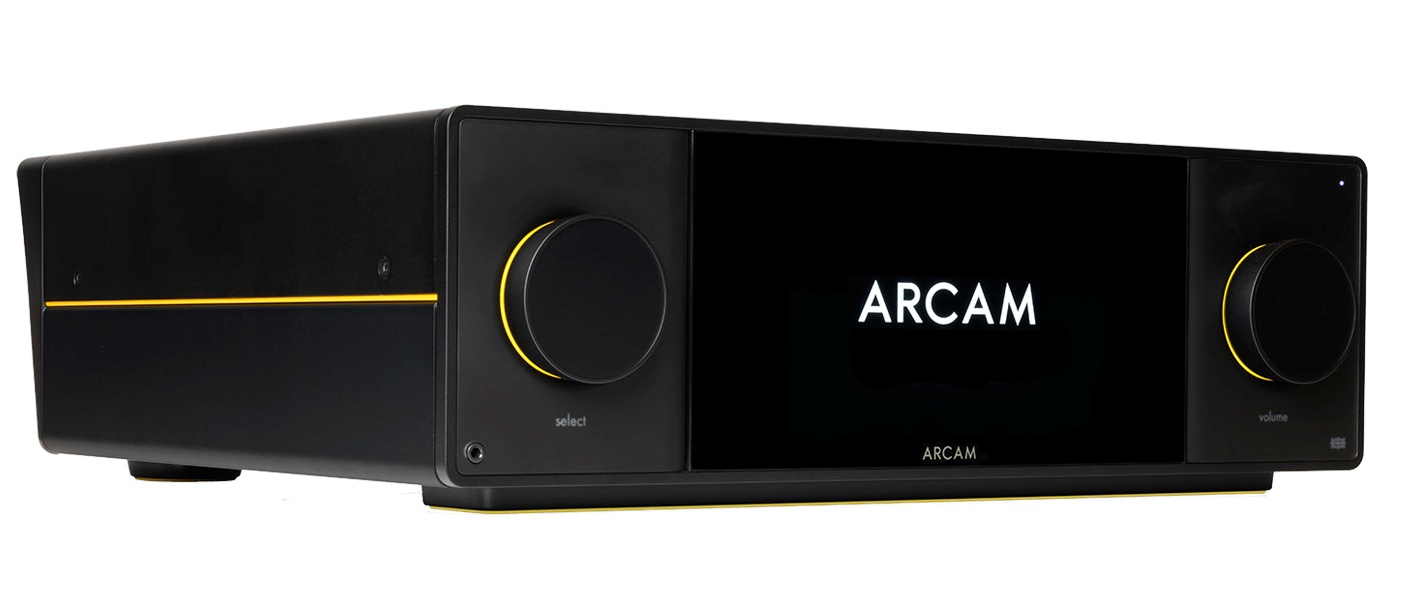
ARCAM’s newest integrated amplifier is an embodiment of all they have learned while designing other great control and amplification products over the years. This makes the SA45 Streaming Integrated Amplifier a very attractive component for the audiophile who is looking for a full-featured integrated amp that is largely “future-proof”. I think many people will buy one of these, hook it up, and then use it for a long time as the central component in their sound system.
ARCAM SA45 Streaming Integrated Amplifier
- Top-tier reproduction of both large and small musical dynamics
- Subjectively excellent transient response
- Really cool-looking piece of kit
- Incredibly flexible, all-inclusive control and amplification
- Dirac Live included
- Nice full-color screen
- Would benefit from some design changes regarding the hook-up
ARCAM announced the new Radia line of hi-fi products in October 2023. They call it the Radia Series, and these products essentially replaced ARCAM’s very respected HDA series of products. The new lineup comprises 8 products that cover the gamut from CD players, streamers, and several integrated amplifiers. Some of the integrated amps include music streaming built-in and some do not.
I wound up getting a review sample of their top-of-the-line Streaming Integrated Amplifier, the SA45, which is the subject of this review. This amp is packed with a lot of leading-edge technology that even includes Dirac Live room correction, HDMI eARC input, and an amplifier section that is based on the now-discontinued A49 HDA Stereo Class-G integrated amplifier. According to ARCAM, “The SA45 is the first ARCAM product to follow the A49 power amp design that is not just a power amplifier. Like the A49, it has a separate Class-G lifter stacked above the power amp, allowing DC to be inserted directly into the right place on the amp board, and an array of output devices for more thermal headroom.”
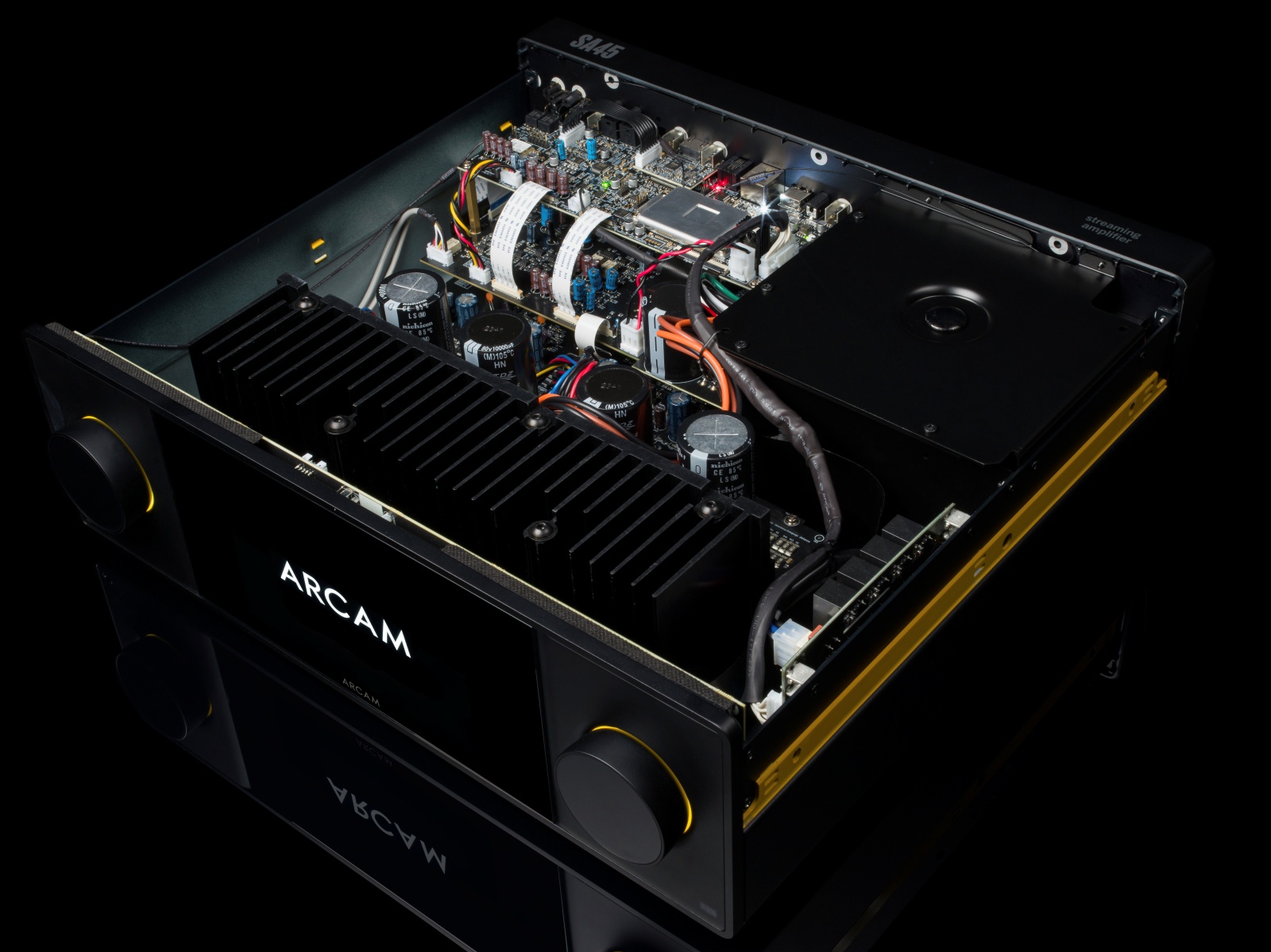
The ARCAM SA45 is a bit of a screamer, outputting 180 wpc per the rigorous FTC measurement method. The amp topology is biased, so that the first 50 watts are delivered in pure Class A.
I was lucky enough to hear the ARCAM SA45 at AXPONA last year, and the demo was quite impressive. Now I have been able to enjoy a review unit in my own system, and I have found there is a lot to love with the SA45.
Power Output:
180W at 8Ω (20 Hz – 20 kHz, <0.5% THD)
300W at 4Ω (1kHz, <0.5% THD)
Total Harmonic Distortion:
(80% power, 8Ω at 1kHz) < 0.002%
Frequency Response (Analog Inputs):
20Hz—20kHz ± 0.2dB
S/N Ratio (A-wtd, ref. 50W, 1V input):
106 dB
Digital Section (Streaming):
Supported Media Formats: FLAC, WAV (LPCM), AAC, ALAC, AIFF, DSD (up to 256), MP3, OGG, and WMA
Supported Bit Depth: 16, 24, and 32
Supported Sample Rates: Up to 384 kHz
Digital Audio Inputs:
1x HDMI eARC/ARC, 2x Coaxial (RCA), 2x Optical (Toslink)
Supported Digital input Bit depth: 16 and 24
Supported Digital input sample rates: Up to 192 kHz
Frequency response (filter 1): 20Hz—20kHz ± 0.2dB
Signal/noise ratio (A-wtd, ref. 50W, 0dBFS): 110 dB
Wireless Specifications:
Bluetooth Profile: 5.4; A2DP Sink/Source, AVRCP, BLE, Snapdragon Sound, AAC, LE Audio, Auracast
Wi-Fi Network: IEEE 802.11 a/b/g/n/ac/ax (2.4GHz/5GHz)
Power consumption (maximum):
1,000 W
Power consumption (standby):
<0.5 W
Dimensions W x D (including speaker terminals) x H (including feet):
17” (432 mm) x 15-3/8” (390 mm) x 5-1/2” (140) mm
Net Weight:
37-1/2 lbs. (17 kg)
Shipping Weight:
44 lbs. (20 kg)
MSRP:
$5,499.95 USD
Company:
SECRETS Tags:
ARCAM, Integrated Amplifier, Class G, Streamer, DAC, Roon, Tidal, Qobuz, Phono
Secrets Sponsor
ARCAM’s new Radia series products share a new, modern look. They have lovely black cases with fantastic yellow accents. The amplifiers all have yellow “halo” lights surrounding the two front-panel knobs. All the Radia components are very striking-looking products that elicit a sense of class, quality, and confidence.
As far as the SA45 is concerned, ARCAM eschewed use of the little antennas that are commonplace on wireless streaming products. The antennas have been replaced by a “cowl” in the back of the amp chassis. This avoids having antennas sticking up in the back and lends an even more high-tech look to the amp. The cowl proved to be a bit of an issue during installation, and I will address this in the Setup section below.
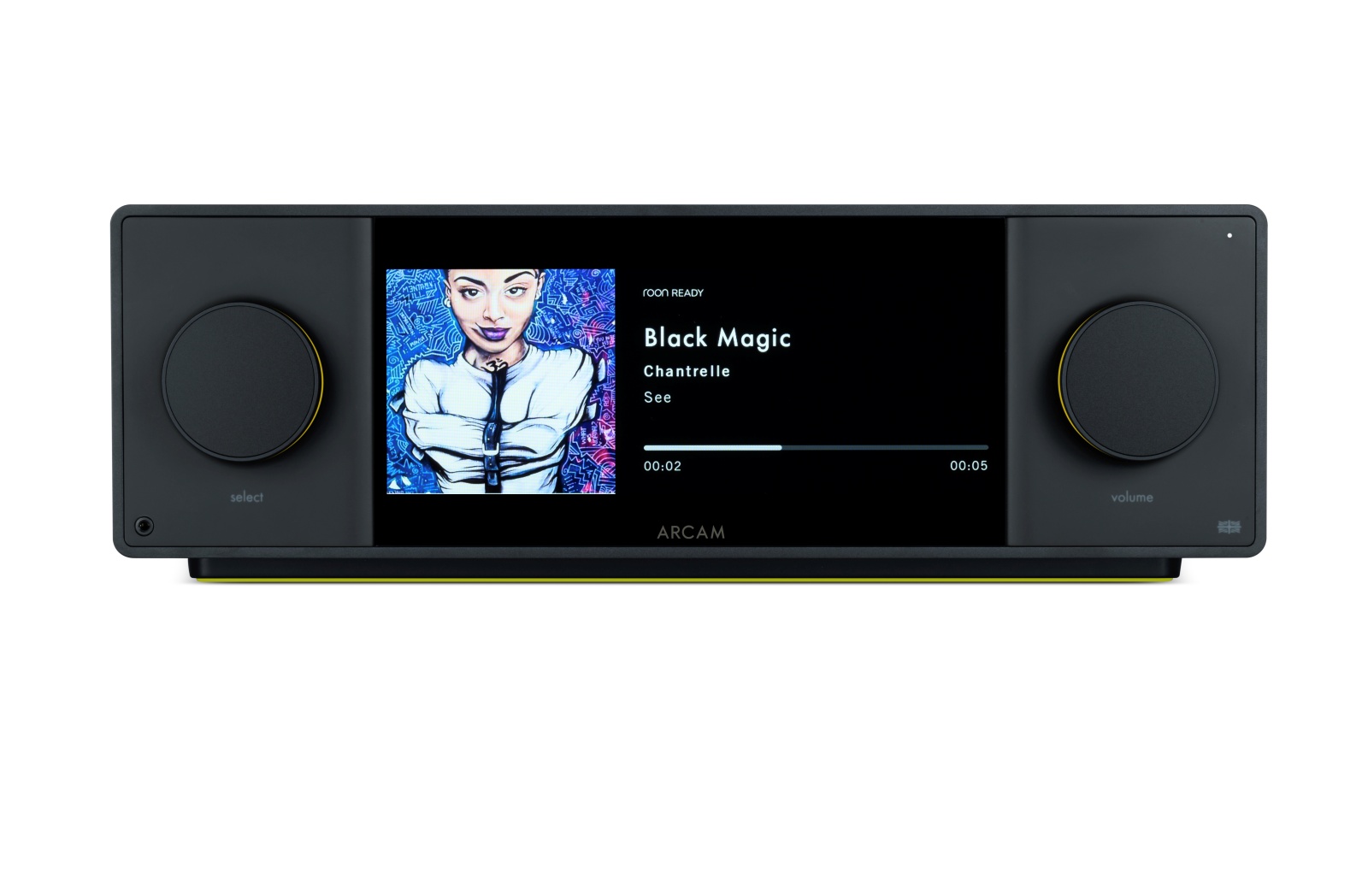
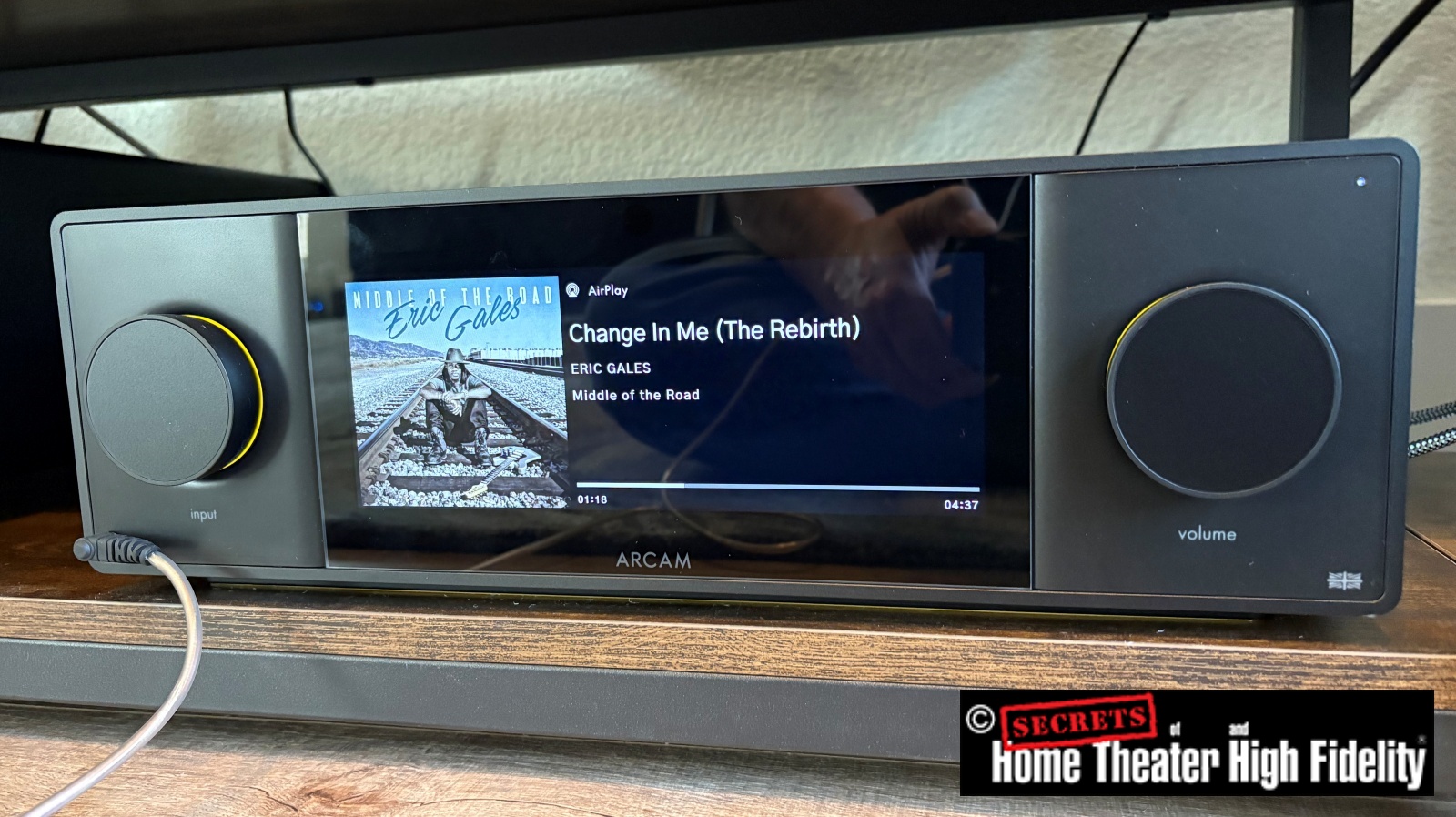
The look of the amplifier is further defined by the very large 8.8” high-resolution display on the front panel. This screen is flanked by a pair of knobs, one for source selection and one for volume adjustments. These knobs can also be used to navigate the menus. That’s the front panel, two knobs, one large display, and a small status/power LED. Wait, there is also a 3.5 mm headphone jack in the lower left corner! It isn’t labeled and isn’t even mentioned in the manual. I hardly noticed it until I got feedback from ARCAM on my draft review. It’s actually a heck of a nice-sounding headphone amp, driving my HiFi Man HE1000V2’s to glorious heights!
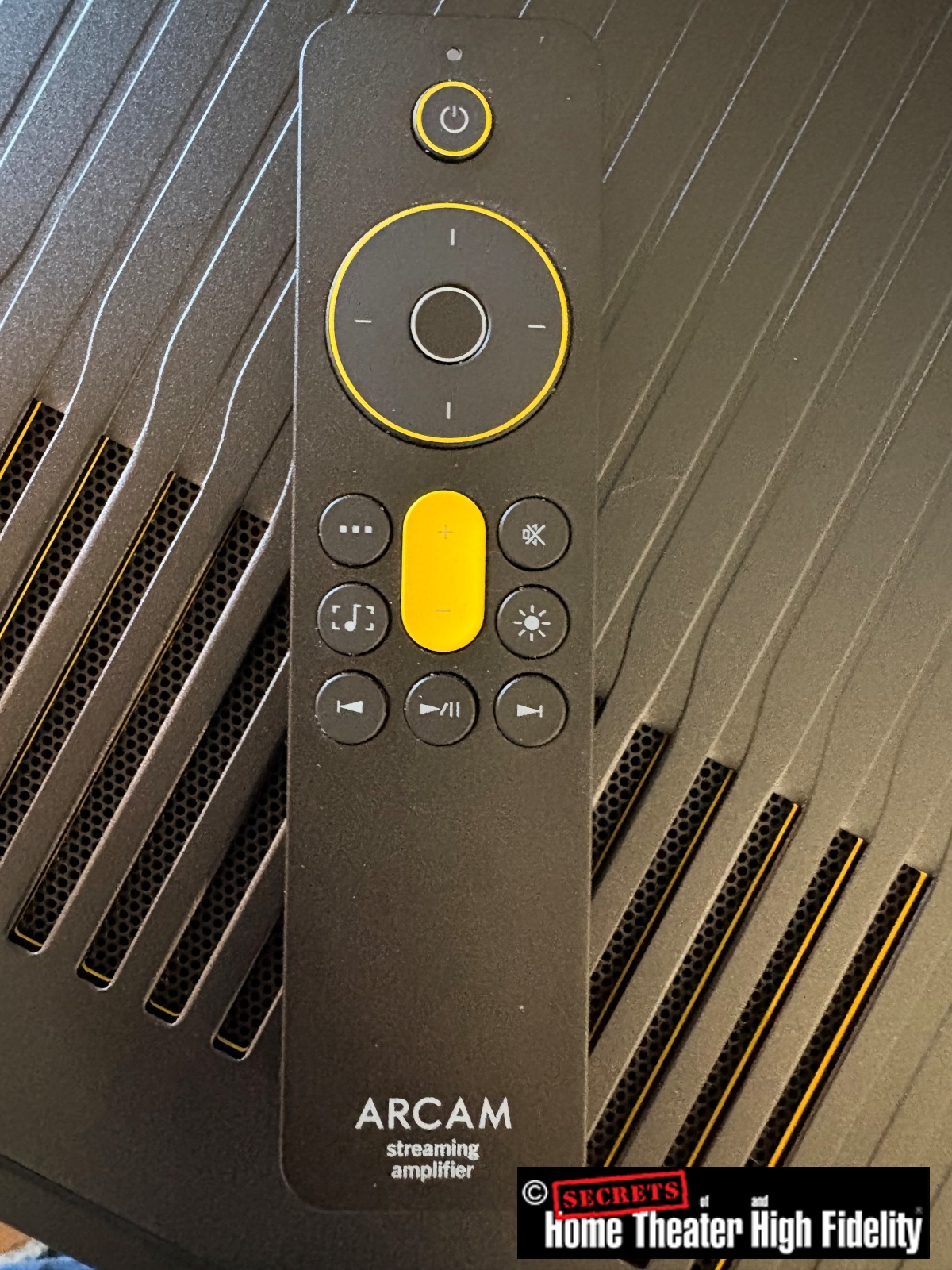
Getting back to the display, ARCAM claims that this is “clearly legible from the comfort of your preferred armchair”. There is a button on the remote that you can use to toggle through four different display modes: Cover Art + Album Title + Artist Name + Track Name + Status Bar, Cover Art Only, Small Album Cover + Large Album Name + Artist + Track Name + Status Bar, and All (Large) Text with no Cover Art. I legitimately have 20/20 vision, and even I had trouble reading the on-screen text from my listening chair, even with the “All-Text” display mode. I find this to be of little consequence because you can see all the relevant info on your phone or tablet when streaming, so the size of the display is less important these days. However, I do wish they made the knobs smaller and the screen a little bigger. Maybe I need to take a chill pill because the much more expensive Marantz Link10N has a way smaller screen on its front panel. So, all in all, I found the SA45 to be an impressive-looking and easy-to-use piece.
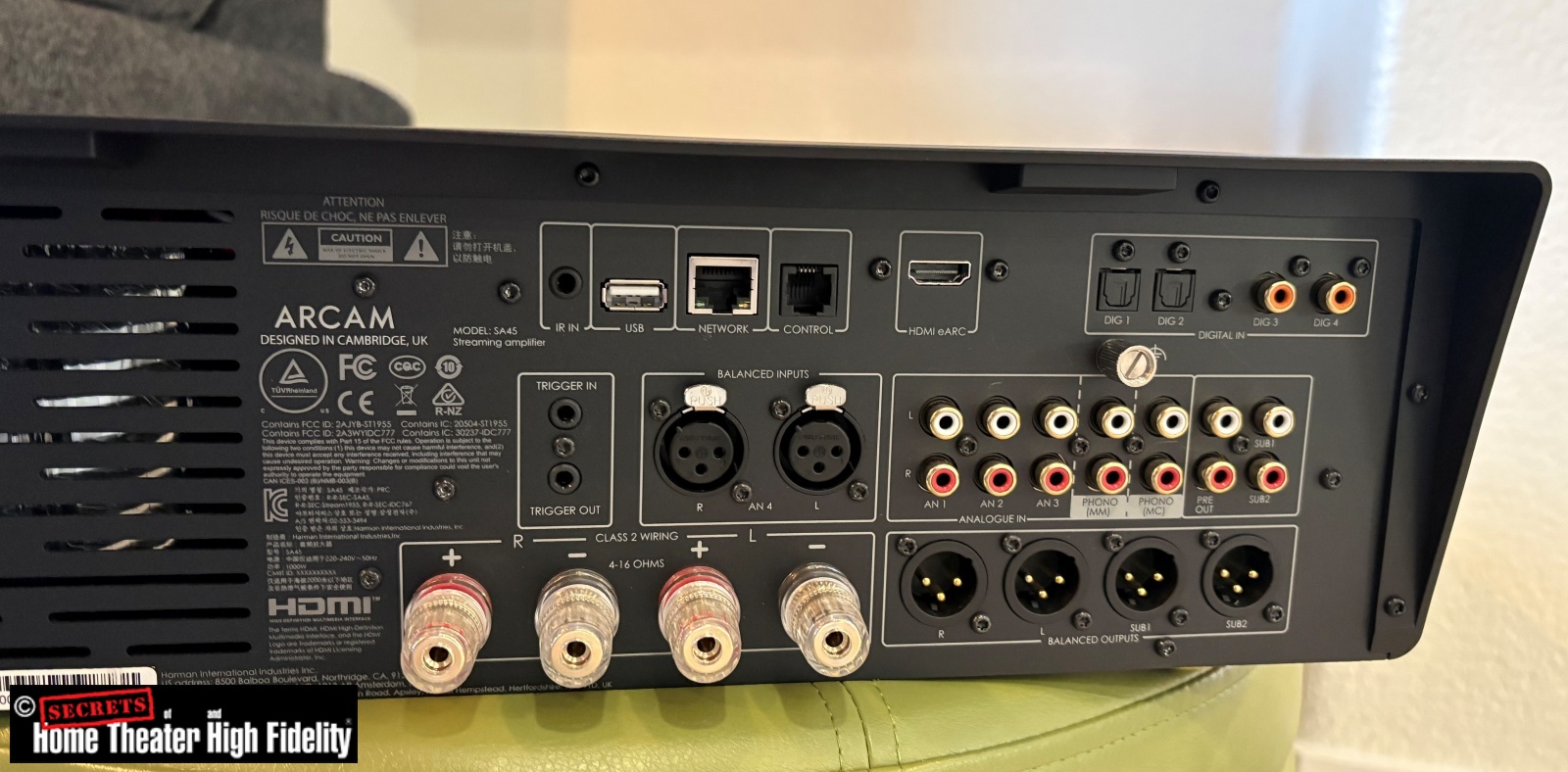
The back panel has a wide range of useful connections. IR In, USB socket, Ethernet, RS232 Control, HDMI eARC, two Optical Inputs, two S/PDIF Inputs, Trigger In and Trigger Out, Balanced XLR Input, three unbalanced audio inputs, two unbalanced phono inputs one for MM and one for MC, balanced and unbalanced line level outputs to include two independent subwoofers, and finally a pair of five-way binding posts to feed your passive speakers. This amp is eminently flexible, and I particularly enjoyed its gain and EQ on the phono side as well as the eARC, which I use every day I am home.
Let’s talk about the guts in there now. The amplifier is holistically designed to feature six layers, including a ground plane throughout the entire board, which is said to isolate the sensitive audio components from noise and interference. More details from ARCAM, “The product includes many different PCBs (boards), each with different layer counts as required. The six-layer board, as described, is the digital audio board, which includes the streaming hardware, digital inputs, and DACs. The power amp board has been heroically designed on just 2 layers.”
The ARCAM SA45 features high-resolution sonics using the latest Hyperstream IV DAC topology from ESS. This fourth-generation solution from ESS is noted for several advancements, not the least of which is its ability to “push” jitter-related timing errors out of the audio band. ARCAM implements this in a balanced configuration, so the DAC section realizes a S/N ratio of >120dB.
The power section is ARCAM’s fifth-generation Class G topology. This high-efficiency amplifier comprises new components and materials to ensure the highest fidelity possible. The power supply features a linear toroidal transformer for low-noise operation. As I said earlier, this is a banger of an amp that plays with amazing levels of openness and transparency with subjectively superior transient response. I was impressed with what I heard and will discuss my listening impression in more detail later in this review.
Once you connect to your home network, you can connect to the ARCAM SA45 with the ARCAM Radia app, though I was not able to figure out how to control the amp from the app, so I had to use the front panel and/or the included remote to adjust balance, volume, etc.
I have been using Tidal Connect the most lately, though I find it to be buggy at times, so I need to get my Roon Core up and running again!
The ARCAM SA45 also features Dirac Live Room Correction built-in. I think this is the first stereo, music-oriented amp I have tested that had Dirac Live. It’s a solid add and can calibrate the main channels and two subwoofers with the included mic and free software download from the Dirac website. I’ll give this room-correction system a whirl as part of my review.
I used the ARCAM SA45 as intended by its maker – as an integrated amp. In other words, I did not use it in preamp mode, though I think it would function excellently as a streamer and control amplifier. I thought about using an external amplifier, but the Class G amplifier technology is so good that I never felt like another amp would be a serious upgrade. I do wish ARCAM would put out a streaming preamp that could be used with active speakers, which are a burgeoning product category these days, and for good reason!
In any event, I primarily auditioned the SA45 while driving either a pair of DALI EPIKORE 7 speakers or with my reference VIVID KAYA 90’s. On the surface, the ARCAM SA45 may appear to be in a lower league than these two speaker models (at least in terms of price), but the little SA45 acquitted itself assuredly throughout my extensive auditioning. It was in its element, even driving these high-end speakers.
I set up the amp in my rack and connected a Blu-Ray player to an optical input, a CD player to one of the coaxial digital inputs, my smart TV to the HDMI eARC input, and my VPI turntable with the Blackbird HO MC cartridge to the MM inputs on the back. This sounds cute when I read it back, but it was a way bigger pain in the ass than it should have been. That is because of my equipment rack and the rear layout of the SA45.
Let me explain. I need to make most of the connections while the amp is in the rack, so I like to use a flashlight and a mirror to make most of the connections, leaning over to reach the various ports. The SA45’s rear-panel labeling is gray on black with small text that can be a challenge to read in this situation. Furthermore, the cowl that is in place of the antennas creates a sort of “shield” across the rear panel, which further interfered with both my vision and the accessibility to the different ports. I wish ARCAM could find a way to have more accessible rear panel connections and brighter, more legible labels. All this forced me to pull the unit all the way out, make all the connections, and then put the amp back in the rack.
Anyway, once I got all hooked up and warmed up, I went ahead and ran the Dirac Live algorithms. The ARCAM SA45 ships with a small microphone that is puck-shaped like the ones you get from other manufacturers. The mic comes with a generic calibration file you get with the ARCAM download. As is usual practice, you download the software to a PC or Mac, connect the mic via its USB-A jack, and then start the calibration process.
It took a while for ARCAM to get the firmware updates in place that would effectively allow proper calibration of the subwoofers. So, I put the unit aside while I waited for the updated firmware. This is one reason for the delay in my review. Once all was updated, I did calibrate the system to my room using a single mono subwoofer, the SVS SB16-Ultra. It took a few iterations to get it to work the way I liked. By the way, Harman includes their recommended target curve with the download, and I have other target files I can use. I will discuss all this in the “In Use” section of my review.
I’d like to lead off with my impressions of the ARCAM SA45 when enjoying some vinyl. I did not use Dirac Live when listening to records as I wanted to hear the performance of this amplifier without any overt (or covert) signal processing.

Various Artists, “The Wonderful Sounds Of Male Vocals”
The first record I pulled was the Acoustic Sounds 200-gram double album “The Wonderful Sounds of Male Vocals”. This thoughtful compilation, as with almost every QRP pressing, has epic sound quality with super dark backgrounds with almost no surface noise of any kind.
One of my favorite tracks was Brand New ’64 Dodge by Greg Brown. That song let me feel the bass and confirmed the ARCAM’s solid grasp on the woofers in my VIVID KAYA 90’s. Another standout track was Losing Hand by Harry Belafonte. This song was portrayed with a great deal of lifelike character, which was highlighted in Belafonte’s voice, but also in the accompanying sax. It all came to a major crescendo on the final track, Coconut by Harry Nilsson. That track brought it all together and highlighted the ARCAM’s incredible transparency and dynamic prowess.

Stan Getz and João Gilberto featuring Antônio Carlos Jobim, “Getz/Gilberto”
The next vinyl LP I want to highlight is a recent repress of the venerable Getz/Gilberto classic jazz album that featured Antonio Carlos Jobim. This was a 180-gram pressing in a lovely gatefold sleeve, which was pressed in the UK. This is an album I have enjoyed hundreds of times on all different formats. This vinyl
is perhaps my most favorite iteration of all. Once again, I found the ARCAM just stepped out of the way and let the music come through with no added flavor. The bass lines were tuneful and extended, the sax was dynamic and fleshy, and the voices came through with an extremely real, natural timbre. I was blown away by this whole album as well.
So those are my basic comments on playing analog through the ARCAM, which I understand is a pure analog pass-through without any unnecessary conversions. In any event, I did listen to music with Dirac Live engaged, and I was a little bit dismayed with what I heard. Let me explain. I am not sure if I might have done something wrong, but the gain changed significantly after I turned on the Dirac Live processing. With Dirac off, I may set the volume at 30 or so; with it engaged, 15 – 17 sounded equally as loud. I think it was just a gain thing, but I did feel there may be some compression in play. Not sure on that, but what I am sure about is that the music lost some of its life and vibrancy with Dirac turned on.
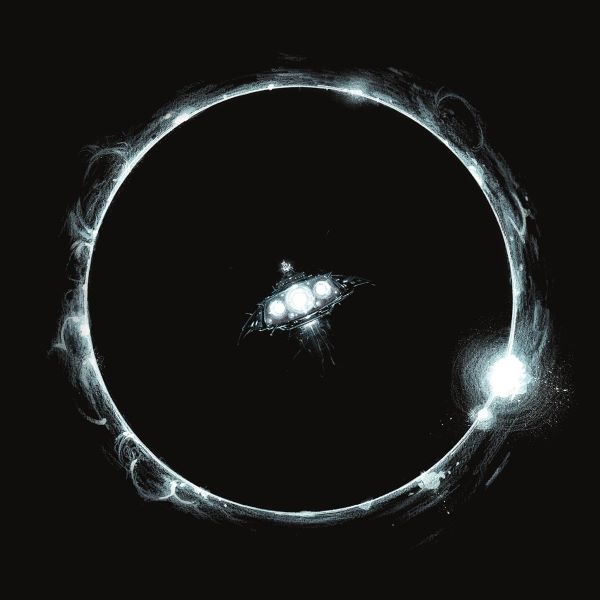
HENGE, “Journey to Voltus B”
For example, the rock band Henge has a new album out, “Journey to Voltus B”. This high-energy, synth-driven rock album is a ton of fun. It is seven songs that tells the story of travel to another planet. Through the ARCAM SA45, I was again fixated by the awesome bass reproduction that just flew unencumbered from the speakers. It was distortion-free and very balanced. I thought Dirac would improve it, and it did in terms of the blend with the main speakers and maybe the overall bass balance, but the end result was more clinical and less lively than I was expecting.
My impression of Dirac in this implementation was that it provided an improved sense of envelopment, better bass balance and blend, along with improved vocal intelligibility. But even though my new room has some fairly significant challenges, my impression of the sound with Dirac engaged was that it wanted to make my system sound too much like what I hear at my local movie theater; it became “generic” and sadly lifeless. And it also gave a sense of compression that was not altogether welcome.
That was with music, but on movies, would the results be the same? My answer is that I preferred the sound on movies and TV with Dirac Live engaged. There was something about the bass management when it was turned on that worked well for mixed media like this.

The Naked Gun
Take the 2025 remake of “Naked Gun” for example. The sound of this movie over the ARCAM was quite impressive. Remember, movies don’t need a ton of loud special effects to be useful in evaluating a sound system. Environmental sounds can be even more useful for evaluation, as realism is the thing you want to hear. In “Naked Gun”, there is a scene where an electric car causes some crashes to happen, resulting in some fun sound effects. I also enjoyed the arena and crowd noises in the wrestling scene. Additionally, the gunshots, vocals, and thumping music all came through with excellent fidelity. All in all, I preferred this movie with Dirac Live running.

Beast of War
Another new movie I screened with the ARCAM SA45 was “Beast of War”. I know I only had a 2.1 system working, but I still made notes about the immersiveness of the sound I was getting. That was heard in the early scenes of the troops training in the Australian outback, then further promulgated in the short attack scene, which featured some deep LFE action. I was once again very pleased with the system’s handling of all the environmental cues and the all-important dialog.
The ARCAM’s strongest traits are its transparency, dynamics, vocal fidelity, and an uncanny sense of immersion. I also liked that the unit had some adjustability, most notably the balance control, which I used sparingly to center the image on a few of my LPs that have slight channel imbalance irregularities.
Secrets Sponsor
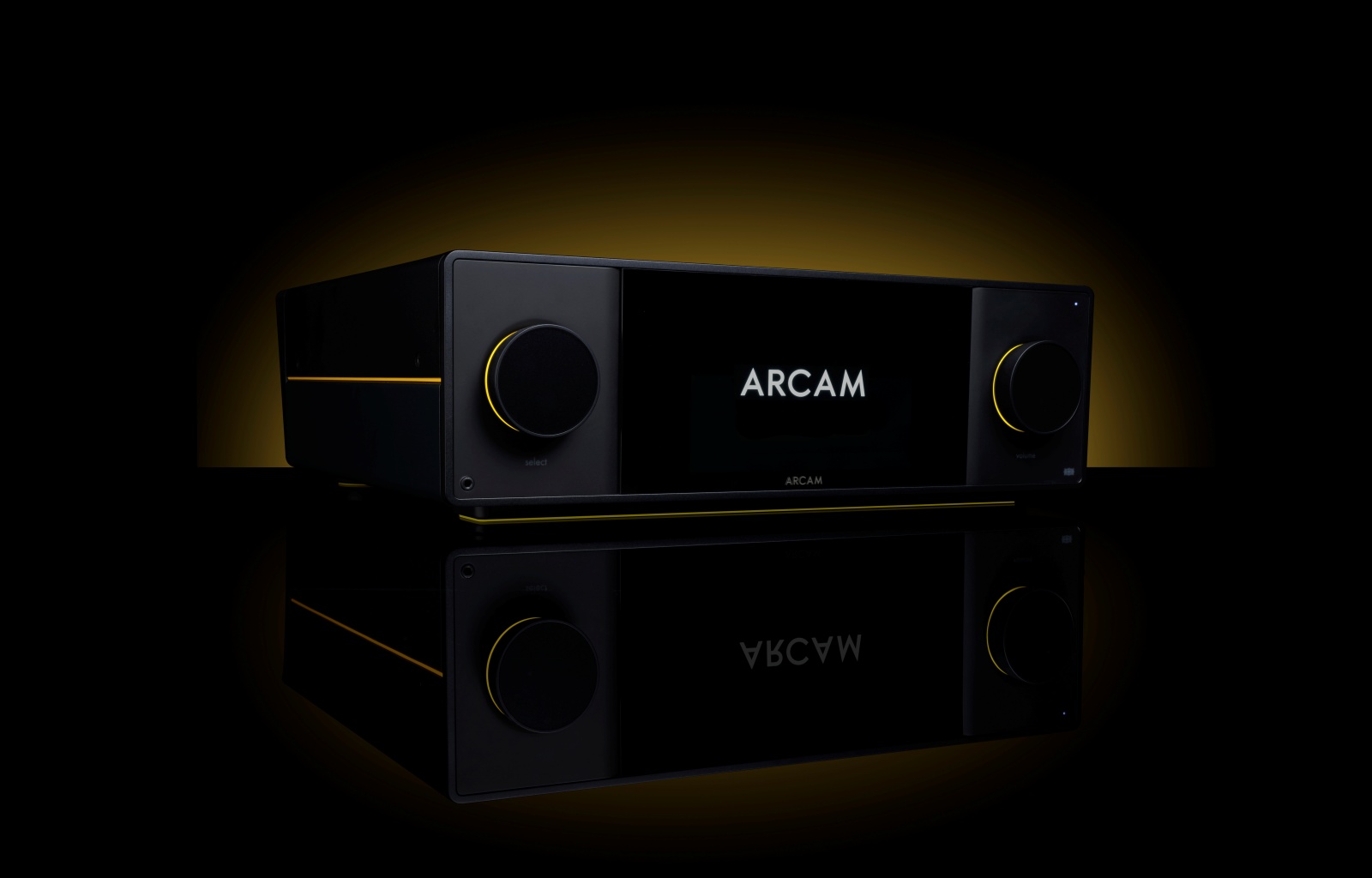
The ARCAM SA45 Streaming Integrated Amplifier impressed me in almost every way – it looks sharp while sounding energetic and transparent. The SA45 really does have sporty looks and gives you a sporting performance!
- Very powerful amplification
- Lots of flexibility
- High-tech in every way
- Sporty-looking
- Nice display
- Dirac Live is included
- Dynamic and transparent sound
- Larger, high-contrast labels on the rear panel
- A cowl design that allows easier access to the rear-channel ports
- Maybe an even bigger readout on the front panel
One day during my review period, I jotted in my notes that the ARCAM SA45 had “sporty looks and sporting performance”. I think that is as good a conclusion as I can muster. The unit looks great with its solid case, yellow highlights, and large readout. It just exudes quality and class from every pore.
The sporting performance is tied to its transparent and dynamic sound quality that really never disappointed.
The unit has about every hookup option you could need for a modern system, and the SA45 can handle pretty much any format you can throw at it. It just lays down music with a great sense of confidence.
Dirac Live room correction is included. Though I felt it was most useful (and desirable) for movies, it may rock your world. The good news is that it is in there, and you can give it a try and see for yourself. You may want to keep it on all the time.
At the end of the day, I could not find much of anything to dislike here, and the SA45 would make an excellent centerpiece to a highly resolving sound system. It gets my highest recommendation.