 YouTube
 Facebook
 X
X LinkedIn
 Pinterest
 Instagram

 Mel Martin
They come in all sizes and all prices. I’ve reviewed many over the years, and most have been impressive. Now we’ve got something new from Questyle, a well-regarded electronics company, called the SIGMA. It has an innovative form factor, first-class packaging, and best of all, exemplary sound.
The battery-operated SIGMA serves as a portable DAC/Amp but would do equally well on a desktop, and it’s showing up in recording studios. Sporting a see-through case, with a large array of buttons on the side, it’s a conversation piece as well as a thoughtfully designed device that will serve multiple needs and serve them well.

Questyle SIGMA Portable DAC and Headphone Amp
- Current Mode Amplification
- Balanced and unbalanced analog outputs
- Qualcomm Snapdragon Sound
- LDAC support
- 768kHz 32-bit PCM playback
- DSD compatible up to DSD 512
- Excellent form for travel, but should include a case.
- Design is both elegant and useful.
Questyle has been in the business of high-end audio design since 2012, when it got started in Shenzhen, China. They have since gained a worldwide reputation for minimalist but unique designs that have found their way into audiophile systems and recording studios all over the world. Their products include Bluetooth transmitters, desktop DACs, portable DACs and amps, and headphones. In the past, I’ve reviewed some Questyle products and found them all among the best in class, so I was anxious to hear their latest effort.
Design:
Portable DAC and Headphone Amplifier
DAC Chip:
AK4493
PCM:
768 kHz/32 bit
DSD Native:
DSD64, DSD128, DSD256, DSD512
DSD DoP:
DSD64, DSD128, DSD256
Micro Controller:
XMOS XU316
USB Playback:
UAC 2.0 supported
Supported OS:
Windows, Linux, Android, HarmonyOS, macOS, iOS (MFi certified)
Bluetooth Codecs:
SBC, AAC, LE Audio, aptX, aptX HD, LDAC
THD+N:
<0.0002% @20 mW, 300 Ω
SNR:
120 dB
Max Output Power:
1200 mW @32 Ω (4.4 mm Balanced)
Line Out:
Single-Ended >2.5 V, Balanced >6.8 V
Playback Battery Life:
>12 hours (real-world average 12-14 hours depending on gain and volume)
Max Charging Current:
2 A (5 V input)
Charging Time:
~3.5 hours
Dimensions:
Height: 4 1/4 inches, width: 2 2/4 inches, depth: 1/2 inch
Weight:
164 grams
Retail Price:
$599.00
Website:
Company:
SECRETS Tags:
Questyle, Questyle Audio, SIGMA, DAC, headphone amp, mobile, portable
Secrets Sponsor
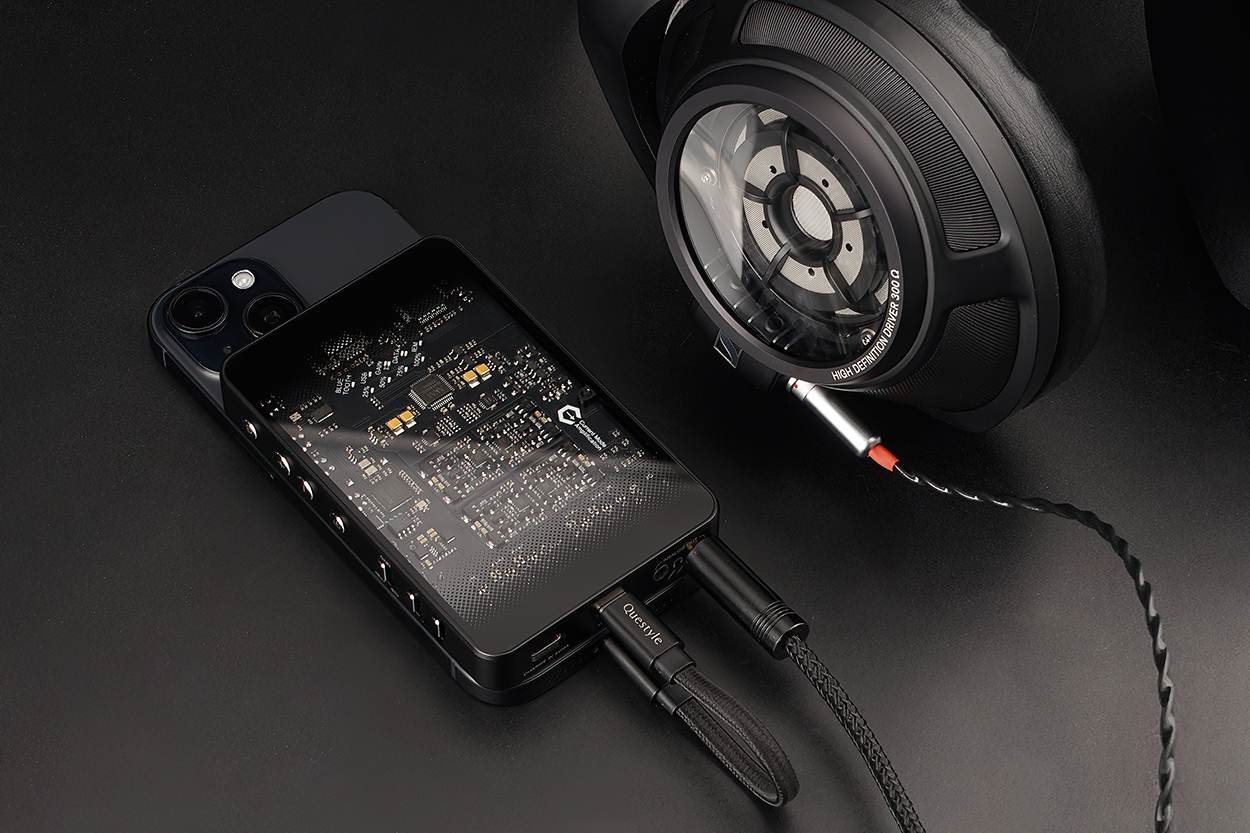
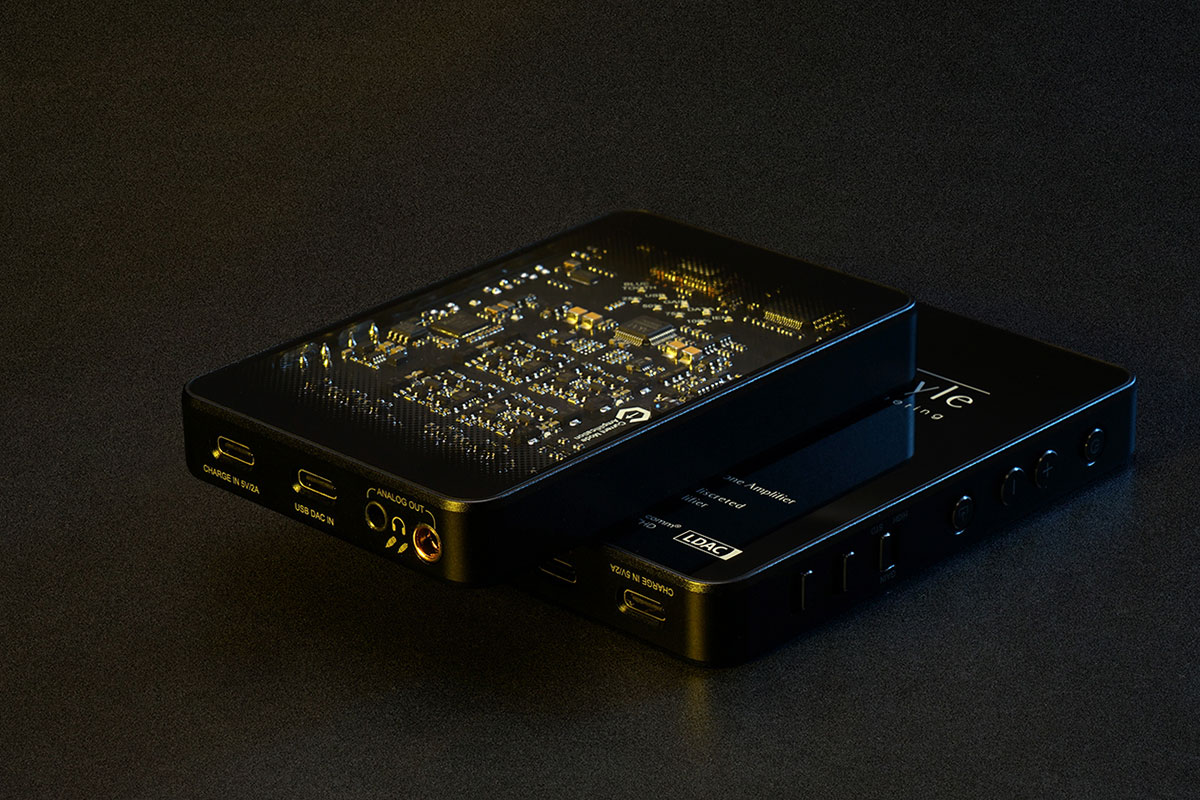
As I’ve pointed out, the SIGMA is a real looker. It always attracts attention, especially from my audiophile friends, when I pull it out or they see it on my desktop. The SIGMA has a precision-crafted chassis, machined ultra-fine, made of sandblasted aerospace aluminum. The glass panels are custom-made optical-grade materials, and the entire case has an RF suppression coating.
The SIGMA has 4 sets of patented fully-discreet, fully-balanced, current-mode amplifiers driving the headphone/output amplifiers. The SIGMA supports high-speed USB connections with smartphones and PCs, as well as lossless Bluetooth audio. Output modes can be switched between headphone amplifier and line out for professional monitors or Hi-Fi systems. This makes the SIGMA a nice signal source for powered speakers.
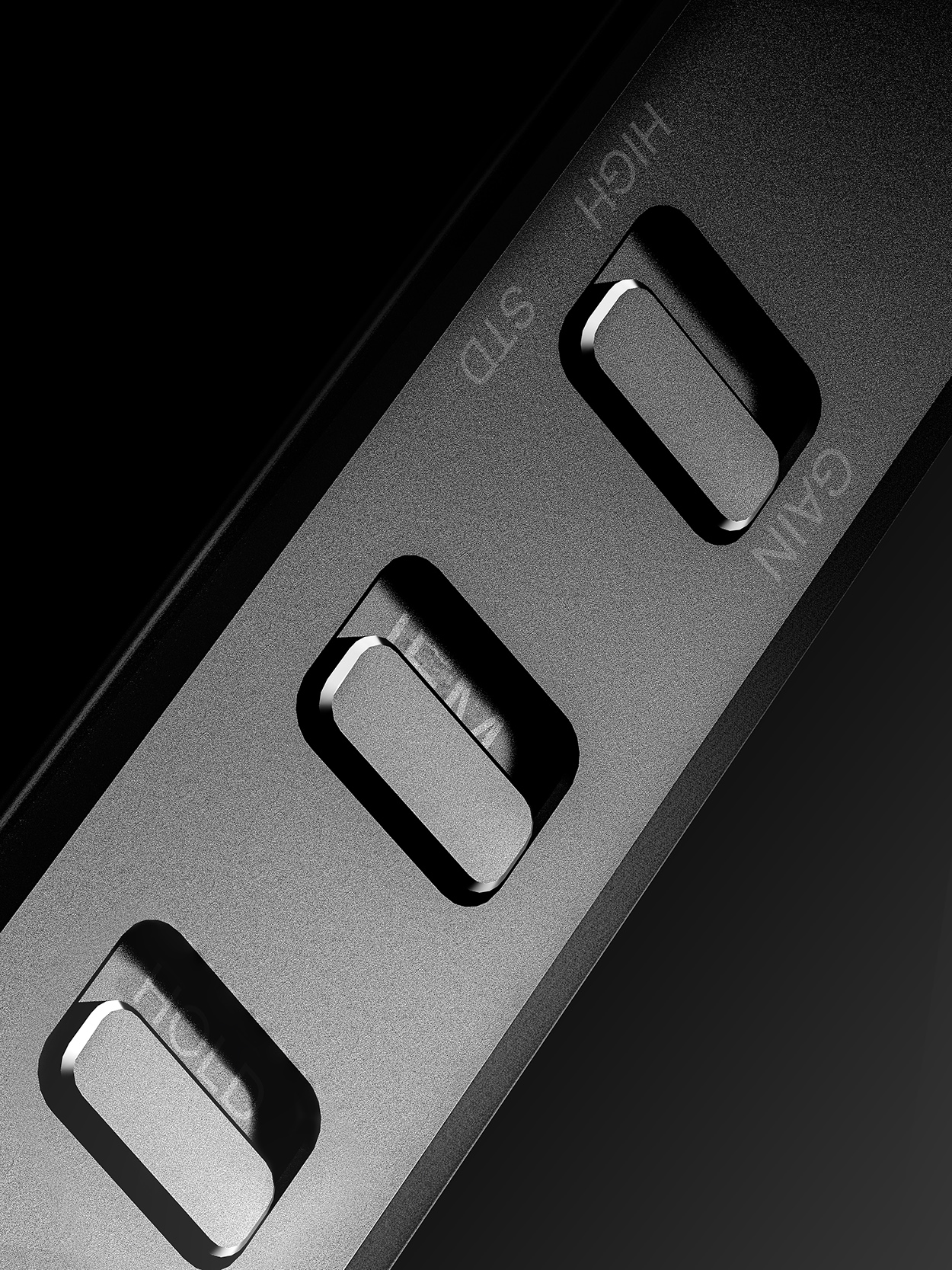
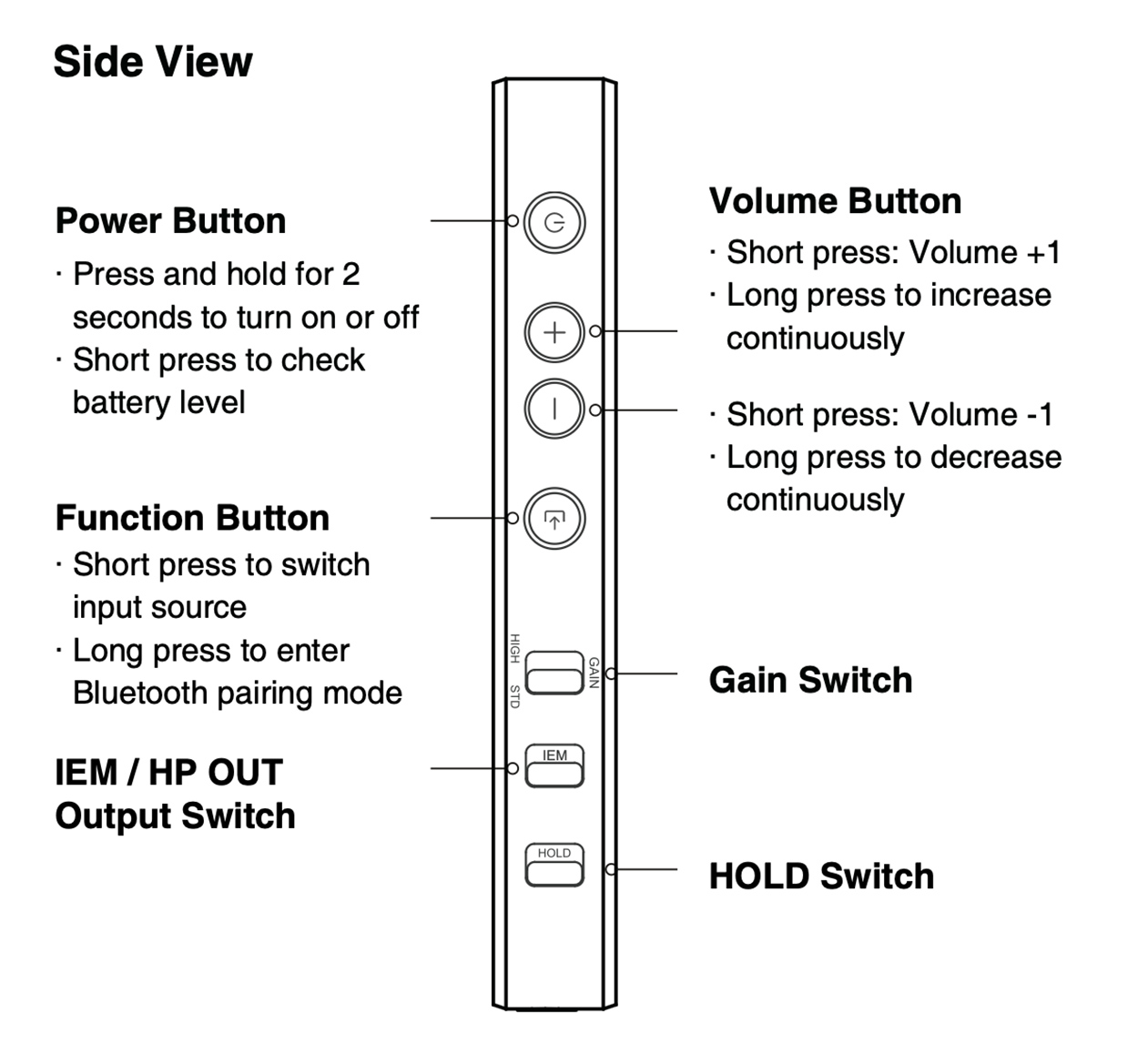
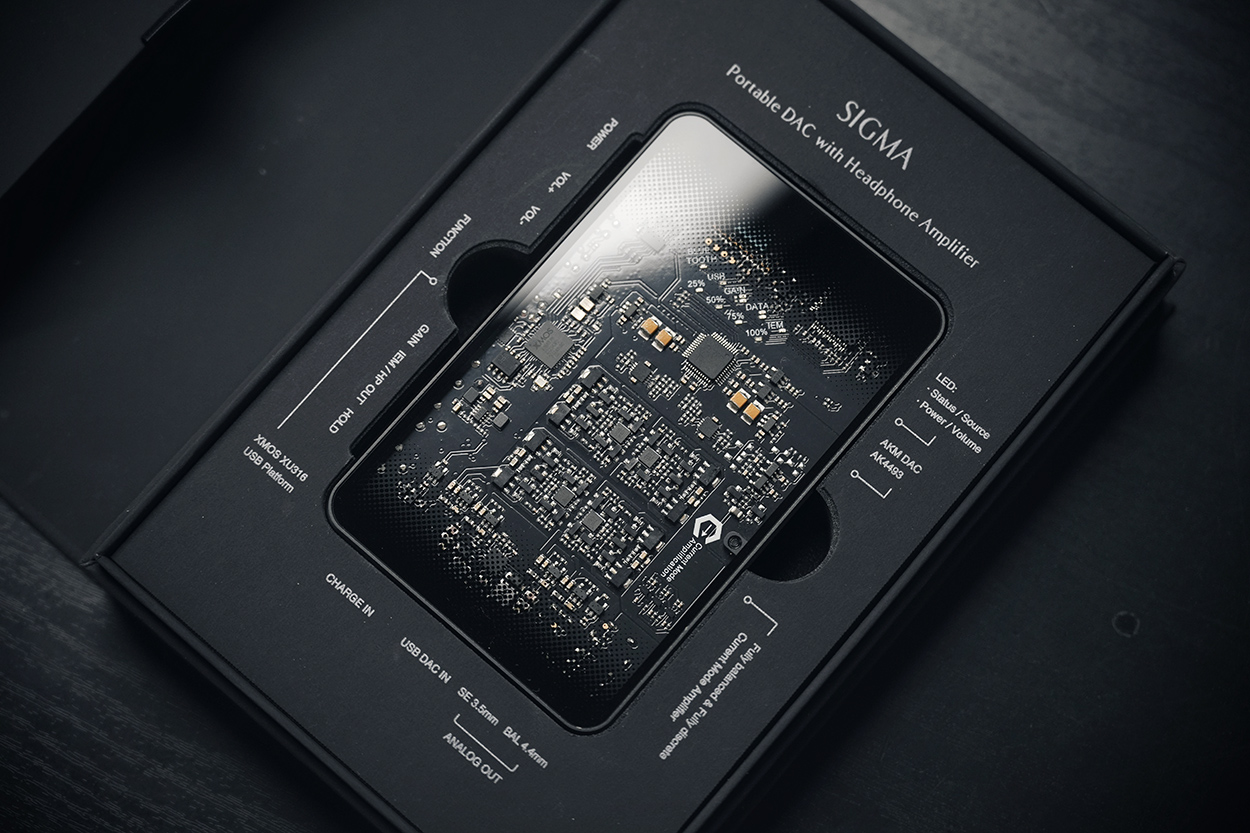
The SIGMA has a variety of ports and buttons, and it’s best to show you a diagram of where they are and what they do. Here are the buttons on the side:
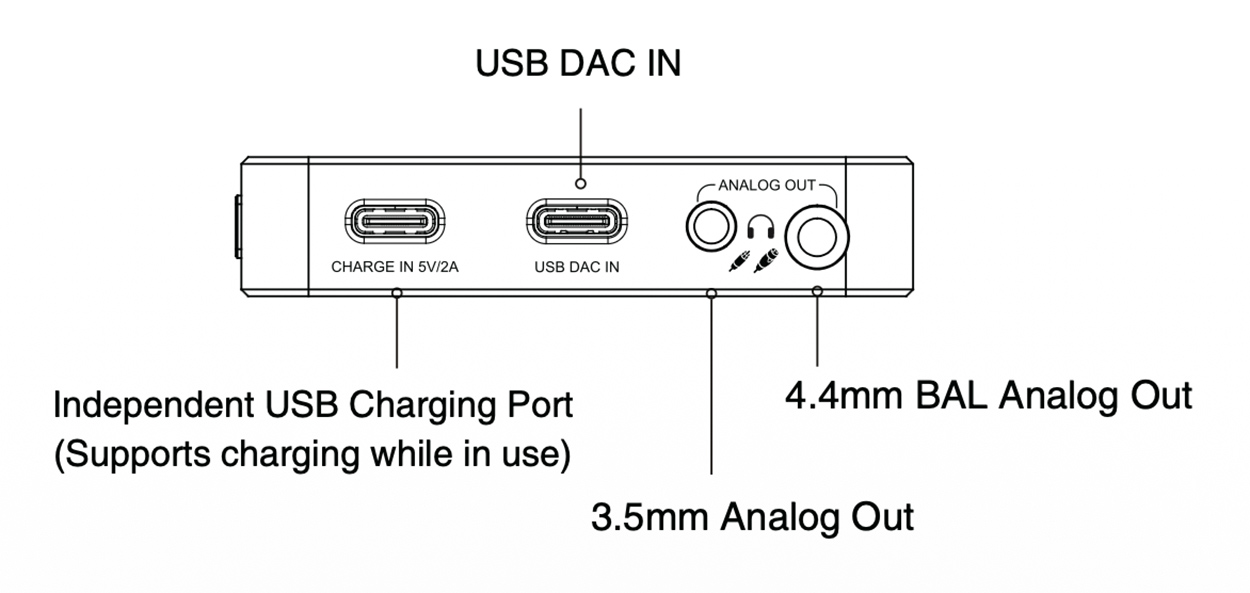
At the bottom of the SIGMA are the connection ports for I/O and headphones.
It’s a very compatible device, fully happy with iOS, Harmony/OS, and Android 5.1. For PCs, it supports Windows 10 1803+ (driverless) and Mac OS out of the box.
Let me talk about the unboxing experience and the quality of packing, and the way the SIGMA looks when you open the outer box.
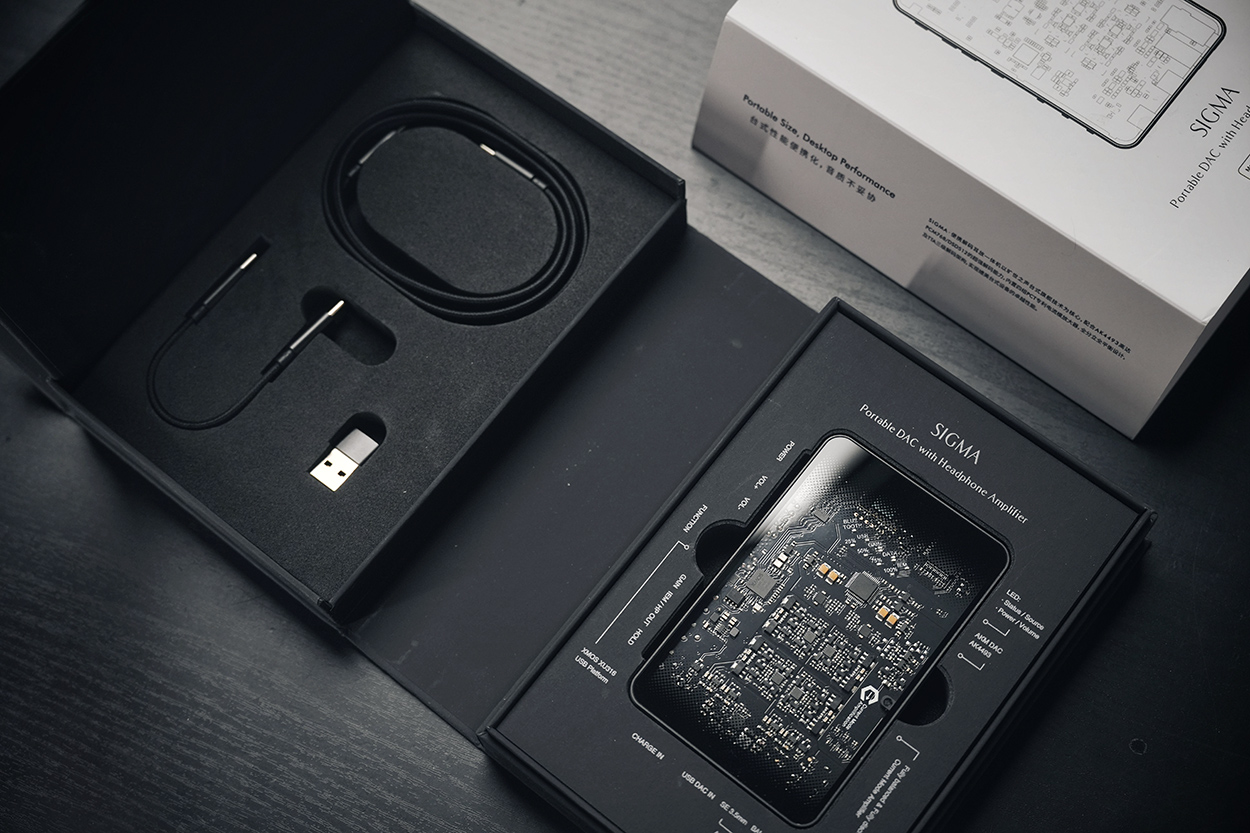
The SIGMA is face up in the packaging, and around the perimeter of the device are labels for all the controls and I/O.
I felt it was a bit like Apple packaging, but aimed at a more sophisticated user. Also in the box is a guide to using the SIGMA, and 2 USB-C cables, one for power and charging the SIGMA, and one for data. There is also a USB-C to USB-A adapter, should you need to make a quick conversion using one of your own cables.
The striking design of the SIGMA includes high-impact glass on the top and bottom. On one side, you can see the internal circuit board, and LEDs indicating battery level, if outboard devices are connected, and a volume indicator.
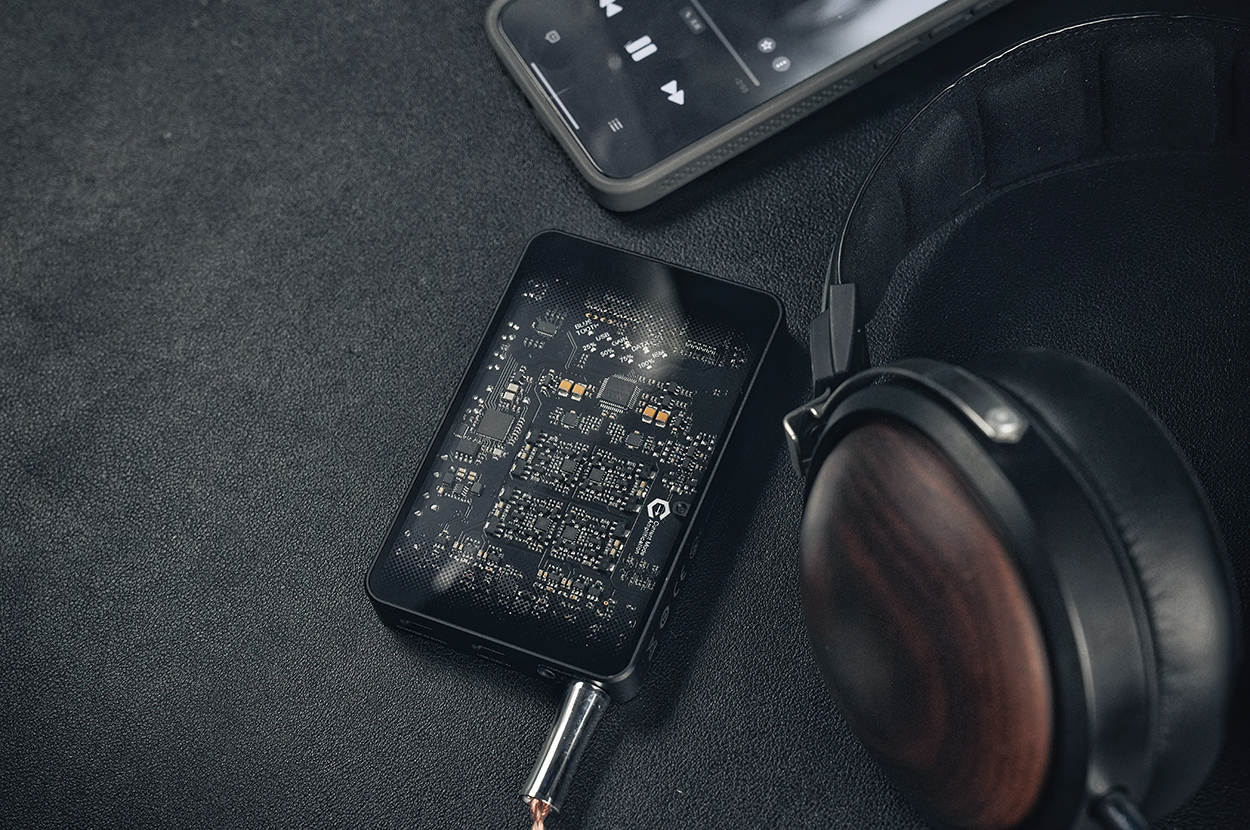
I charged the SIGMA for a few hours using the included USB cable. Four of the LEDs inside the case indicate when the charge is full. Battery life is claimed to be 12 hours. I didn’t let the SIGMA run all the way out, but it was chugging along at 10.5 hours with one LED still lit.
Using the SIGMA as a DAC and a headphone amp was a pleasurable experience. Most of my testing was with headphones, listening to high-resolution music files. My headphone of choice was a wired Focal Clear MG model. I also listened on a variety of Bluetooth headphones, but personally, I don’t find the Bluetooth system a great way to test high-quality audio. It was more of a check to see if the SIGMA Bluetooth feature worked properly, which it did.
Music sources were varied. I used a FiiO M15 portable music player, plugging a USB cable from its digital out into the digital input on the SIGMA. I also listened to high-resolution FLAC files on my MacBook Pro, played from the Mac digital out. I also used my Tidal app on the Mac to listen to some streaming high-resolution files from that service. The majority of my auditioning was from the FiiO.
I also used my iPhone as an audio source.
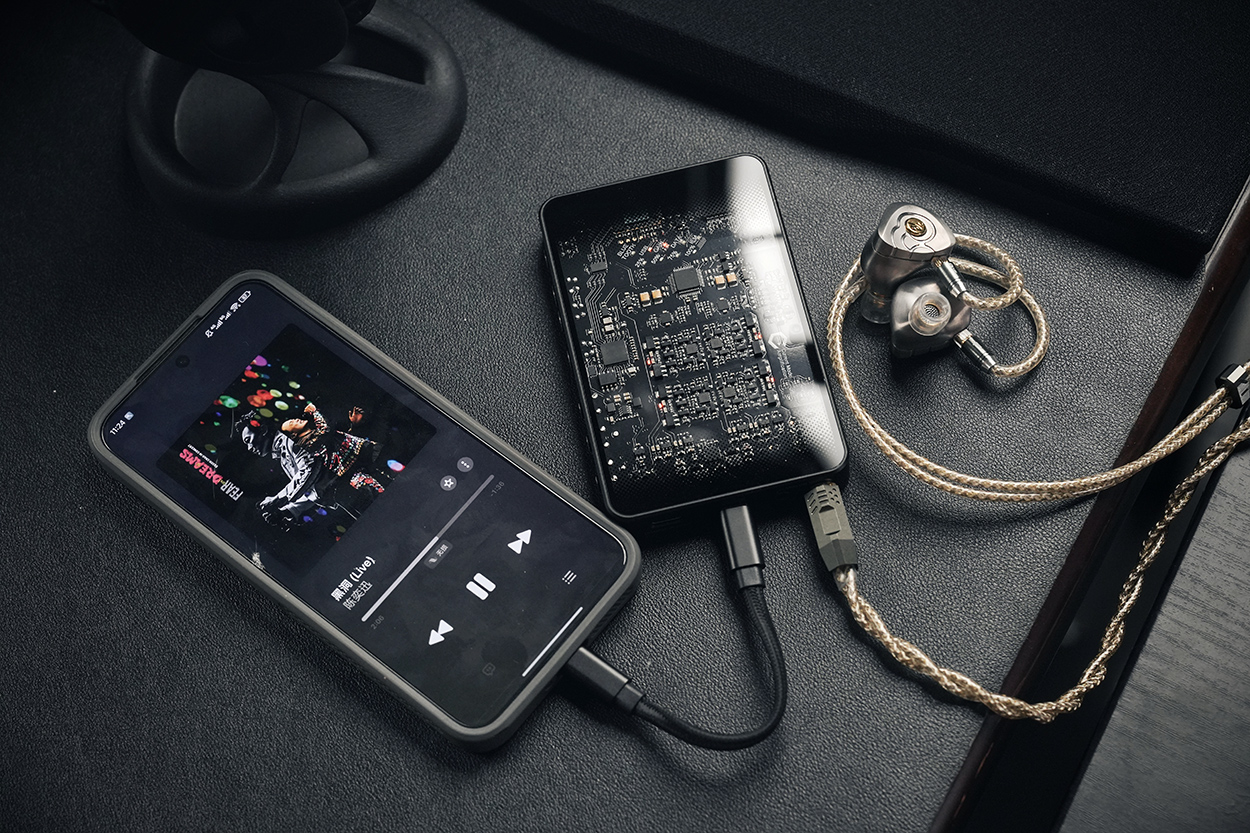
I found the sound quality very good in all cases. I generally test a variety of music, with a bias toward live music with a large orchestra and chorus, because I believe massed instruments and voices present a challenge for the entire audio chain. I also listened to a variety of acoustic instruments in small chamber groups because a good recording is very revealing if the rest of the audio chain is up to the task.
I also tried some popular music and electronic rock, not for accuracy as much as placement and directionality.
Of course, with all these selections, we’re testing the playback chain, which includes the original recording, the playback device (mostly the FiiO M15 in this case), the headphones (Focal Clear MGs), and of course the SIGMA DAC/amplifier. On almost all the music tested, I would also listen directly on the FiiO M15, so switching DACS would show up any differences and non-linearities.
Here are some notes on music I found enjoyable and revealing:

Rebecca Pidgeon, “The Raven”
Rebecca Pidgeon: The Raven – This is about as well-recorded an example of the human voice I’ve found. She’s close to the mic, and on headphones, there is an intimate, “you are there” sound. The audio was exemplary. I also listened directly on the FiiO, and found the SIGMA offered a quieter background, and slightly better, more anchored positioning of Pidgeon and her backup musicians. I’d have to attribute the difference to the SIGMA DAC.
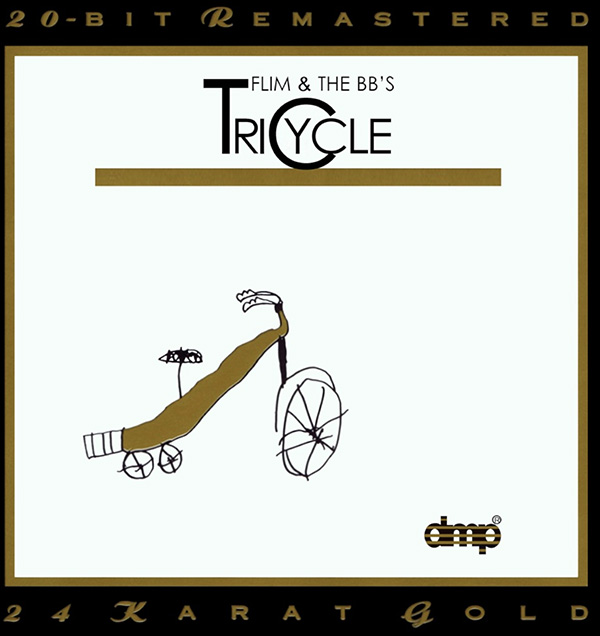
Flim and the BB’s, “Tricycle”
Tricycle: Flim and the BB’s – In the days when there were lots of audio stores back in the 80s, I’d take this CD around to check out new speakers. This is still a great recording with tremendous dynamic range and some very fine jazz. The sound was rendered beautifully on the SIGMA, with the instruments locked into their positions, and the dynamic range was stunning.
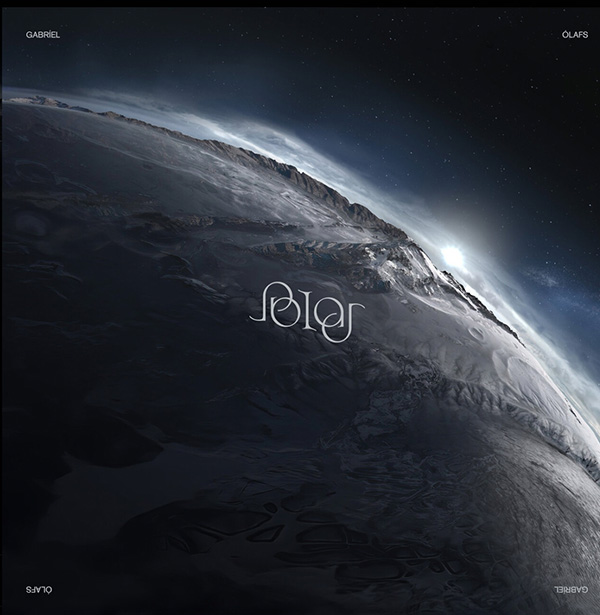
Gabriel Olafs, “Polar”
Polar: Gabriel Olafs – An Icelandic composer with really interesting musical ideas. This is a 44/16 rip from a CD. It’s a great test of instrument positioning and deep bass. The SIGMA did not seem to add or detract from this music, which is well recorded. The track “Whale Overture” has reference level deep bass and shimmering strings.

Vaughan Williams, Tavener, MacMillan, “The Choir of Westminster Abbey”
Vaughan Williams, Tavener, MacMillan: The Choir of Westminster Abbey – This album made it on to the classical best seller list in 2022. It’s a pretty stunning 96/24 recording of the choir in rich acoustics. I was listening particularly for the decay of the sound, which, at times, digital gear seems to lose. The SIGMA and my associated gear rendered the recording with lovely realism.

Brian Eno, “Ambient 4 – On Land”
Ambient 4 – On Land – Brian Eno – A very influential New Age recording, with a very dreamy sound. On headphones, it is very immersive, more so than listening via speakers. Although this is just a 44/16 CD rip, it still sounded excellent through the SIGMA DAC on headphones. Swapping the SIGMA out for the built-in FiiO DAC resulted in a very slight but noticeable blurring of the music.
Secrets Sponsor
At $599.00, the Questyle SIGMA is a good value, providing near state-of-the-art sound at a reasonable price. It is flexible, very attractive, and can run off its own power. The packaging is superb.
- Sound quality is as good as I have heard from any portable DAC, and it is very close to the best desktop DACS I’ve heard.
- Build quality is excellent, and visually, the unit is attractive, and LEDs on the circuit board offer a lot of information.
- It has very good battery life – it can keep working even on a long flight.
- Bluetooth option is a plus.
- Versatile, works with phones, and supports several mobile standards from iOS and Android. It can also work as a desktop unit and is a nice choice for powered speakers.
- Included padded case. This unit is too beautiful to ruin needlessly.
- Some means to attach it to a phone or digital music player. Mobile users won’t want to have multiple devices rattling around.
- The included manual is very small. Grab the PDF and save your eyes!
The SIGMA is a first-rate DAC/Amp that should make any audiophile happy. Having found the audio qualities excellent, I have a few reservations. As a portable system, there is no way to attach the device to your phone or music player, so you can carry them together. It’s awkward at best. Even worse, there is no case, and with the beautiful glass front and back pieces, I can sense an unhappy ending if the unit is dropped or the glass surfaces become scratched. I am surprised there was no case that comes with this device, and no thought given to how to carry it with a music source. I don’t think most people want to carry a music player or phone, with wires coming out to attach to the SIGMA in a loose configuration. Yes, Bluetooth will keep it wireless, but there’s still the SIGMA to carry around with a lot of exposed glass.
So, we have a faultless, superb-sounding DAC, designed for home or travel, but when traveling, it seems somewhat unwieldy and unprotected without a case.