 YouTube
 Facebook
 X
X LinkedIn
 Pinterest
 Instagram

 Lory Hawley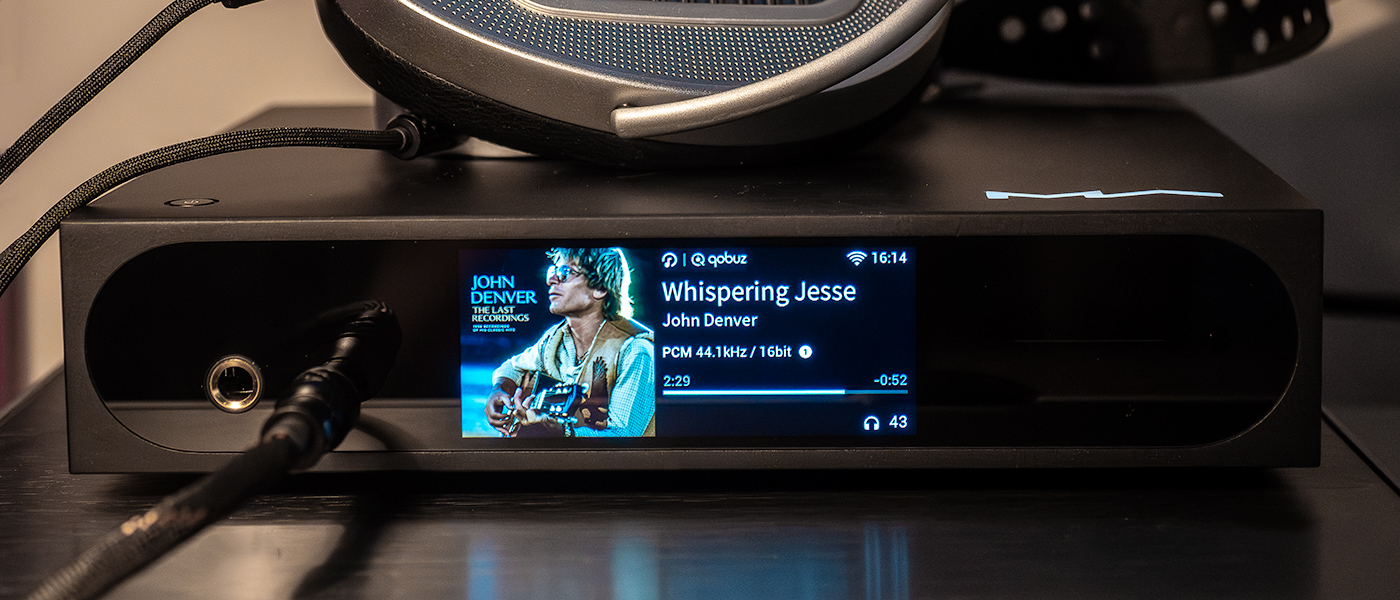
The Matrix Audio mini-i Pro 4 is a small device weighing less than three pounds, but it is a powerhouse that contains an ESS ES9039Q2M DAC chip and a balanced headphone amplifier with two headphone jacks: a 4.4mm balanced and a 6.35mm single-ended. The Matrix Audio mini-i Pro 4, even without its top-notch streaming capability, would be a great piece of gear. But with streaming support for UPnP, TIDAL Connect, Spotify Connect, Qobuz Connect, Apple AirPlay 2, and more, plus certifications for Roon Ready and Plays with Audirvāna, makes the mini-i Pro 4 worth a deeper look.
Matrix Audio mini-i Pro 4 Music Streamer
- The fully balanced amplifier is powerful and can easily drive many power-hungry headphones from the balanced output.
- The DAC can serve as a stand-alone DAC for use with other headphone amplifiers.
- HDMI ARC for television audio
- USB Audio: PCM, DSD, MQA
- Comes with a remote
- The in-house designed MA Player app provides complete control using iPhone, iPad, and Android phones.
- The full color, high-resolution, 3.46” touch screen provides quick access to many of the functions.
- Support for DSD Native and DSD over PCM (DoP)
- The mini-i Pro 4 supports local music playback from USB storage devices and NAS (network-attached storage).
- Access to free Internet global radio stations, including vTuner Internet Radio and Radio Paradise.
- Roon Ready certification.
- It can be challenging to navigate at first.
Matrix Electronic Technology Co., Ltd. is a Chinese Hi-Fi audio company founded in 2006 by three friends who shared a passion for music and audio gear. Seeing that music has evolved beyond physical media, Matrix Audio represents a new generation of streamer-focused audio gear. In addition to performing their own R&D and utilizing new technologies as they emerge, they produce the software that runs the apps, thus controlling every step in the design of their products, such as the MA Player app for iOS and Android.
The MA Player app is a high-resolution audio playback system and forms the foundation of the streaming capabilities. It controls playback quality and has an audio format decoding library for playing various format files, and indexes audio files from storage devices, which automatically builds a music library.
The Matrix Audio mini-i Pro 4 joins a growing class of all-in-one desktop devices, such as the FiiO K17, which was reviewed by John Johnson for Secrets. Though they provide similar functions, each company has its own approach, and Matrix Audio’s emphasis on developing the software along with the hardware and creating a streamer-focused design has given the end user a wealth of riches unheard of just a few years ago. The Matrix mini-i Pro 4 that we have in for review is a full-featured streamer that also has a top-notch DAC and a balanced headphone amplifier.
CPU:
Quad Cortex-A55 2.0GHz
DAC chip:
ESS ES9039Q2M
Class A/B amplifier
Digital Input:
PCM: 16-24Bit/44.1kHz, 48 kHz, 88.2 kHz, 96 kHz, 176.4 kHz, 192kHz
DSD 2.8MHz (DoP)
HDMI ARC:
PCM: 16-24Bit/44.1kHz, 48kHz, 88.2kHz, 96kHz, 176.4kHz, 192kHz
USB Audio:
PCM: 16-24Bit/44.1kHz, 48kHz, 88.2kHz, 96kHz, 176.4kHz, 192kHz, 352.8kHz, 384kHz, 705.6kHz, 768kHz
MQA: 16-24Bit/44.1kHz, 48kHz, 88.2kHz, 96kHz, 176.4kHz, 192kHz, 352.8kHz, 384kHz
DSD (DoP): 2.8MHz, 5.6MHz, 11.2MHz
DSD (Native): 2.8MHz, 5.6MHz, 11.2MHz, 22.4MHz
USB-C port:
Maximum power of 5V/1A
USB mass storage standard and supports: FAT, FAT32, exFAT, and NTFS file formats (not guaranteed compatible with all storage devices)
Line Out:
XLR, RCA
Headphone output:
4.4mm balanced, 6.35mm single-ended
Roon Ready and Plays with Audirvāna certified
MPA Player support:
Airplay 2, DLNA/UPnP, TIDAL Connect, Spotify Connect, Qobuz Connect, vTuner, Radio Paradise, HIGHRESAUDIO
Headphone output (4.4mm balanced):
SNR:117dB A-weighting
THD+N <0.0004%@ 20Hz-20kHz 4VRMS ±0.1 -3dB@90kHz
Output impedance:<22Ω
Output power: 2200mW@33Ω, 950mW@300Ω, 500mW@600Ω, 1%THD
Gain: +14dB
Headphone output (6.35mm single-ended):
SNR: 116dB A-weighting
THD≠N <0.0005%@ 20Hz-20kHz 2VRMS
Frequency response: 20Hz-20kHz ±0.1 -3dB@90kHz
Output impedance: <11Ω
Output power 1200mW@33Ω, 260mW@300Ω, 130mW@600Ω, 1%THD
Gain: +14dB
Network:
LAN: 10/100/1000 Mbps, WLAN: 2.4 GHz/5 GHz
Weight:
2.87 lbs.
Dimensions:
width 8.80 inches, depth 7.32 inches, Height 2.07 inches
Colors:
silver or black
MSRP:
$999.00 USD
Company:
SECRETS Tags:
Matrix Audio, mini-i Pro 4, Music Streamer, Music, Streamer, Streamers, Music Streamers
Secrets Sponsor
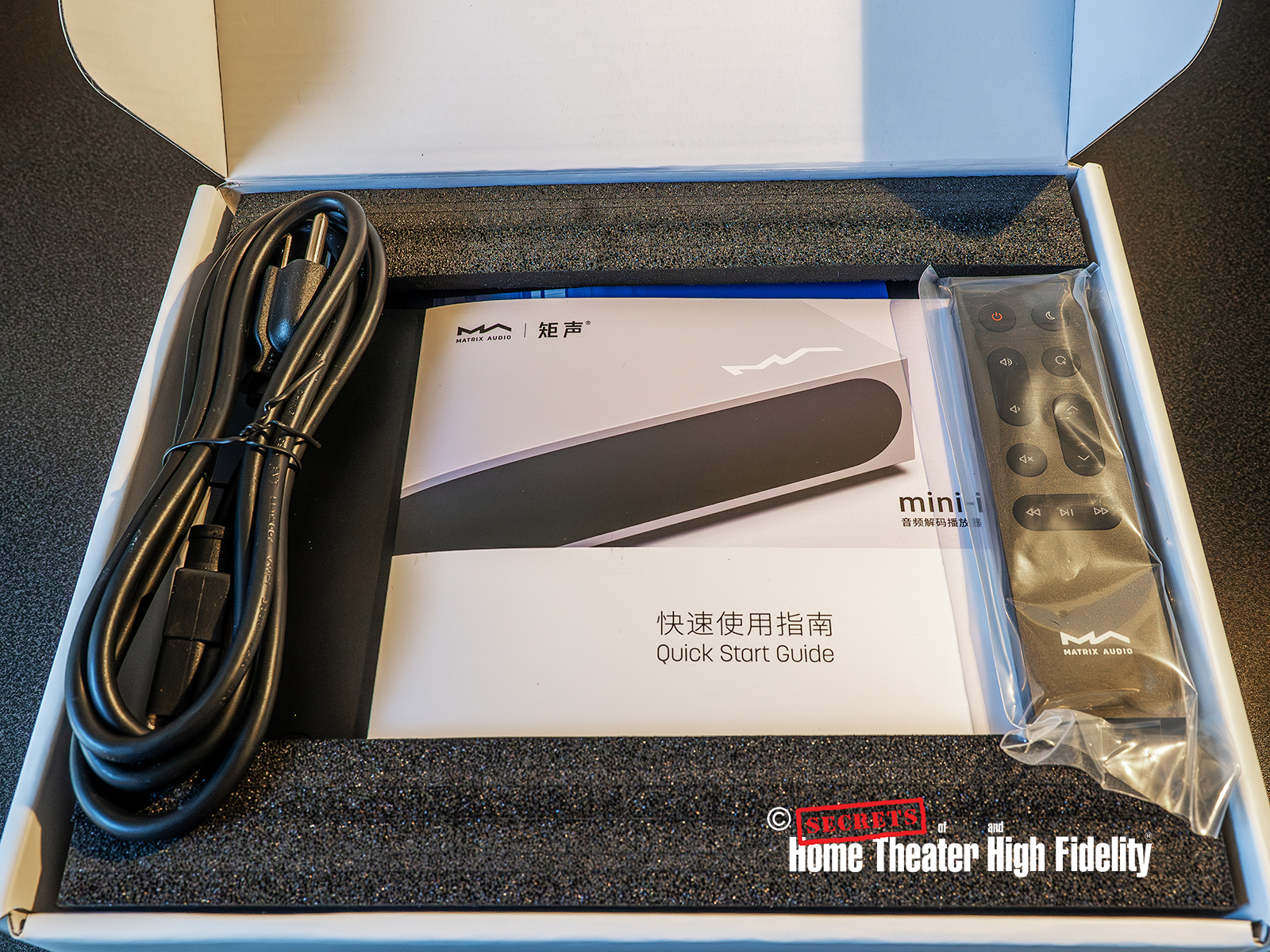
The packaging is straightforward and, along with the mini-i Pro 4, includes the power cord, remote, manual, warranty card, and Roon trial offer card.
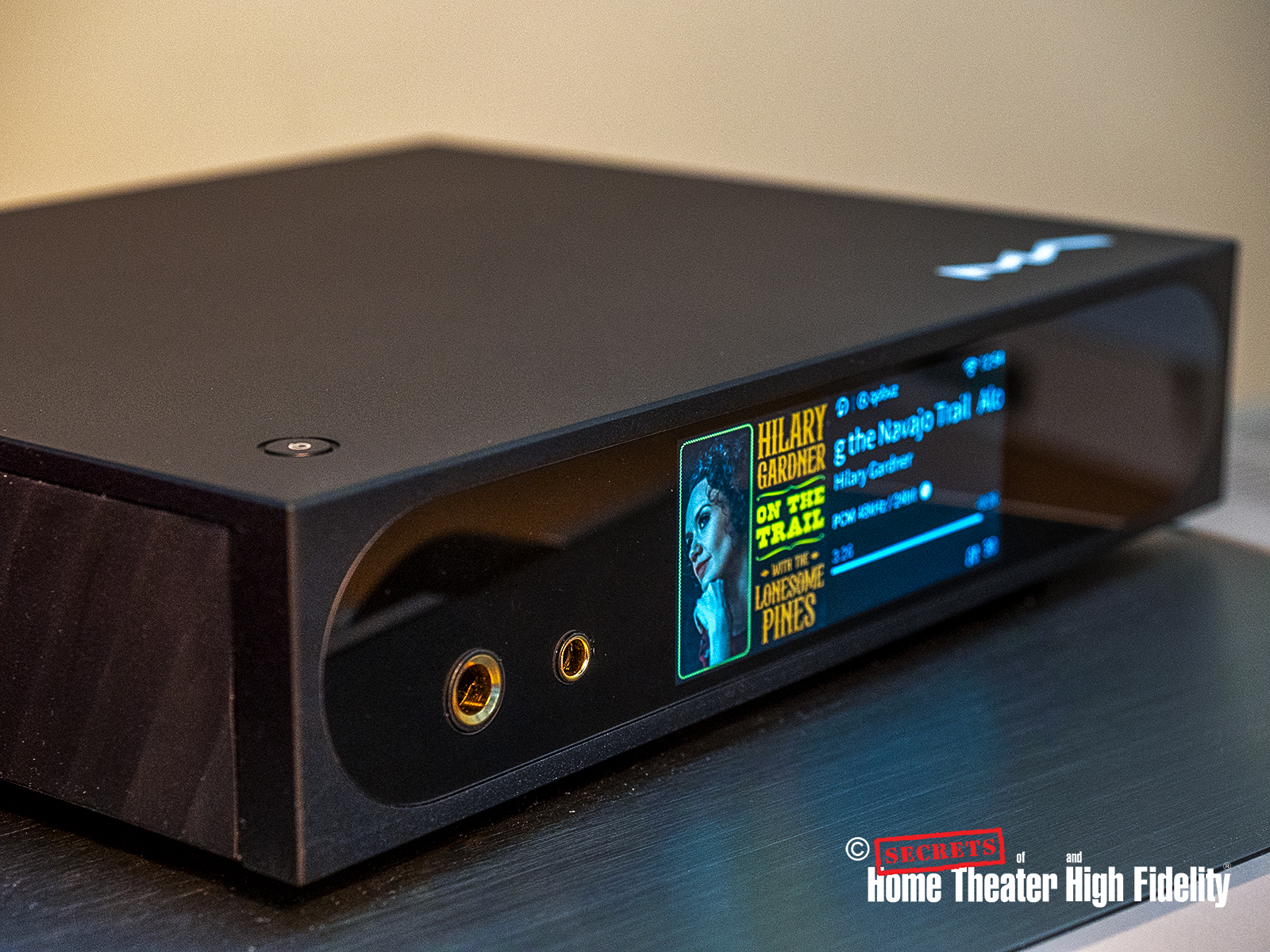
The mini-i Pro 4 unit I have in for review came in the matte black color. It is like the little black dress of all-in-one boxes. Before powering it up for the first time, all there is to see is a sharp-edged box with a matte-black aluminum top and plastic sculpted sides and bottom. There are two headphone jacks (single-ended 6.35mm and balanced 4.4mm) on the front, a very tiny power button on the top left, and a greyish logo on the top right that becomes bright white when powered on. The only clue that there might be a display is the glossy oval that extends across most of the front.
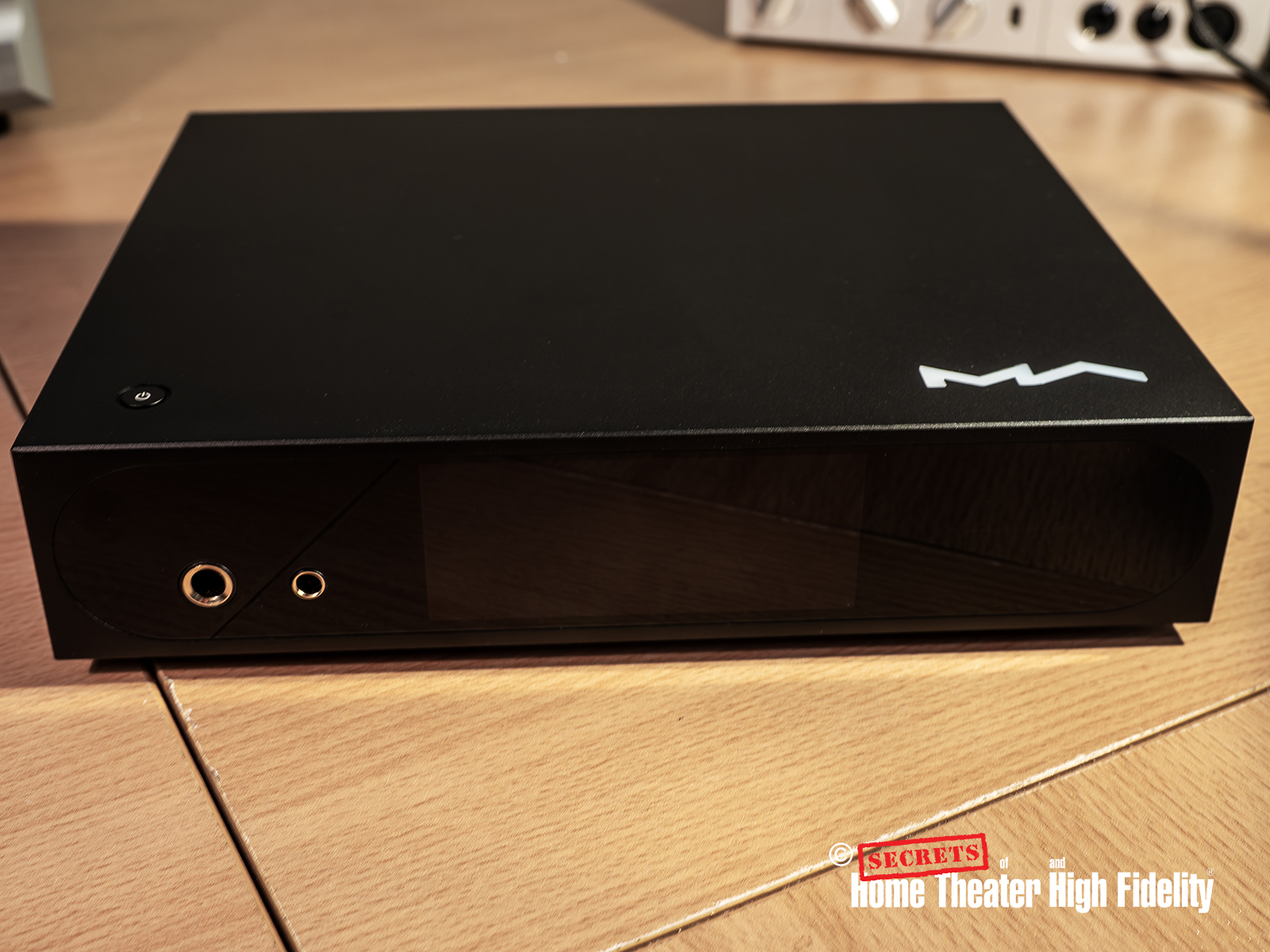
It was only when I powered it up that the touch display appeared. And even then, it was modest and underwhelming.
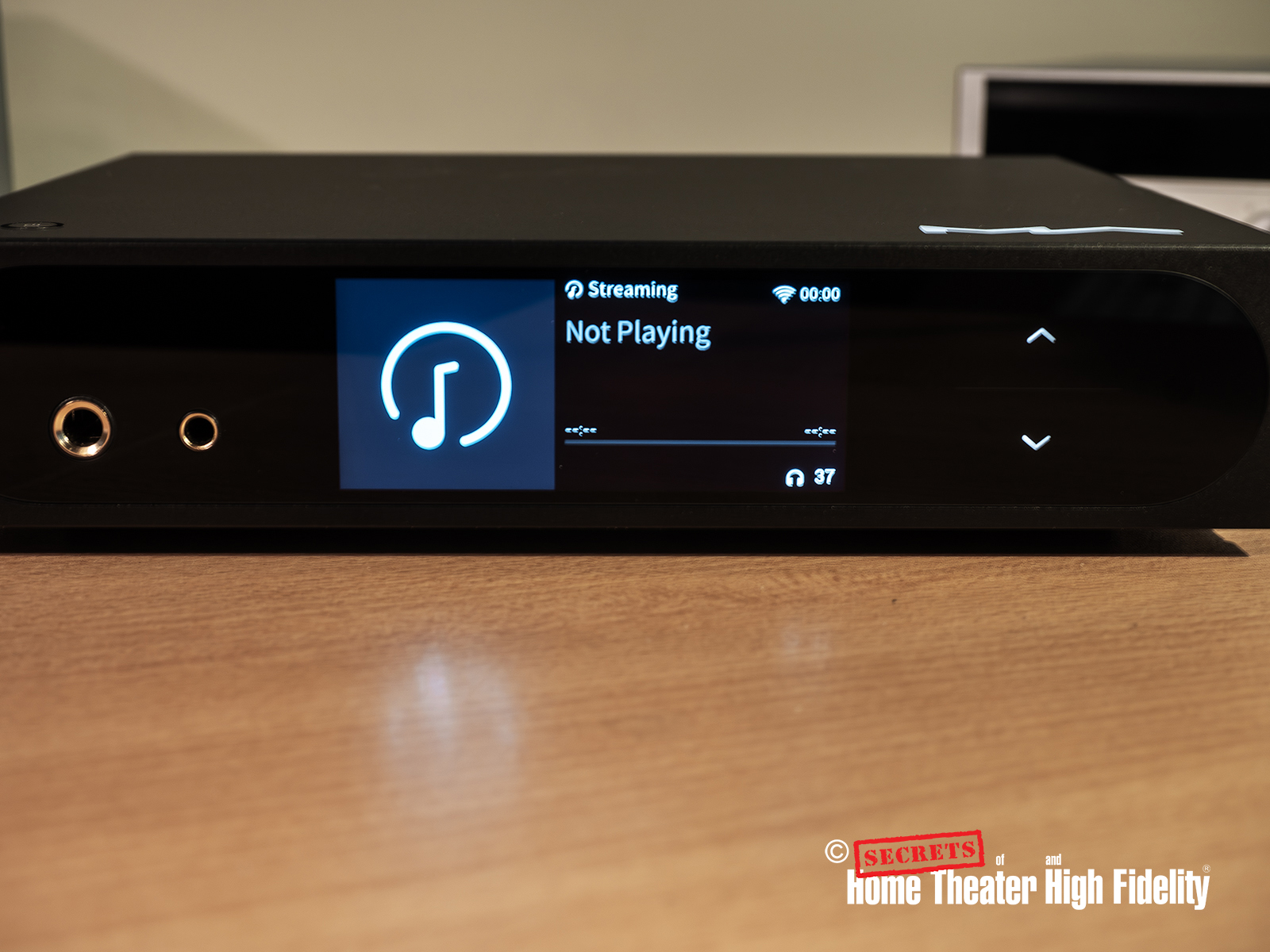
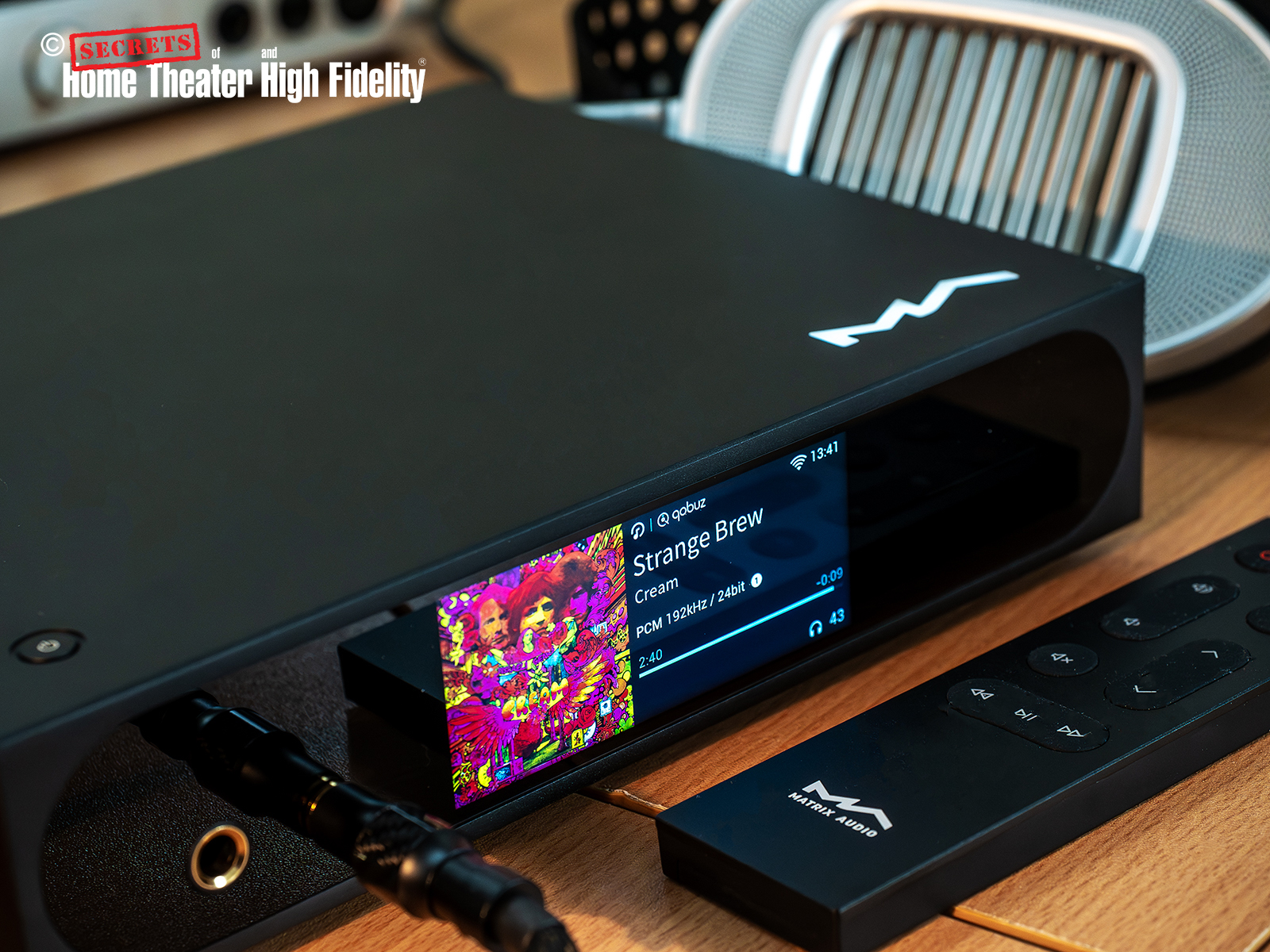
However, like jewels on that little black dress, when the full color image of the music being played appears, the display is bright and colorful. But when powered down, the stealth-like mini-i Pro 4 is happy to disappear on the desktop until called into use. The front panel also has an invisible volume control, which is activated by tapping on the right side, which lights up with two tiny arrows.
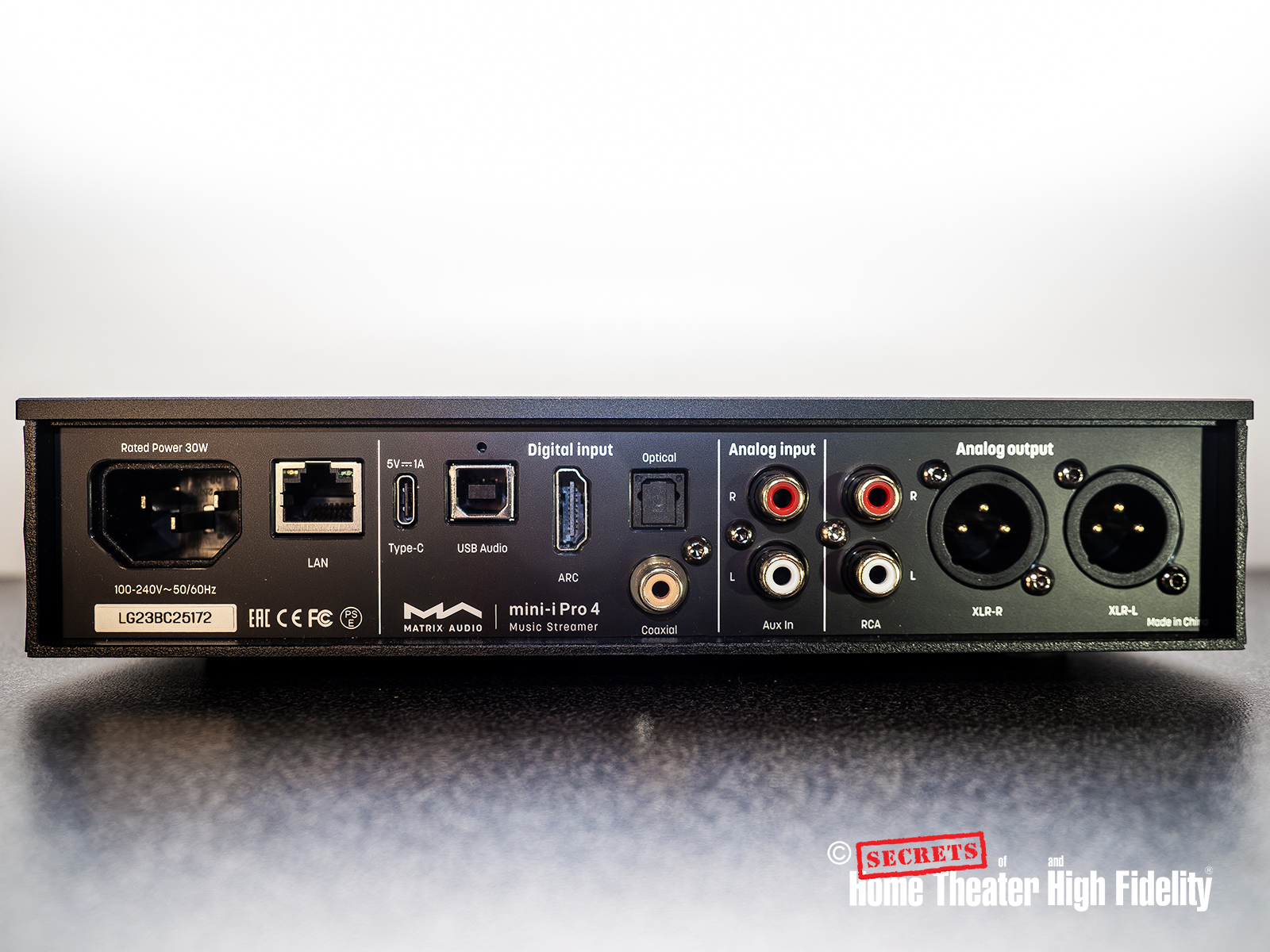
The rear panel has a full-featured set of connections. It has an analog RCA input and RCA and XLR outputs for powered speakers, A/V receiver, or power amplifier. In addition, the digital input panel has numerous options: USB-C for connecting to external storage, USB-B for connecting to a computer, optical and coaxial S/PDIF, and HDMI ARC for processing television audio. There is also a LAN Ethernet port and Wi-Fi for network connectivity.
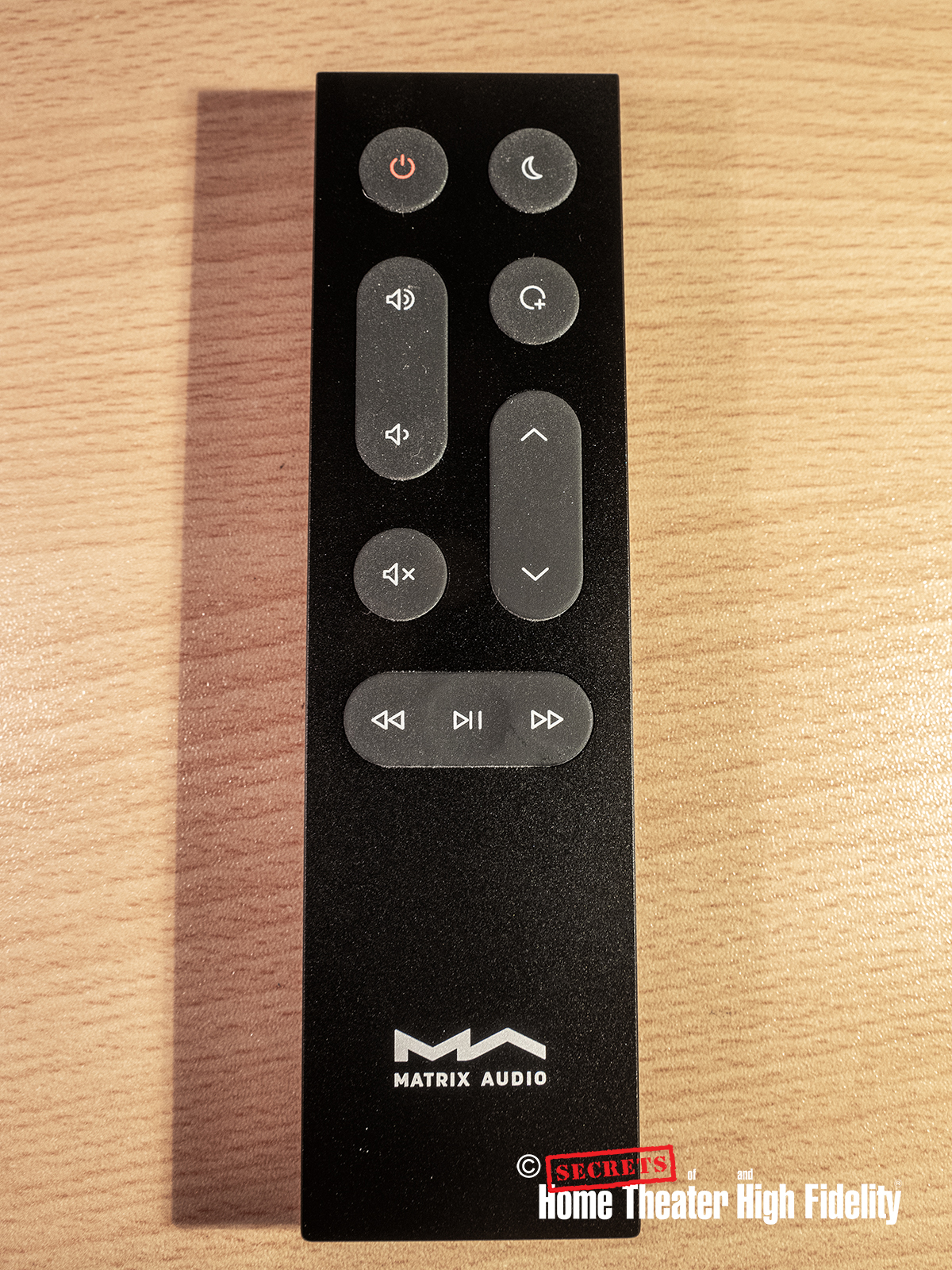
The included remote mirrors the design of the mini-i Pro 4. It is compact with a black metal front and black plastic back, black buttons with small contrasting symbols, and the white Matrix Audio logo along the bottom. It provides the basic controls, including volume/mute, track and function selection, pause, and a “visual mute” button to completely turn off the display while listening to music. Everything on the front display disappears, and even the illuminated logo turns off. I appreciated the absence of visual noise when listening in a dark room. The remote is powered by a CR2032 battery, which is not included.
The 3.46” LCD touch display provides an interactive interface for showing the metadata of the music playing, as well as navigating menus, selecting input/output, and is accessed by swiping left and right. The volume control is accessed by tapping to the right of the display screen. It is unmarked, and I found it difficult to use as it is a bit of a guessing game to hit the right spot. The MA Remote app provides additional controls and is the easiest way to control the volume. The mini-i Pro 4 has a fully balanced amplifier with gain choices of low, 0dB, and high, which are accessed through the touch screen.
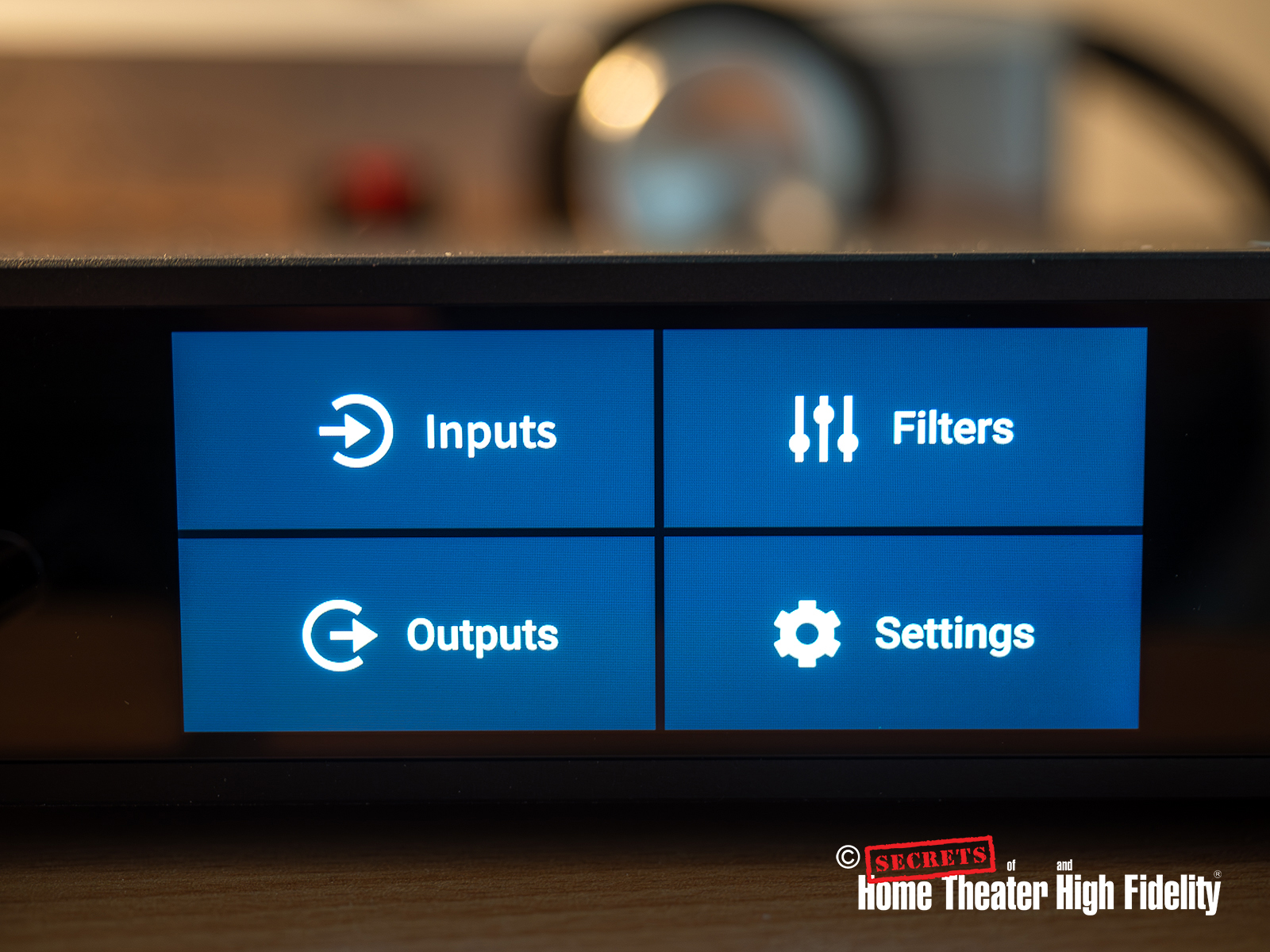
Though the exterior design is minimalist, the options for listening to music are varied and multi-layered. In fact, I found the choices to be somewhat confusing. I spent a lot of time reading the manual for the MA Remote app. As someone with little experience with streamers, I would have liked to have had a more detailed set of instructions on accessing the internet stations. Also, internet radio stations on a few of the pages were written in Chinese with no translation.
Setting up the mini-i Pro 4 was straightforward. No hook-up was required for my computer, just pairing with my Wi-Fi network. I downloaded the MA Remote app to both my iPhone and iPad. The app was much more enjoyable to use from my iPad thanks to the extra screen real estate, especially when I was studying the manual diagrams (accessed from the settings section, which is also where the firmware update is located).
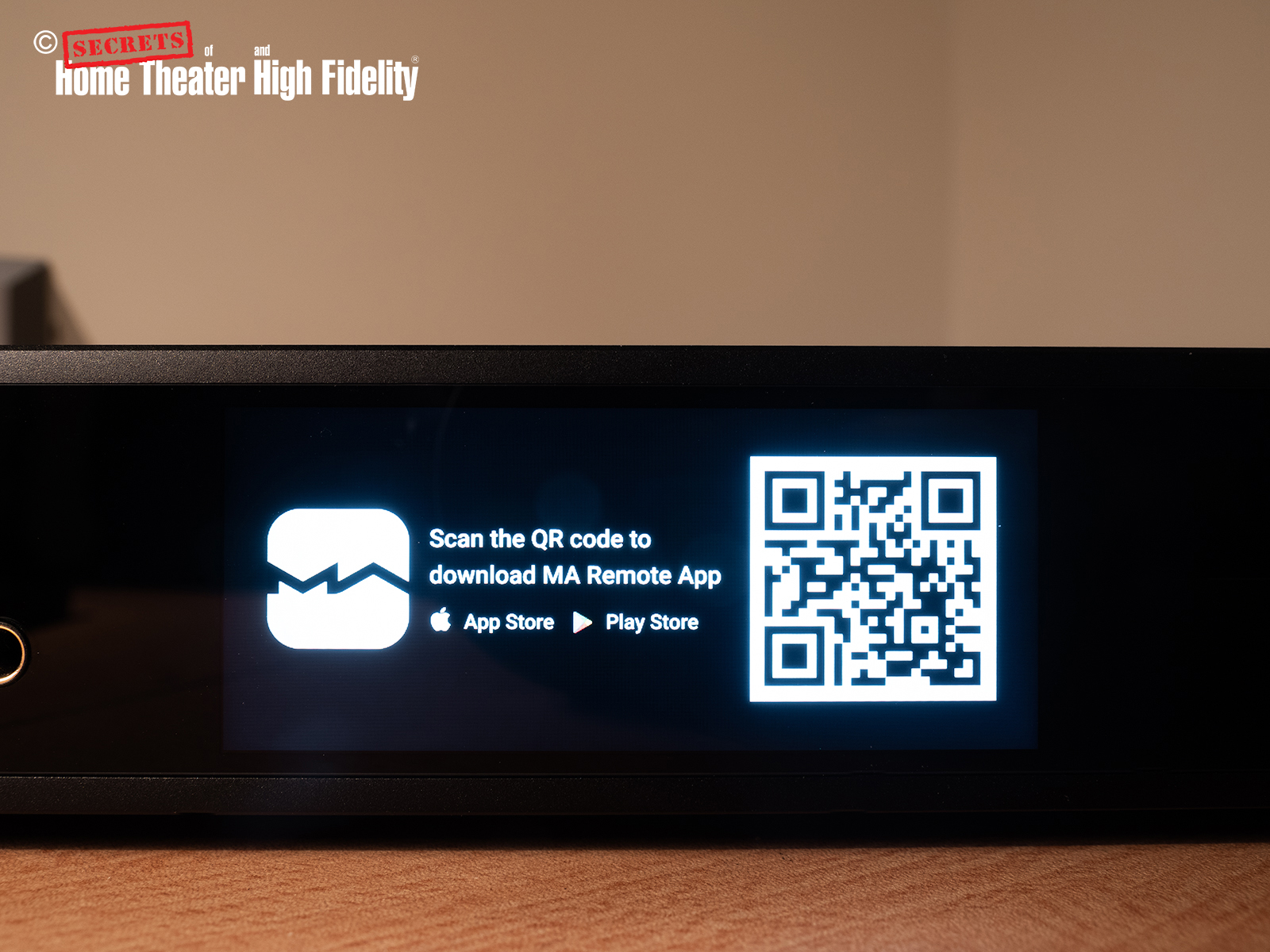
This was my first time using Qobuz Connect, which I accessed through the MA Remote app, and it worked flawlessly. Apple AirPlay also connected without issue. I loved using Qobuz straight from the mini-i Pro 4 without launching Qobuz from my MacBook. I realized I could set up the mini-i Pro 4 in another room away from any computer and have a music center/headphone station, with just the MA Remote app.

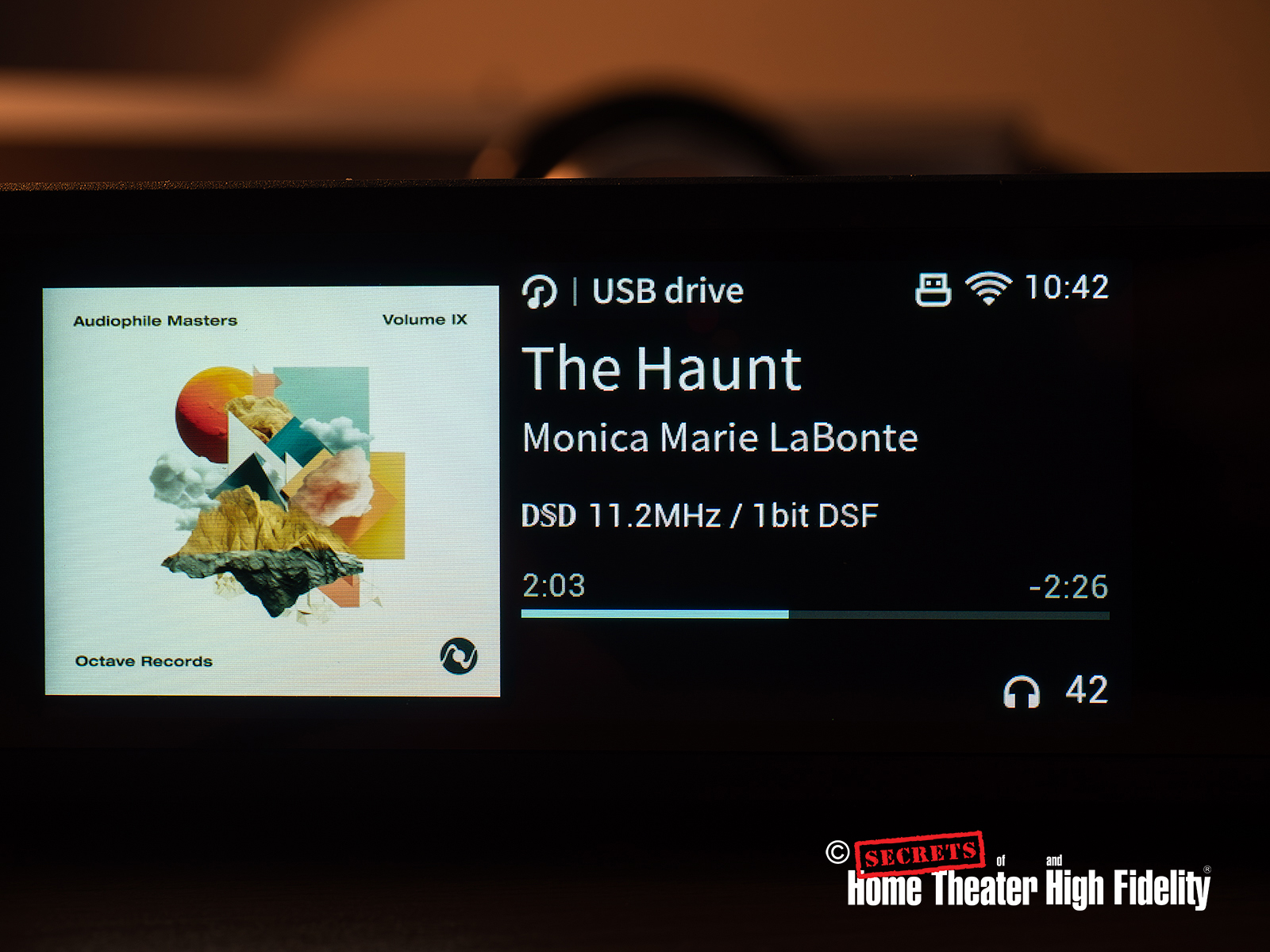
I wanted to test the music library feature by plugging in an external hard drive. I changed the setting from Streaming to USB-C. At first, nothing appeared on the display. Checking the manual, the USB-C input reads FAT, FAT32, exFAT, and NTFS file formats. I reformatted my jump drive from the standard Mac format to FAT and reloaded the DSD music files. The display instantly showed a full color image of the album the music was from, as well as all the file information. It played the DSD file without issue and sounded wonderful.
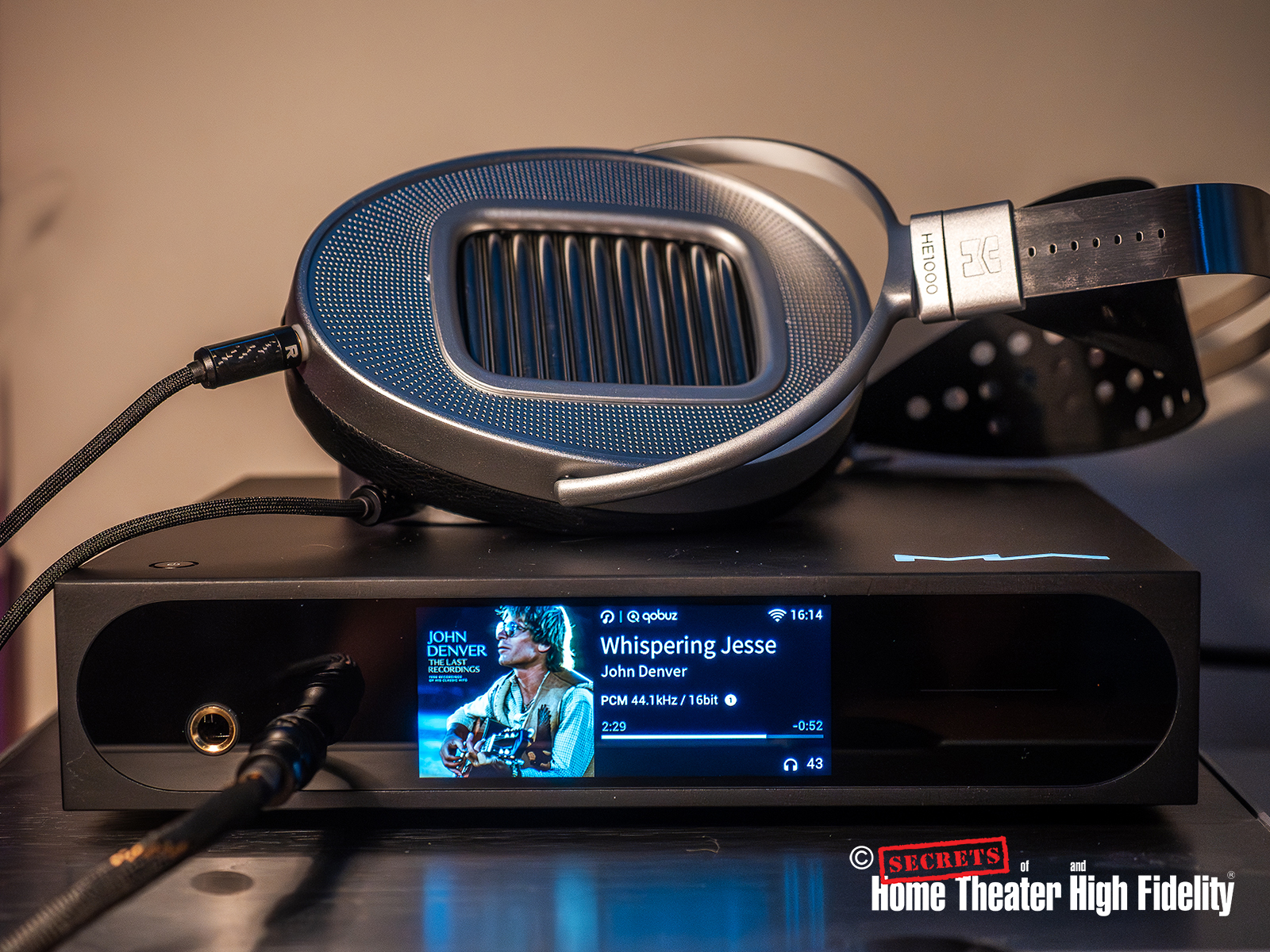
The headphones I used were the planar-magnetic HIFIMAN Arya Unveiled, the HIFIMAN HE1000 Unveiled, and the Sennheiser IE 900 IEM.
The mini-i Pro 4 had no trouble powering the HE1000 Unveiled, which at 28Ω and 95dB isn’t hard to drive, but is picky about how it’s driven. The mini-i Pro 4 provided all the dynamics and detail that make the HE1000 Unveiled such a soulful and beautiful listening experience. I found the sound signature to be neutral/warm with precise detail. The bass notes had punch and fullness, and the mids and highs, though still retaining the warmth of the low end, had a crystalline clarity that complemented the strengths of the planar headphones while smoothing out the sometimes-edgy brightness the HE1000 can have on some pieces of music. I think this would be a good choice for someone who is treble-sensitive. The soundstage was interesting; it had great depth, but a rather closed-in width. Both the Arya Unveiled and the HE1000 Unveiled are soundstage stars, in my opinion, and so it was surprising to hear them become more intimate, as if I had stepped closer to the performers. It wasn’t a negative, just a different way to experience the music. Though all three headphones need quality power to show them at their best, the mini-i Pro 4 delivered with room to spare.
I set the gain to high as it seemed to provide more dynamics and volume, though it was subtle on the two HIFMAN headphones; however, when I tried out different gain settings on the Sennheiser IE 900, they really needed the high gain to sparkle. I also tried out the different PCM filters (accessed through the MA Remote app), which were like looking at paint samples of different shades of whites… I couldn’t really tell a difference, but ended up setting it on filter 4, as it seemed to bring a tiny bit of extra warmth and richness.
To test the DAC as a stand-alone DAC, I paired it with the Pass Labs HPA-1 Class A headphone amplifier. It was a stellar combo. The Pass Labs has a warm analog smoothness, and paired with the mini-i Pro 4, the warmth and effortless power of the HPA-1 and the precision and clarity of the DAC made for some fine music listening. It was so good, I forgot that the DAC wasn’t stand-alone, and it was a week or so before I returned to the combo function of the mini-I Pro 4.
Listening to Qobuz Connect sounded as good as listening to Qobuz on my computer, and AirPlay worked perfectly once I remembered to select the mini-i Pro 4 in the sound settings.
I found that the mini-i Pro 4 handled all genres of music with finesse, providing hard-hitting bass where needed while presenting the delicate pluck of a string in vivid detail. The noise floor was silent, and the spaces between notes were dead quiet.

Hilary Gardner, “On The Trail, With The Lonesome Pines”, Hi-Res, 24-Bit, 48 kHz-Stereo, Qobuz
Hilary Gardner grew up in Alaska singing country and western music. She moved to New York and performed in jazz clubs and on Broadway. Years later, she returned to her roots and recorded an album of classic country, western, and swing songs from the 1930’s and 40’s. Cow Boogie is a rocking classic from 1942, originally written for the Abbott & Costello film “Ride ‘Em Cowboy”. Hilary Gardner’s rich, warm voice is presented by the mini-i Pro 4 in all its lush fullness, while the twang of the western guitar, the snap and thump of the snare drum, along with the Dobro and slide guitars, are clear and distinct and never get muddied together.

“Plan B3”, Tommy Schneider & Friends, 16-Bit, 44.1 kHz-Stereo, Qobuz
Plan B3 is an audiophile’s dream recording. Dynamic, well-recorded, and filled with solos from the Hammond organ of Tommy Schneider, Adrian Stern’s guitar, Hans Peter Bartsch’s drums, and Philippe Chrétien’s saxophone. The feel of the album has the vividness and realism of a high-definition film. It has that kind of cinematic quality. Close your eyes, and you are there.
Tommy Schneider chose the Hammond B3 and a Leslie sound cabinet 122 to provide the authentic sound of Green Onion. Not only does he capture the original song’s signature rocking Hammond, but I think he even improves upon it. The Hammond B3 organ has such a distinctive sound that accurate timbre is critical, and the mini-i Pro 4 delivers.

Mark Ronson, “Uptown Special”, Hi-Res, 24-Bit, 88.2 kHz-Stereo, Qobuz
Mark Ronson is an English-American two-time Emmy Award-winning music producer and musician who, along with Bruno Mars, recorded “Uptown Funk”, one of the biggest hits of the 2010’s. It had over 5.6 billion YouTube views and was named the top song of the decade by Billboard magazine. There is a lot going on in this song. Horns, wah-wah pedal guitar, drums, voices, all with that Funk, dance music rhythm driving the beat. Even if you didn’t think you knew this song, you will probably recognize it after the first two beats. It was so endemic to the Funk scene of the mid 2000’s. Recorded in London, Memphis, Hollywood, New York, Toronto, and Vancouver, it took over 100 sessions to get it just where Mark Ronson wanted it.
Like the other songs I mentioned, there is so much going on musically on this album. Not only layers of tracks and a zillion instruments, but layers of voices, and then that wah-wah guitar sound….all needing tonal accuracy and energy to punch out the rhythms and give the song life and movement without blurring any of the instruments. Once again, the mini-i Pro 4 came through. What a great song!
Secrets Sponsor
For anyone who is looking for a compact solution to maximizing precious desk space or wants to create a headphone/streamer listening station away from computers and cables, the Matrix mini-i Pro 4 is an excellent choice. I also really appreciated the ability to play DSD files.
- Compact
- A stealth design that minimizes visual clutter on the desktop.
- Benefits from the expertise of engineers who design premium network streaming components.
- Provides a true all-in-one component that excels in each of its functions.
- Can serve as a stand-alone DAC for use with other headphone amplifiers.
- The headphone amplifier can easily drive most headphones, including demanding planar magnetic models.
- The three-step gain selection is a nice option for IEMs.
- A full-featured network streamer that supports Qobuz Connect, Tidal Connect, and AirPlay 2.
- Roon Ready and easily integrates with music libraries.
- Plays DSD music files.
- The MA Remote app is full-featured.
- A more detailed manual that has a section for users who are less experienced with network streamers, including a primer on the various services and stations.
- The instructions for connecting to external libraries were somewhat obscure to this beginner. Some basic instructions would be helpful.
- A volume control on the front that is easy to use, as remotes aren’t always nearby.
- A remote with illuminated keys.
Matrix Audio is known for its in-house design of premium high-performance streamers and DACS and recently, a series of all-in-one desktop components. Their latest venture, the mini-i Pro 4, brings their know-how to the desktop with a compact network streamer DAC/AMP that performs each of its functions not just well, but exceptionally well. As a DAC, it paired beautifully with the flagship Pass Labs HPA-1. With headphones and IEMs, it provided not just excellent power and finesse, but synergy with the DAC and network streamer.