 YouTube
 Facebook
 X
X LinkedIn
 Pinterest
 Instagram

 Lory Hawley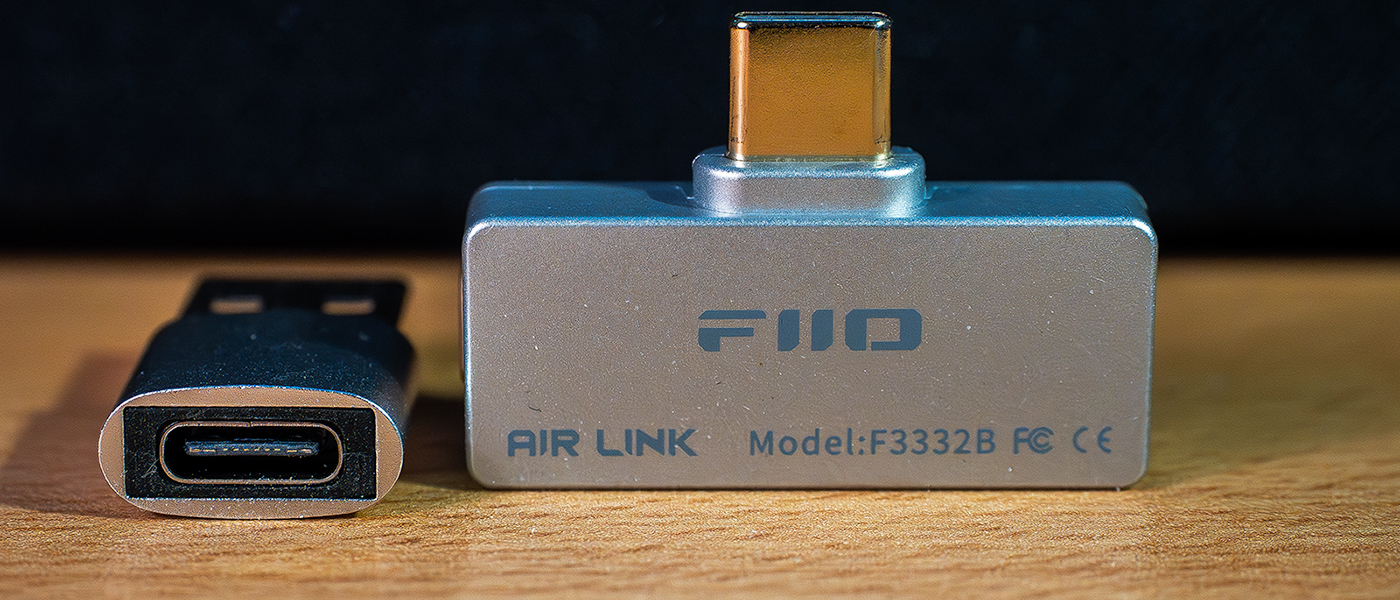
The tiny FiiO Air Link portable high-res Bluetooth transmitter has liberated me from the Bluetooth limits of the Apple universe while letting me stay within the Apple ecosystem, where I am quite happy otherwise. The FiiO Air Link is a tiny dongle that plugs into the USB-C port on mobile devices and computers. The Air Link uses the flagship Qualcomm QCC5181 chip, which supports Snapdragon Sound and aptX Lossless as well as other advanced Bluetooth codecs. In addition, it is Bluetooth 6.0, which offers a stable, high-performance, long-range connection with minimal power usage, and has a broadcast range of 114 ft. or more.
My iPhone and iPad are my primary portable music sources. Apple uses its proprietary AAC (Advanced Audio Coding) Bluetooth codec, which works well with Apple-designed iOS/macOS audio devices. However, AAC maxes out around 320 kbps 24-bit and can be more problematic with Android devices, and there are other codecs used by other audio companies that offer better sound quality. For example, aptX Lossless can reach bitrates of 1,100-1,200 kbps and delivers exact bit-to-bit audio transmission. If I were missing out on the sonic potential promised by the more advanced codecs on those headphones, I wouldn’t know.
The FiiO Air Link has Bluetooth 6.0. It is still rare to find it implemented in wireless gear. With the Air Link, I don’t have to wait for Apple to provide it. At the time of this review, Apple is still using Bluetooth 5.3, though in 2026, the next generation of iPhones will be Bluetooth 6.0, which will be a huge step-up for wireless gear. Three of the many improvements will be:
● channel sounding for highly accurate distance measurement for location tracking, like Apple’s “Find My” feature
● 114 ft. or more transmission range with up to 160 ft. possible in unobstructed areas.
FiiO Air Link Portable High Resolution Bluetooth Transmitter
- The FiiO Air Link supports Qualcomm Snapdragon Sound, SBC, LDAC, and all Qualcomm aptX codecs, including aptX Adaptive, aptX Lossless, aptX HD, and aptX Low Latency.
- Bluetooth 6.0 for improved fidelity, range, and low latency.
- Works equally well for iOS and Android.
- Bluetooth multipoint: supported.
- The Air Link has a multi-function button and RGB lighting that shows what Codec is being used.
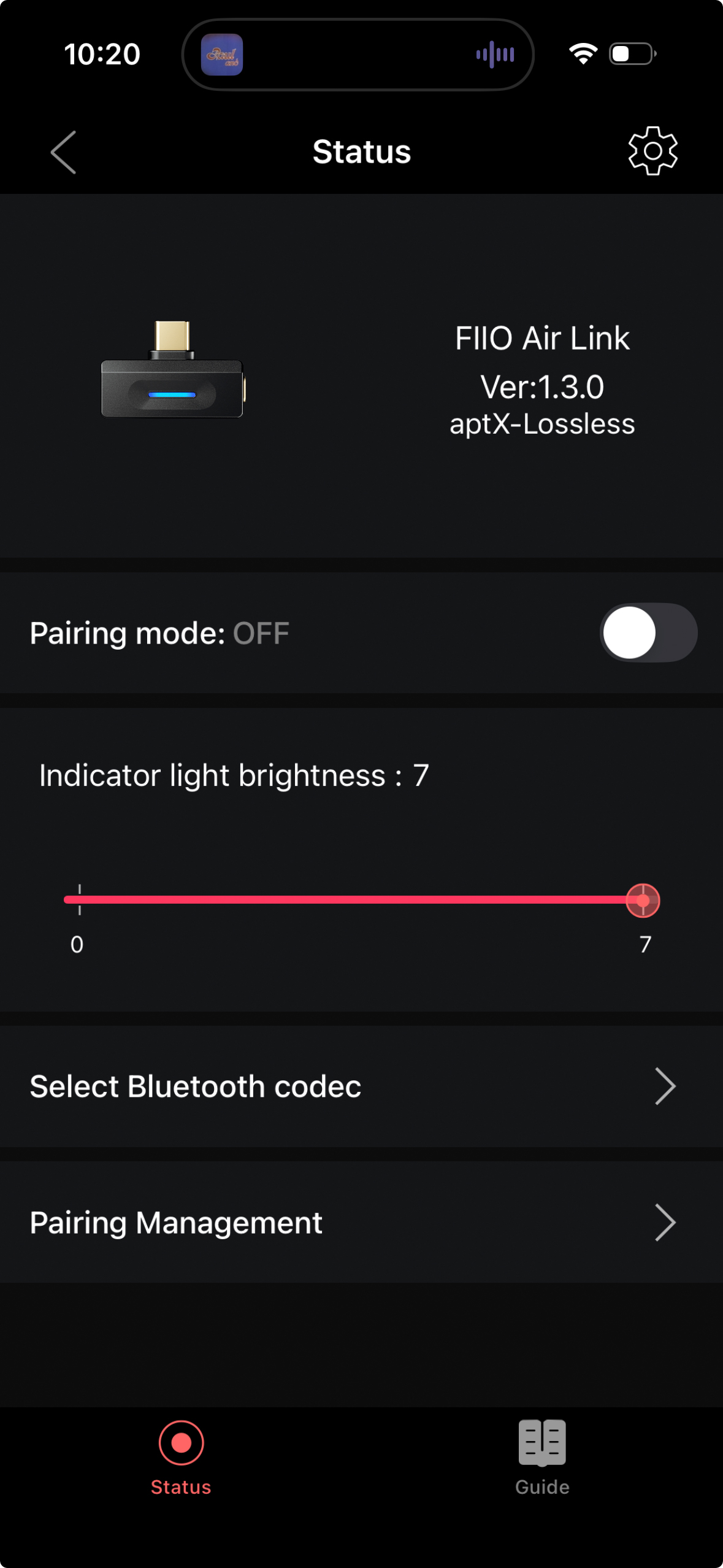
- Controlled by the FiiO Control app or by web interface.
- A dedicated multi-function button that handles pairing/clearing and codec mode switching.
- RGB lighting that shows both connection and codec status.
- USB-C passthrough charging; charge smart phone while using.
- Great value.
- Weight about 5 grams/0.18 ounces.
FiiO is a Chinese audio company founded in 2007 by senior engineers who were formerly with OPPO Digital, a U.S. based company that produced high-end audio and video equipment. Their products include high-resolution music players, headphone amplifiers, DACS, headphones/IEMs, and home audio gear. I recently had a conversation with one of the members of the FiiO marketing team. He talked about the culture at FiiO and proudly talked about the OPPO pedigree and how the OPPO spirit of the founding engineers has been preserved and honored at FiiO. One of OPPO’s products was their flagship media players, and that legacy can be seen in the FiiO DM13 portable CD Player that was reviewed by Secrets’ reviewer Mel Martin last February.
FiiO is known for its drive to innovate and, at the same time, bring affordable state-of-the-art products to the audio world. One of the innovations is the Air Link high-resolution Bluetooth transmitter. The FiiO Air Link had been refined and reworked from its first attempt with the B11 Bluetooth transmitter, which never overcame its software issues. I was one of the frustrated users of the B11 and finally gave up on trying to add multiple codecs to my iPhone. The folks at FiiO, knowing of my frustration with the B11, reached out to me when the Air Link was about to make its debut. They suggested I give the Air Link a try and sent me one to put through its paces.
Here is a very brief primer on Bluetooth and why codecs matter. The quality of a Bluetooth signal is one of the biggest determinants of perceived audio quality in wireless headphones. Bit rate, bit depth, and sample rate combine to transmit the music from the source to the headphone (when I use the term headphone, I am including IEMs). In the early days of Bluetooth, when SBC was the standard, the data was highly compressed and lossy. The music sounded flat and lacked life and dynamics. When Apple developed AAC, it was a huge leap in audio quality when it was introduced.
Two of the big players in Bluetooth are Qualcomm and Sony. Sony developed LDAC, which can deliver 990 kbps under ideal conditions, but can be less stable, and when it drops to a lower transmission rate, it often stays there. Qualcomm recently developed aptX Lossless, which can dynamically scale down in poor conditions but will return to true lossless quality when possible. Many of the newer flagship headphones are now aptX Lossless-ready. For example, the Bowers and Wilkins Px8 S2, which I reviewed last November, has aptX Lossless capability, and I was able to use the Air Link to listen to the Bluetooth audio that the Px8 is capable of, which, if I had to only use its AAC codec, I would have missed.
Qualcomm QCC5181:
Quad-core processing with dual Kalimba DSPs and Snapdragon Sound.
Bluetooth 6.0 radio:
range 164 ft.+ open, 114 ft.+ with obstacles.
Lossless and high-res wireless:
LDAC, aptX Lossless, aptX Adaptive 96k/24, aptX HD/LL, aptX, SBC.
Type-C male plug:
power supply/data transmission.
Type-C female plug:
charging.
Maximum supported sampling:
96kHz/24bit.
Multipoint support.
High-res audio (wireless):
Certified support for premium wireless listening with ~50 ms ultra-low latency.
RGB indicator, codec and status:
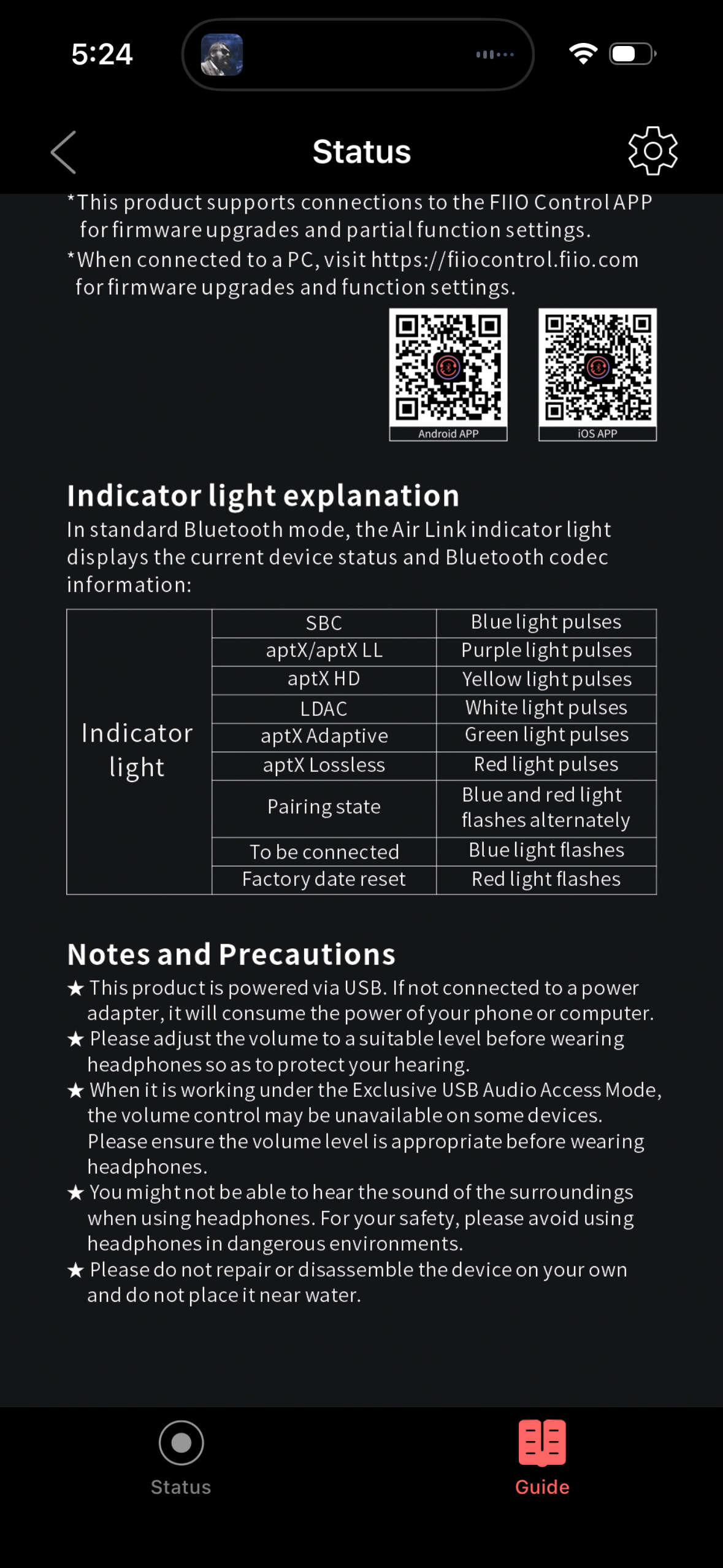
pulsing white, LDAC, pulsing green, aptX Adaptive, pulsing red aptX Lossless, pulsing yellow, aptX HD, pulsing purple, aptX/aptX Low Latency, pulsing blue, SBC, flashing red & blue, pairing mode, flashing blue, reconnecting/waiting, flashing red, factory reset.
Antenna:
FPC high-performance design.
Firmware upgrade:
OTA/USB.
App/Web control, FiiO Control app, and web interface.
Drive-free mode:
supported.
Dimensions:
1.36” wide, 0.37” deep, 0.93” tall.
Weight:
about 5 grams/0.18 ounces.
Color:
silver or black.
MSRP:
$59.00
Website:
Company:
SECRETS Tags:
FiiO, Air Link, Portable, High Resolution, Bluetooth Transmitter, Bluetooth, Transmitter
Secrets Sponsor
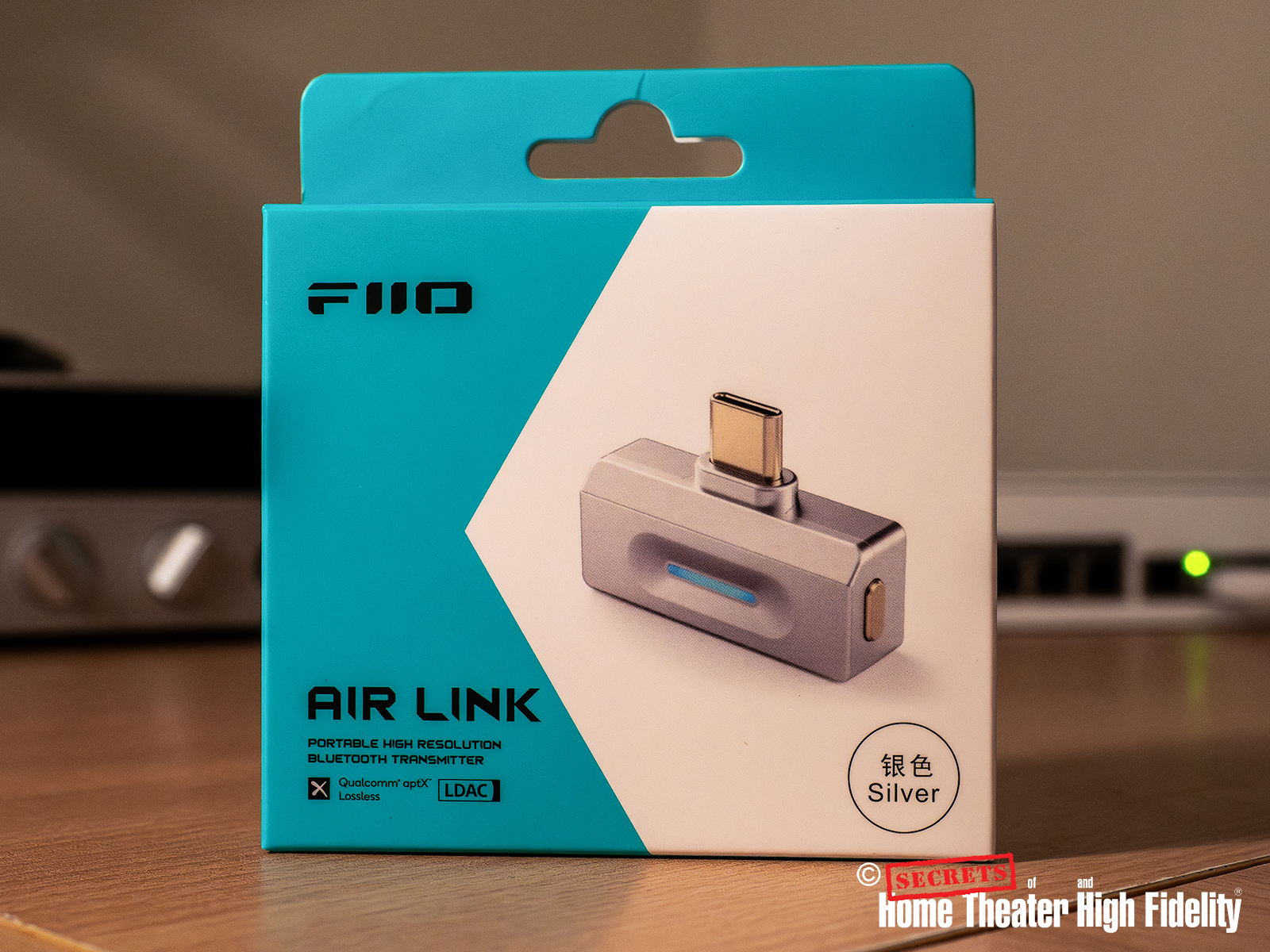
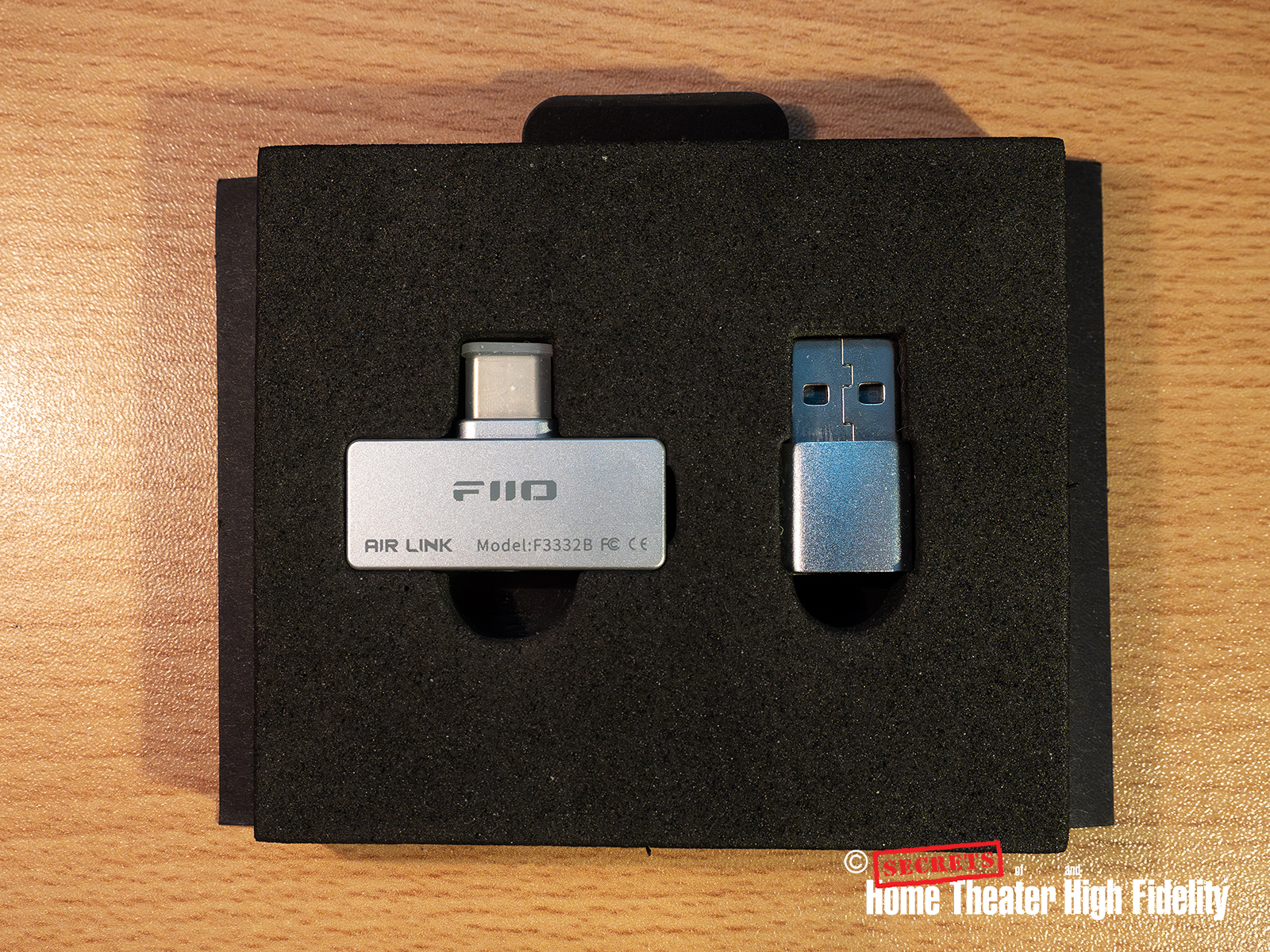
The Air Link is packaged in a small cardboard box. Inside, tucked tightly in a black foam case, is the Air Link and a USB-A to USB-C adaptor. A small accordion-fold, multi-language warranty card and a quick-start guide are included. The quick-start guide can also be downloaded from the FiiO website, which I recommend unless you have the eyes of a 12-year-old. The guide is also available on the FiiO Control app when the Air Link is paired with it. The guide includes a chart that explains which colored light represents which codec.
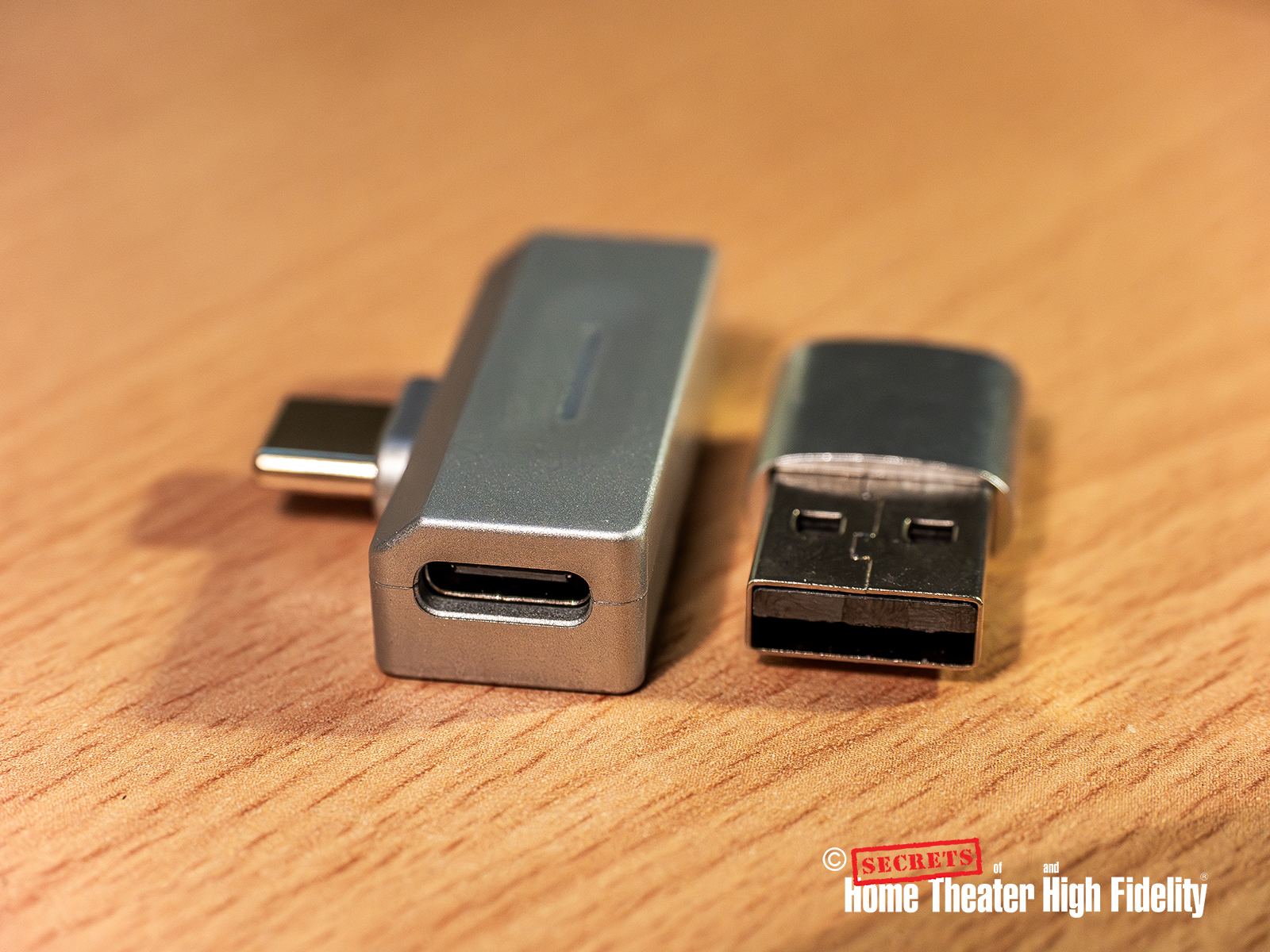
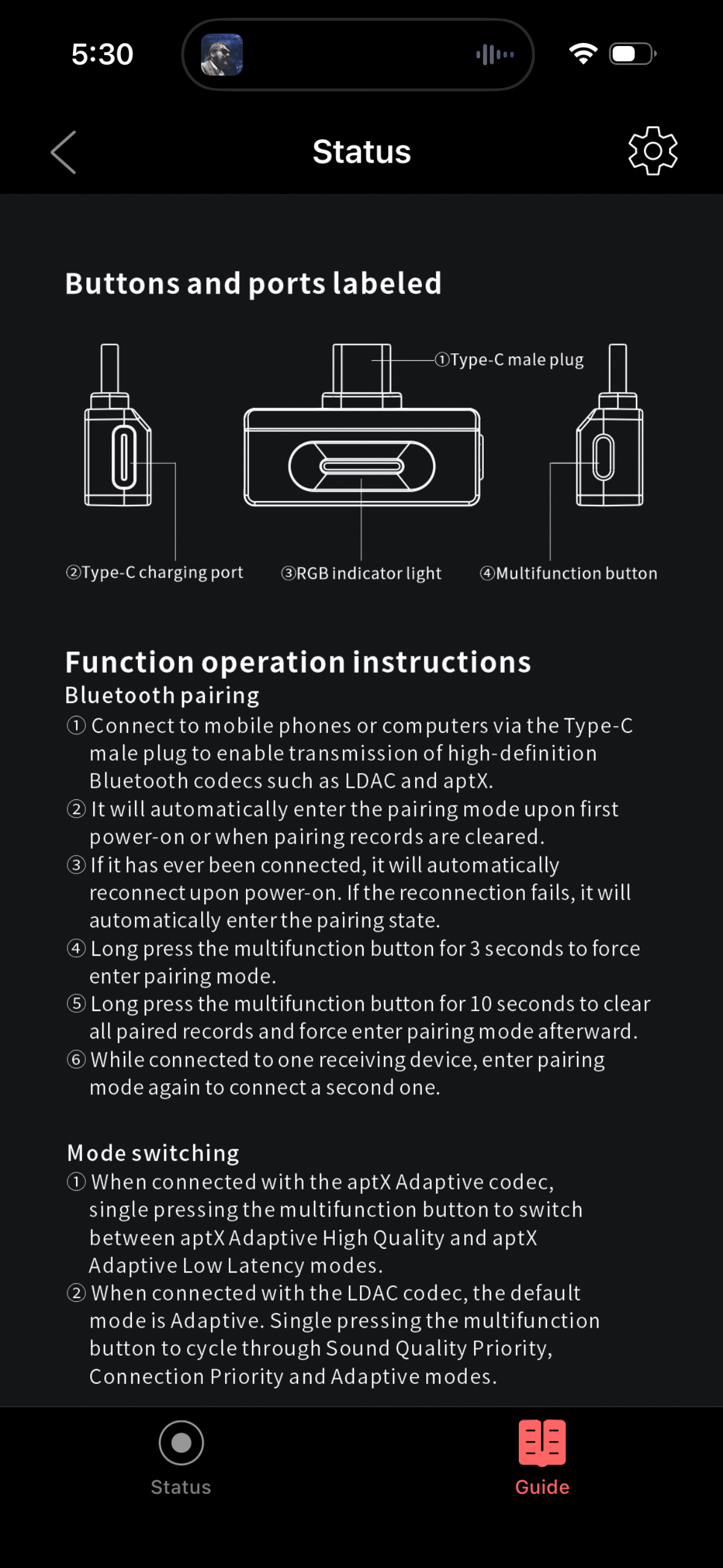
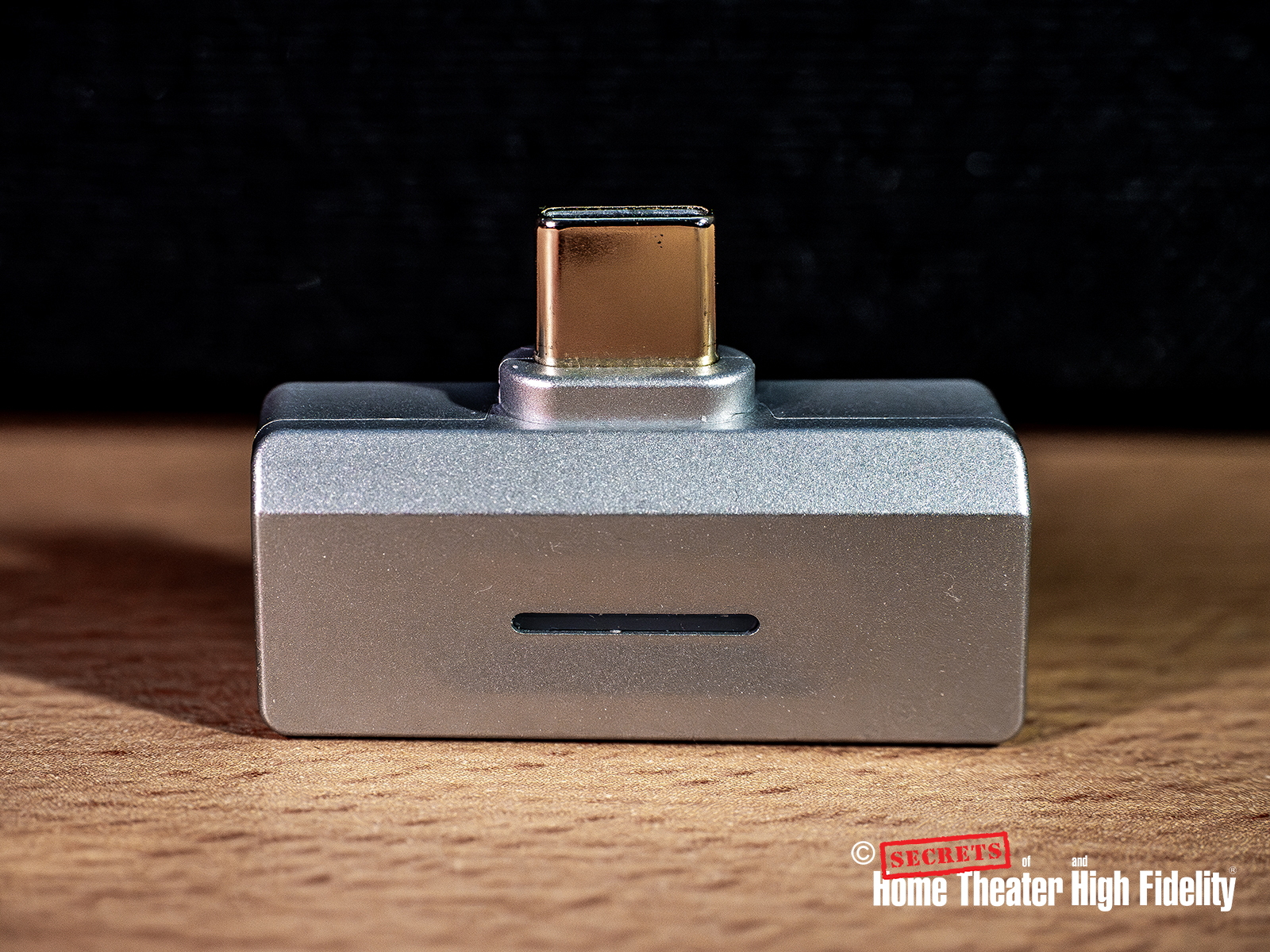
The Air Link has a metal body and a gold-plated USB-C connector, which is a quality touch that will help it to avoid oxidation and resist wear. The front has an RGB light that changes colors to signal what codec it is using. The Air Link automatically connects using the highest codec the headphones can use. If using an Apple product, the connection will be SBC, since FiiO hasn’t added the AAC codec yet. On the right side is a small multi-function button which is used for pairing and codec switching (like aptX Adaptive & LDAC). On the left side is a USB-C port for charging a mobile device while using it. The T-shape fits snug against the bottom of my iPhone. There is a small metal collar between the base of the connector and the Air Link body, which allows for the extra thickness of a case. It almost locks into the iPhone; there is no risk of it falling out.
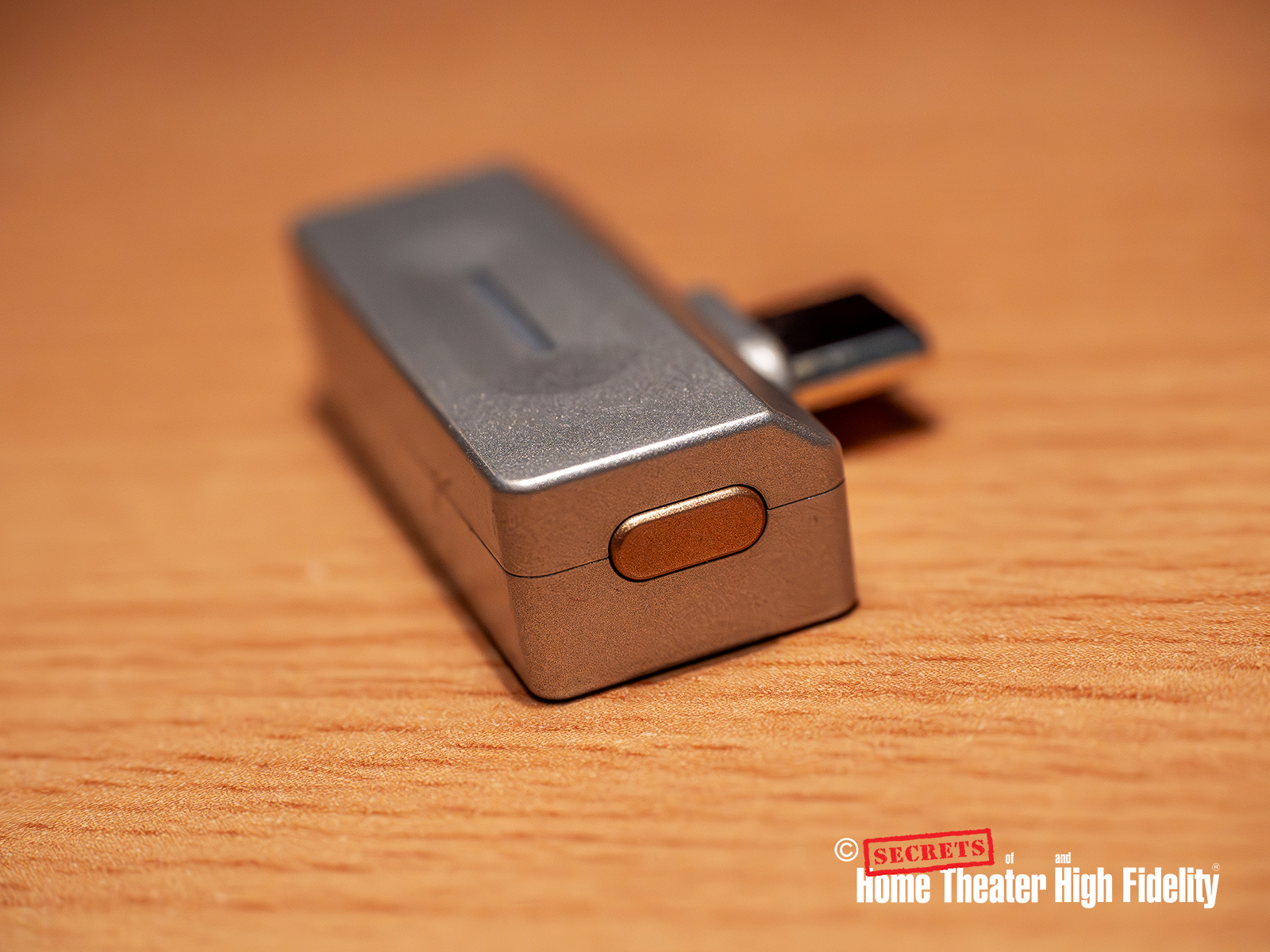
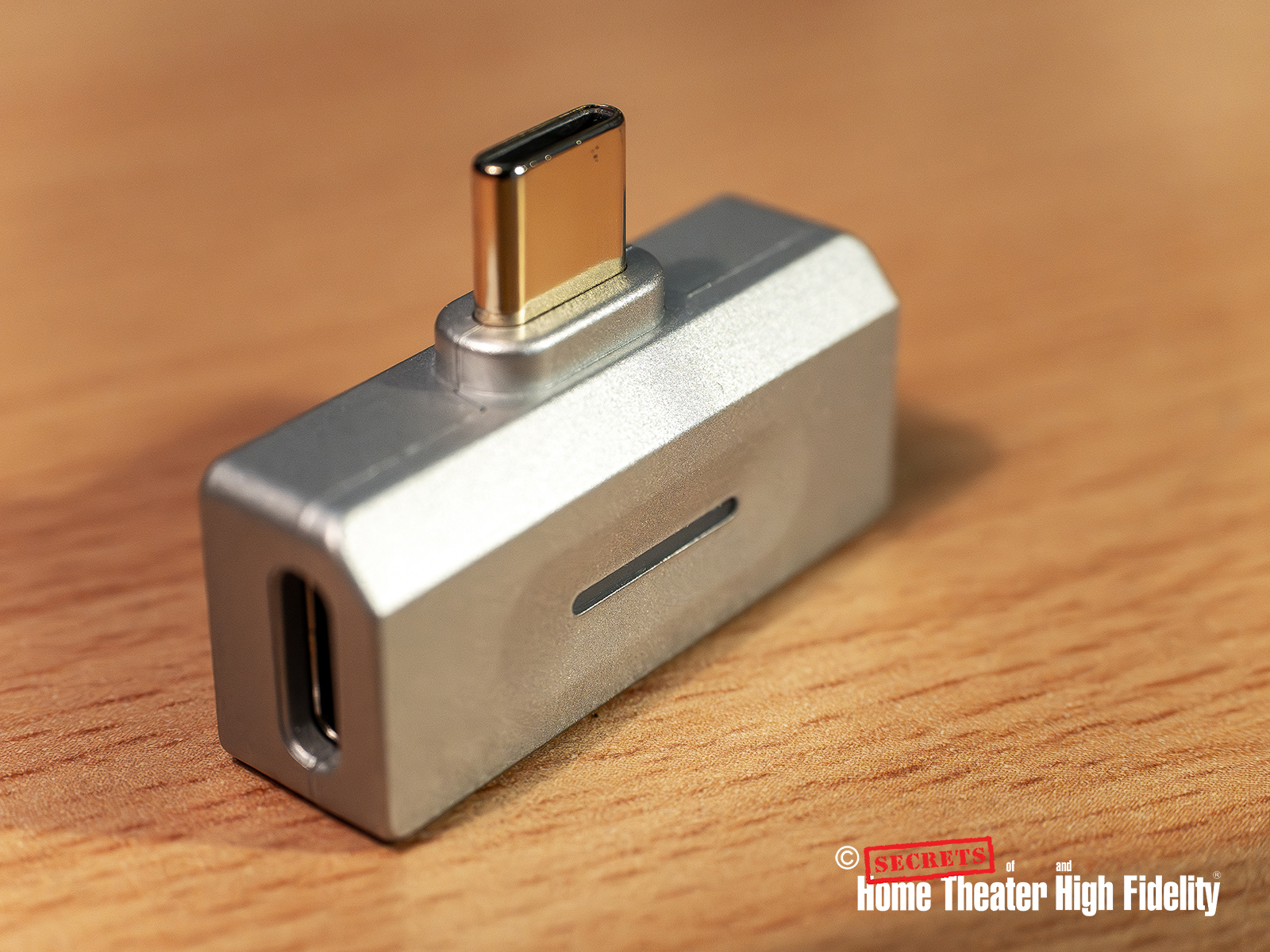
The set-up instructions are simple (in theory). Plug in the Air Link to the USB-C on the device that is the music source. The Air Link powers up automatically and is powered by the device it is connected to. The Air Link has a charging port that allows simultaneous charging during Bluetooth transmission, though it only works with 5V-compatible smartphones, and not high-voltage devices like a laptop. Note: Android users can also use the Air Link to update their older devices to include the latest codecs.
It will automatically enter the pairing mode, and if it has been connected before, it will automatically reconnect. Occasionally, the Bluetooth pairing gets wonky. I recommend following the directions exactly as FiiO gives them. Something I did finally worked, because now it has been working beautifully, which leads me to the next section.
I used the FiiO Air Link to listen to music on the Bowers & Wilkins Px8 S2 and the Noble FoKus Apollo wireless headphones. The music sources were my Apple iPhone, the iPad, and the FiiO M21 digital audio player. The FiiO M21 natively has LDAC, LHDC, aptX HD, and aptX, as well as standard AAC and SBC. Just by plugging in the Air Link into the M21, it can now broadcast aptX Lossless. There is no need to replace an older DAP (digital audio player) just to have the most up-to-date codecs to support your latest headphone purchase.
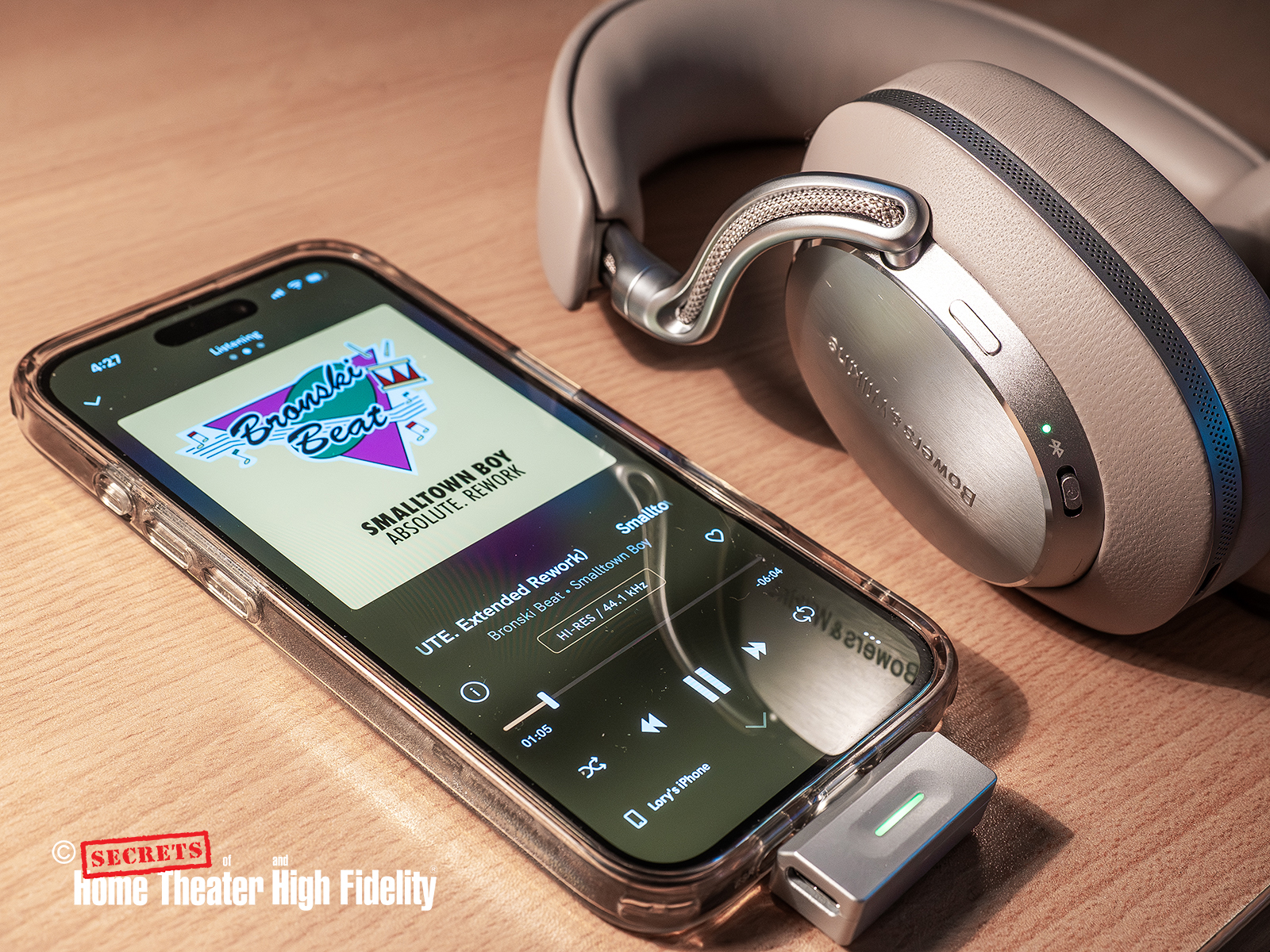
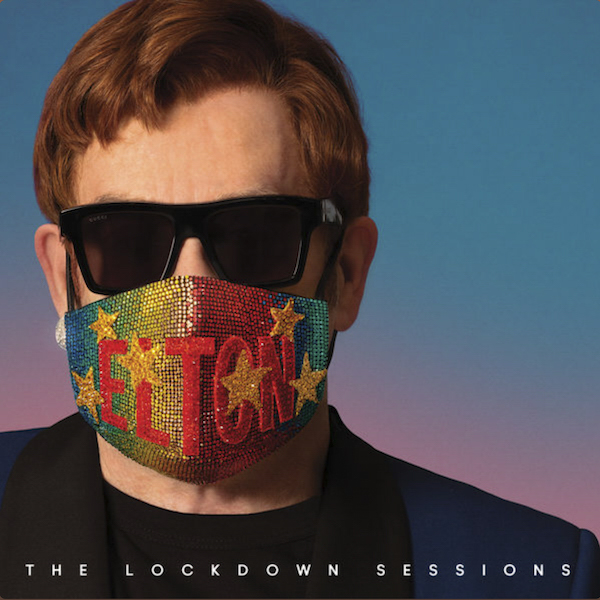
Miley Cyrus, “The Lockdown Sessions (Christmas Edition)”, Hi-Res, 24-Bit, 44.1 kHz, Stereo, Qobuz
Two musicians you might not put in the same sentence, Miley Cyrus and Yo-Yo Ma, yet here they are, and they sound extraordinary together. “Nothing Else Matters” is one of the collaborations on the Lockdown Sessions album, which Elton John recorded during the Covid Lockdown when he couldn’t tour. He invited friends and colleagues to drop by and make music.
Miley Cyrus’s vocals show her extraordinary range in her growling version of the Metallica song “Nothing Else Matters”. Elton John plays the piano, which replaces the original version’s guitar. Chad Smith, drummer for the Red-Hot Chili Peppers, drives the song with the fierceness of a Taiko drummer. Yo-Yo Ma brings the gorgeous depth and richness of his Cello to the mix. This is a wild and well-recorded piece that tests anything it is played on. Elton John called it “one of the best songs ever written”.
In terms of audio improvement, both LDAC and aptX Lossless seemed to take the veil off the music. There was more detail and dynamic punch overall, and I would definitely choose those codecs over AAC for non-Apple headphones.
Secrets Sponsor
The FiiO Air Link is probably the most bang for your buck you will get out of any $59.00 audio product. To be able to bring the newest high-res codecs to older Android phones or DAPs, and to give Apple users the ability to listen to their non-Apple wireless headphones with the advanced Bluetooth codecs they come with, is pretty close to magic.
- Getting to enjoy my non-Apple wireless headphones with their native Bluetooth codecs.
- Digital audio players with older or more basic codecs can be upgraded to all the current codecs if they have USB-C (or USB-A using the included adaptor).
- Excellent build quality.
- Only weighs about 5 grams/0.18 ounces.
- Low latency capability for gaming and movie watching.
- Ability to pass through charging while transmitting Bluetooth.
- FiiO Control app.
- The price. A bargain at $59.00.
- A more streamlined and stable process for Bluetooth pairing.
First, my confession. This is the first time I’ve listened to any codecs besides AAC. I’m a bit dazzled by having access to these “better” codecs. I may well have some bias towards what is new and different, so my listening may be skewed. My informal “test” was to see if I could hear the difference between AAC, AptX Lossless (Bowers & Wilkins Px8 S2), and LDAC (Noble FoKus Apollo). I played both headphones straight from my iPhone with AAC and then with the Air Link, providing the other codecs.
This was a challenge because each headphone tops out at a different codec, with the Px8 S2 armed with the newest aptX Lossless, while the FoKus Apollo has the older but former top LDAC. In addition, these are two flagship headphones that have their own sound profile and don’t sound like each other.
I spent a few hours listening to several genres of music. All three codecs sounded very good. AAC, topping out at only 320 kbps, still sounded impressive. Though there was a clear improvement with both LDAC and aptX Lossless over AAC, there wasn’t much difference between these two codecs. However, aptX Lossless, with its true bit-for-bit audio, had slightly more detail and punch. I’m guessing that since it is more stable, it would probably play at its highest bitrate more often compared with LDAC, which is more vulnerable to the influence of environmental conditions.
The real winner here is the FiiO Air Link.