
|
|||||||||
|
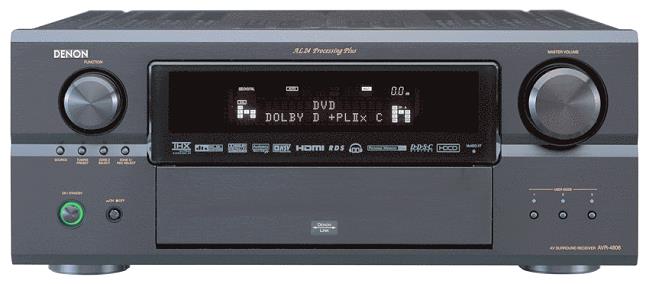
Introduction Denon goes back a long way, to about 1910, when Nippon Chikuonki Shokai was founded by Frederick Horn. In 1912, it merged with Japan-U.S. Recorders Manufacturing, and then, in 1927, Columbia Records became part of the picture. In 1939, Denon was formed when Japan Denki Onkyo, an affiliate, merged with Japan-U.S. Recorders Manufacturing. The word Denon comes from the Den and the On in Japan Denki Onkyo. Denon, in the 1940's, developed direct drive phonograph motors that had servo control. It also developed a disc recorder used in the professional recording industry. In 1951, Denon developed the first stereo moving coil phono cartridge, and then, professional tape recorders in 1953. The 1970's brought Denon into the production of amplifiers, tuners, speakers, and turntables. Compact discs (CDs) were first made available to the retail market by Denon, in 1983, and in 1997, they released the world's first music DVDs (e.g., Chopin's Piano Concerto No. 1). The point of this short history lesson is that Denon is an industry leader, and likes it that way. When everyone was trying to figure out when DVD-A and SACD would be available as digital bitstreams over Firewire connections, Denon developed a proprietary method via Denon Link so that consumers would not have to wait. Now, Denon Link is available on several consumer brands. It carries DVD-A and soon will have SACD. The AVR-4806 The Denon AVR-4806 is a 7.1 receiver, offering every codec out there, plus DVD-A and SACD decoding through Link and HDMI connections. The manual states that when Link version 3 is released, the 4806 will be able to decode SACD through that input, as opposed to just DVD-A at the present. The front panel is simple, with a Function dial on the left for changing Source or DSP mode, and Volume Control on the right. Outside of the flip down panel, there are only a few buttons, for setting the Function control to change the source, Power On/Off/Standby, and User Modes (a user sets his/her preferences which can be recalled from memory). The display is large and in white letters rather than green. It can be dimmed.
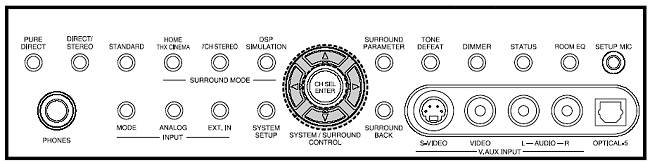
Underneath the flip down panel are controls that are used less often, but nonetheless used from time to time.
Using these buttons, you can change from Standard (whatever DSP mode you have on at the time) to Pure Direct, which bypasses DSP, so you can hear the effects the DSP has vs. no DSP (other manufacturers call this the "Effect Off" mode). Other buttons include DSP Simulation, Surround Parameter, Tone Defeat, Dimmer (panel brightness), Room EQ (to turn off the EQ that the Audyssey MultEQ XT has put into effect; see later in this article), changing the input mode to digital vs. analog, System Setup (for access to menus that select speaker size and other parameters), and turning the rear surround speakers on or off. There is a jack for the setup microphone on the top left corner, and an additional set of input jacks for S-Video and composite video, along with analog stereo audio and a Toslink digital optical audio jack.
|
|||||||||






 YouTube
 Facebook
 Twitter
 LinkedIn
 Pinterest
 Google+
 Instagram
Magazine Publishing Solutions by
 Advontemedia